
Madras High Court: One Person Cannot Claim Two Dearness Allowances
Court Clarifies DA Is Linked to Inflation
Prevents Double Benefits for Same Individual
By Our Legal Correspondent
New Delhi: March 17, 2026:
Also Read: K. S. Dinachandran vs. Shyla Joseph & Ors: Supreme Court Upholds Validity of Contested Will
On March 2026, the Madras High Court delivered an important judgment on government service benefits, ruling that a single person cannot draw two separate Dearness Allowances (DA). Justice S. Srimathy observed that DA is designed to protect employees and pensioners from inflation, but it cannot be duplicated for the same individual. The ruling came in response to a petition filed by a retired employee who sought DA both as a pensioner and as a salaried employee in another organization.
Background of the Case
- The petitioner, a retired government employee, was drawing pension with DA.
- He later joined another organization where he was entitled to salary with DA.
- He claimed entitlement to both DA components, arguing that they were linked to different sources of income.
- The government opposed the claim, stating that DA is an inflation-linked allowance and cannot be duplicated for the same person.
Also Read: Supreme Court Forms 9-Judge Bench to Decide ‘Industry’ Definition Under Labour Law
[Recommended Research Resources]
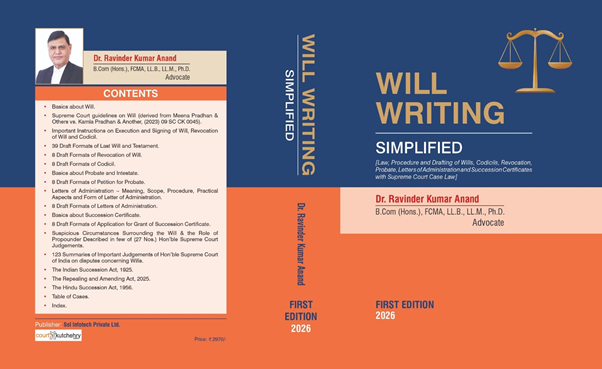
[📘 Legal professionals, families and students alike will benefit from Will Writing Simplified, which covers procedure and case law in detail.]
🔹 Buy online: Amazon | Flipkart
Court’s Observations
- Purpose of DA: The Court emphasized that DA is not a reward but a compensatory allowance to neutralize inflation.
- Single Benefit Principle: A person cannot claim DA twice, as inflation affects individuals uniformly, not separately for pension and salary.
- Legal Interpretation: The Court held that DA is attached to the individual, not to the source of income.
- Judicial Balance: While recognizing the petitioner’s service, the Court ruled that allowing double DA would amount to unjust enrichment.
Also Read: Gift Deed vs Will: The Big Property Transfer Decision in India
Implications of the Ruling
- For Pensioners: Pensioners who take up re-employment cannot claim DA twice.
- For Government Policy: Reinforces fiscal discipline and prevents duplication of benefits.
- For Employees: Clarifies that DA is linked to inflationary impact on individuals, not on multiple income streams.
- For Legal Practice: Provides a precedent for similar disputes involving allowances and dual entitlements.
Broader Context
Dearness Allowance is a crucial component of government salaries and pensions in India, revised periodically to offset inflation. Courts have consistently held that DA is compensatory, not a profit-making allowance. The Madras High Court’s ruling aligns with this principle, ensuring fairness and preventing misuse of public funds.
Conclusion
The Madras High Court’s judgment is a landmark clarification on Dearness Allowance entitlements. By ruling that a single person cannot claim DA twice, the Court has reinforced the principle that allowances must serve their intended purpose—compensating for inflation—without leading to unjust enrichment. This decision will guide future disputes and strengthen fiscal responsibility in public administration.
Also Read: J&K High Court: No Monthly Maintenance for Wife Living Separately by Consent
Keywords for SEO & Faster Searches
Madras High Court DA ruling, double Dearness Allowance India, pension and salary DA entitlement, Justice S Srimathy DA judgment, DA inflation allowance India, government employee DA rules, DA duplication case India
Also Read: Supreme Court Upholds SEBI Nod for WeWork India IPO