

Supreme Court Upholds SEBI Nod for WeWork India IPO
Bombay HC Order Stands Firm
Petitions on Disclosure Issues Dismissed
By Legal Reporter
New Delhi: March 17, 2026:
Also Read: K. S. Dinachandran vs. Shyla Joseph & Ors: Supreme Court Upholds Validity of Contested Will
In a landmark judgment delivered on March 13, 2026, the Supreme Court of India dismissed appeals challenging the Securities and Exchange Board of India (SEBI) approval for WeWork India’s IPO. The apex court refused to interfere with the Bombay High Court’s December 2025 order, which had already rejected petitions questioning the legality of SEBI’s nod. This decision paves the way for WeWork India’s entry into the stock market, marking a significant moment for India’s real estate and co-working sector.
Also Read: Supreme Court Forms 9-Judge Bench to Decide ‘Industry’ Definition Under Labour Law
Case Background
- Petitioners: Hemant Kulshrestha and Vinay Bansal filed writ petitions alleging non-disclosure of criminal proceedings against WeWork India’s promoters.
- Bombay High Court Ruling (Dec 2025): Dismissed the petitions, holding SEBI’s approval valid.
- Supreme Court Appeal (Mar 2026): Petitioners sought intervention under Article 136 of the Constitution.
- Supreme Court Bench: Justices P.S. Narasimha and Alok Aradhe declined to interfere, stating: “We are not inclined to interfere with the impugned order in exercise of our jurisdiction under Article 136.”
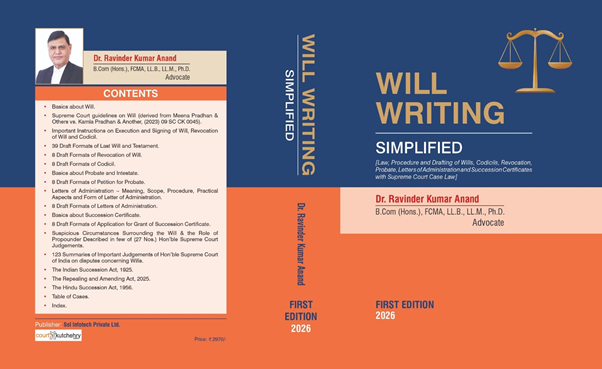
[📘 Legal professionals, families and students alike will benefit from Will Writing Simplified, which covers procedure and case law in detail.]
🔹 Buy online: Amazon | Flipkart
Also Read: Ilaiyaraaja vs Saregama: Copyright Battle Over Indian Music Royalties
Court’s Observations
- Disclosure Allegations: Petitioners argued WeWork India failed to disclose pending criminal cases against promoters.
- Counter Arguments: Senior Advocate Darius Khambata, representing SEBI, emphasized that all material disclosures were made in compliance with regulations.
- Judicial Reasoning: The Court held that SEBI’s regulatory framework ensures adequate investor protection and found no grounds to overturn its approval.
Implications of the Ruling
- For WeWork India: The ruling clears hurdles for its IPO, strengthening investor confidence.
- For SEBI: Reinforces SEBI’s authority in vetting IPOs and disclosure requirements.
- For Investors: Ensures transparency and regulatory oversight, reducing risks of misinformation.
- For Legal Precedent: Establishes that courts will not lightly interfere with SEBI’s technical approvals unless clear violations are proven.
Broader Context
WeWork India, a major player in the co-working space, has seen rapid growth in metropolitan cities. Its IPO is expected to attract strong interest from institutional and retail investors, given the rising demand for flexible office spaces post-pandemic. The Supreme Court’s ruling provides legal certainty, boosting confidence in India’s capital markets.
Also Read: Can Housing Societies Ban Zomato & Swiggy for Defaulters? Gurgaon Case Sparks Legal Debate
Conclusion
The Supreme Court’s decision is a victory for regulatory independence and investor protection. By upholding SEBI’s nod, the Court has ensured that India’s capital markets remain robust, transparent, and fair. For WeWork India, this marks the beginning of its journey as a publicly listed company, potentially reshaping the co-working industry in India.
Keywords for SEO & Faster Searches
Supreme Court WeWork India IPO, SEBI IPO approval India, Bombay High Court WeWork ruling, Article 136 IPO case, WeWork India stock market debut, SEBI investor protection, IPO disclosure India, co-working IPO India
Also Read: Boney Kapoor, Janhvi & Khushi Move Madras High Court Over Sridevi’s Chennai Property