

Can Housing Societies Ban Zomato & Swiggy for Defaulters? Gurgaon Case Sparks Legal Debate
Residents Protest Against Delivery Restrictions
Law Says Societies Must Follow Byelaws, Not Arbitrary Rules
By Legal Reporter
New Delhi: March 17, 2026:
Also Read: K. S. Dinachandran vs. Shyla Joseph & Ors: Supreme Court Upholds Validity of Contested Will
In Gurgaon, a housing society board has reportedly barred food delivery agents from Zomato and Swiggy from entering flats of residents who defaulted on maintenance payments. The decision has triggered debate over whether societies can enforce such rules and what the law says about residents’ rights.
What Happened in Gurgaon
- The society board announced that defaulters who had not paid monthly dues would not be allowed to receive food deliveries at their doorstep.
- Delivery agents were stopped at the gate, and residents were asked to collect orders outside.
- The rule was framed to pressure residents into clearing dues.
Also Read: Supreme Court Forms 9-Judge Bench to Decide ‘Industry’ Definition Under Labour Law
[Recommended Research Resources]
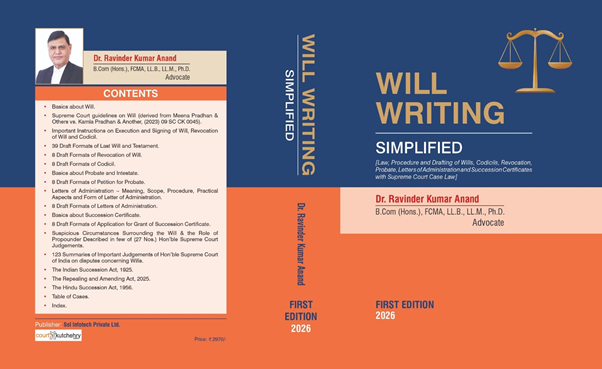
Legal professionals, families and students alike will benefit from Will Writing Simplified, which covers procedure and case law in detail.
🔹 Buy online: Amazon | Flipkart
Legal Position: Can Societies Enforce Such Rules?
1. Authority of Housing Societies
- Societies are governed by state cooperative housing laws and registered byelaws.
- The managing committee can frame rules, but only with approval of the general body.
2. Limits of Power
- Societies cannot impose rules that violate fundamental rights (such as right to food, privacy, or equal treatment).
- Blocking delivery services amounts to denial of essential services, which can be challenged legally.
Also Read: Gift Deed vs Will: The Big Property Transfer Decision in India
3. Consumer Protection
- Residents are consumers of delivery platforms. Restricting access interferes with contractual rights between residents and service providers.
- Such restrictions may be considered arbitrary and unfair trade practice.
4. Legal Remedies for Residents
- Residents can issue a legal notice to the society for harassment.
- If unresolved, they can approach the Registrar of Cooperative Societies or file a case in civil court.
Expert Opinions
- Legal experts note that societies can regulate entry protocols (e.g., requiring delivery agents to wait at the lobby for security reasons).
- However, blanket bans targeting defaulters are discriminatory and not supported by law.
- Courts have previously held that societies must act in accordance with byelaws and cannot create rules that punish residents beyond lawful means.
Implications
- For Residents: They cannot be denied basic services even if they default on dues. Recovery must be through legal channels, not coercion.
- For Societies: Must use lawful mechanisms like notices, penalties, or recovery suits instead of arbitrary bans.
- For Delivery Platforms: Need clarity on access rights to avoid disputes with societies.
Also Read: J&K High Court: No Monthly Maintenance for Wife Living Separately by Consent
Conclusion
The Gurgaon case highlights the tension between society management and residents’ rights. While societies can enforce maintenance payments, they cannot deny essential services like food delivery. The law requires societies to act within their byelaws and cooperative housing regulations, ensuring fairness and legality.
Keywords for SEO & Faster Searches
Also Read: Supreme Court Upholds SEBI Nod for WeWork India IPO
Gurgaon housing society Zomato ban, Swiggy delivery restriction India, housing society bye-laws India, cooperative housing law residents’ rights, maintenance dues housing society dispute, consumer rights food delivery ban India
Also Read: Supreme Court Upholds SEBI Nod for WeWork India IPO