

J&K High Court: No Monthly Maintenance for Wife Living Separately by Consent
Court Upholds Section 488(5) CrPC Bar
Orders ₹2.5 Lakh One-Time Settlement to Prevent Destitution
By Our Legal Correspondent
New Delhi: March 17, 2026:
Also Read: K. S. Dinachandran vs. Shyla Joseph & Ors: Supreme Court Upholds Validity of Contested Will
In a significant ruling, the High Court of Jammu & Kashmir and Ladakh has held that a wife who resides separately from her husband by mutual consent is not entitled to monthly maintenance under Section 488(5) of the Criminal Procedure Code (CrPC). The Court, however, exercised its inherent jurisdiction to ensure justice and ordered a ₹2.5 lakh one-time settlement to safeguard the woman from financial hardship. This judgment, delivered by Justice Sanjay Parihar, has far-reaching implications for family law and maintenance disputes in India.
Also Read: Supreme Court Forms 9-Judge Bench to Decide ‘Industry’ Definition Under Labour Law
Background of the Case
- Marriage & Separation: The couple married in 1990 and had a son. In 1995, the wife alleged her husband contracted a second marriage. A customary divorce (farakhtnama) was executed, and she accepted ₹10,000 as settlement before living separately.
- Litigation History:
- 2003 & 2007: Wife sought maintenance only for her son, describing herself as divorced.
- 2008: Filed fresh petition under Section 488 CrPC seeking maintenance for herself.
- 2020: Chief Judicial Magistrate granted ₹2,000 monthly maintenance.
- 2020: Revisional Court set aside the order, citing Section 488(5) CrPC.
- 2026: High Court upheld the bar but ordered one-time settlement.
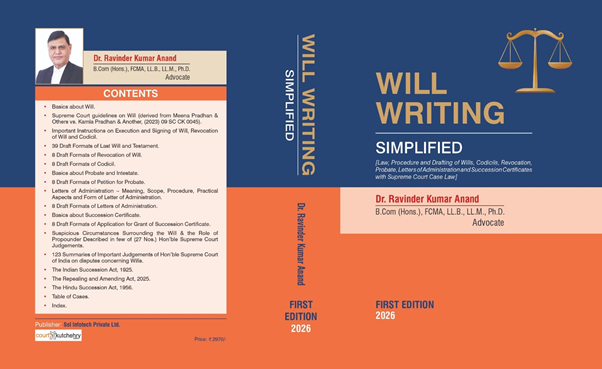
[📘 Legal professionals, families and students alike will benefit from Will Writing Simplified, which covers procedure and case law in detail.
🔹 Buy online: Amazon | Flipkart
Also Read: Ilaiyaraaja vs Saregama: Copyright Battle Over Indian Music Royalties
Court’s Analysis
- Legal Position: Section 488(5) CrPC clearly bars maintenance if spouses live separately by mutual consent.
- Admissions by Wife: The Court noted her repeated admissions of being divorced and living separately for decades.
- Customary Divorce Issue: While the Court found no valid proof of customary divorce, it emphasized that her conduct and agreements amounted to consensual separation.
- Justice Consideration: To prevent vagrancy, the Court invoked its inherent powers and directed the husband to pay ₹2.5 lakh within six months, with 6% interest if delayed.
Implications of the Judgment
Also Read: Can Housing Societies Ban Zomato & Swiggy for Defaulters? Gurgaon Case Sparks Legal Debate
- Legal Clarity: Reinforces that mutual separation agreements bar maintenance claims under Section 488 CrPC.
- Social Impact: Protects husbands from repeated litigation while ensuring wives are not left destitute.
- Precedent Value: Balances strict statutory provisions with equitable justice, setting a precedent for similar disputes.
Conclusion
This ruling highlights the delicate balance between legal rights and social justice. While the law bars maintenance in cases of consensual separation, the Court ensured fairness by granting a one-time settlement. For families, lawyers, and policymakers, this judgment underscores the importance of clear agreements and honest admissions in marital disputes.
Keywords for SEO & Faster Searches
Section 488 CrPC maintenance, J&K High Court ruling, wife living separately mutual consent, one-time settlement ₹2.5 lakh, family law India, maintenance rights India, customary divorce farakhtnama, Justice Sanjay Parihar judgment
Also Read: Boney Kapoor, Janhvi & Khushi Move Madras High Court Over Sridevi’s Chennai Property