
Delhi High Court Orders UNI’s Eviction from Rafi Marg Office
Court Says UNI Squatted on Public Land for 45 Years
Delhi Police Seal Office Hours After Order
By Legal Reporter
New Delhi: March 21, 2026:
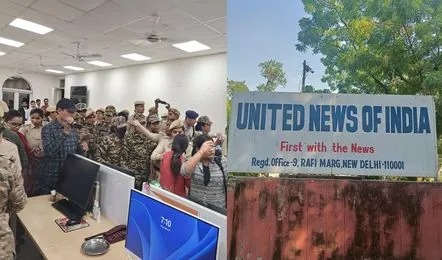
In a dramatic turn of events, the Delhi High Court directed the eviction of United News of India (UNI) from its long-standing office at 9 Rafi Marg, Central Delhi. The order, passed by Justice Sachin Datta, upheld the cancellation of UNI’s land allotment by the Land and Development Office (L&DO). Within hours, Delhi Police sealed the premises, sparking protests from journalists and staff.
To explore all major rulings, refer to this complete Supreme Court judgments list on wills and probate.
Case Background
- Land Allotment: UNI was allotted land at Rafi Marg more than four decades ago to build a composite office building.
- Failure to Comply: The agency failed to construct the building or meet obligations tied to the allotment.
- Cancellation: L&DO cancelled the allotment in March 2023.
- Court Challenge: UNI challenged the cancellation, but the High Court dismissed its petition on March 20, 2026.
- Valuation: The land is estimated to be worth ₹409–410 crore today.
[Recommended Legal Resources]
📘 Legal professionals, families and students alike will benefit from Will Writing Simplified, which covers procedure and case law in detail.
🔹 Buy on Amazon
🔹 Buy on Flipkart
Court’s Observations
- Squatting on Public Land: The court said UNI had been “effectively squatting” on valuable land for decades.
- No Construction: Despite repeated opportunities, UNI failed to build the composite office building.
- Cancellation Valid: The court upheld the government’s cancellation as justified and lawful.
- Immediate Possession: The order directed the government to take immediate possession of the property.
Also Read: Raj Kumari & Ors v. Surinder Pal Sharma: Supreme Court Rejects 1992 Will, Orders Equal Partition
Aftermath
- Police Action: Delhi Police sealed the office on March 20, 2026, just hours after the ruling.
- Journalist Protests: UNI staff and journalists protested outside the premises, calling the eviction abrupt and unfair.
- Government Stand: Officials maintained that UNI had failed persistently to meet allotment conditions, leaving no option but eviction.
Implications of the Ruling
- Media Institutions: The case highlights accountability for media organizations occupying government land.
- Public Land Use: Reinforces that prime public land cannot be held indefinitely without fulfilling obligations.
- Legal Precedent: Sets a strong precedent for eviction in cases of non-compliance with allotment terms.
Expert Views
Legal experts note that the ruling underscores the principle that public land is a national asset and cannot be misused. They argue that while the eviction is harsh, it reflects the judiciary’s commitment to enforcing compliance.
Conclusion
The Delhi High Court’s eviction order against UNI marks a historic moment in media and land law. It sends a clear message that failure to comply with allotment conditions will lead to cancellation and eviction, regardless of the institution’s stature.
Also Read: Ganesan (Dead) through LRs v. Kalanjiam & Ors: Supreme Court Upholds Will, Dismisses Appeal
Keywords for SEO & Faster Searches
Delhi High Court UNI eviction, Rafi Marg office sealed, UNI land allotment cancellation, public land misuse India, UNI vs L&DO case, Delhi Police UNI office sealing, UNI journalists protest eviction, Delhi HC land ruling 2026, UNI eviction news India, government land accountability.