
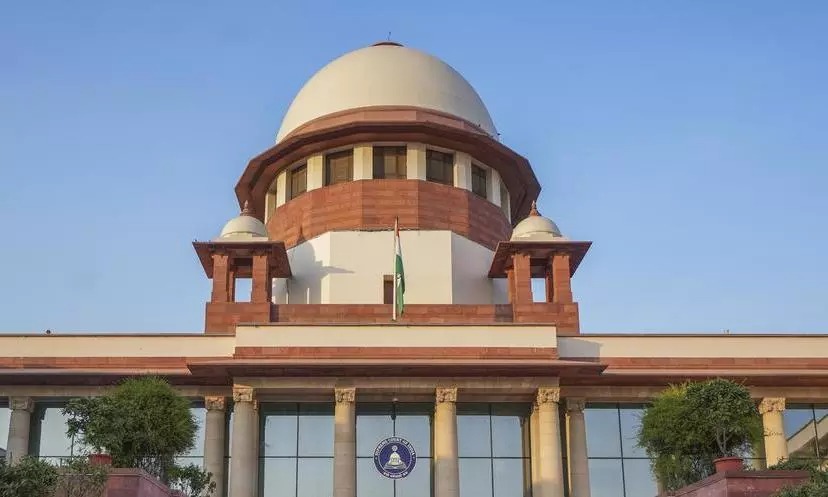
COURTKUTCHEHRY SPECIAL SERIES ON LANDMARKS JUDGEMENTS ON WILLS, CODICIL & PROBATE
H. Venkatachala Iyengar v. B. N. Thimmajamma & Ors.: Supreme Court Declines Probate of Suspicious Will In Landmark Judgement
Court Stresses Burden on Propounder to Prove Free and Genuine Execution
Appeal Fails as Will Found Not to Represent True Intention
By Vishwas Kumar
New Delhi: March 31, 2026:
On 13 November 1958, the Supreme Court of India delivered a landmark judgment in H. Venkatachala Iyengar v. B. N. Thimmajamma & Ors., shaping the law on proof of wills in India. The dispute revolved around the will of Lakshmamma, which the trial court had accepted as genuine. However, the High Court reversed this finding, citing suspicious circumstances such as improbable recitals and the appellant’s dominant role in the execution.
The Supreme Court, with a bench comprising Justices T.L. Venkatarama Ayyar, P.B. Gajendragadkar, and A.K. Sarkar, upheld the High Court’s decision. The Court emphasized that when a will is surrounded by suspicious circumstances, the burden lies heavily on the propounder to dispel doubts and establish that the document truly represents the free and conscious intention of a capable testator. It clarified that courts must be fully satisfied about the genuineness of the will before granting probate.
In this case, the appellant failed to discharge that burden. The evidence did not convincingly show that Lakshmamma executed the will voluntarily and with full understanding. As a result, the Supreme Court held that the will was not proved and dismissed the appeal.
This ruling remains a cornerstone in Indian succession law, laying down the principle that suspicious circumstances demand heightened scrutiny. It ensures that probate is granted only when the will is free from doubt, thereby safeguarding against manipulation and protecting the sanctity of testamentary dispositions.
For More, Read Here the Summary of the Judgement from the Book: WILL WRITING SIMPLIFIED, read below or open page no 436, Chapter 14.1 in the book. (Online book purchase link available here on: Buy online: Amazon | Flipkart
|
|
Case Summary |
: |
H. Venkatachala Iyengar v. B. N. Thimmajamma & Ors. |
|
|
Court |
: |
Supreme Court of India |
|
|
Citations |
: |
(1958) 11 SC CK 0008: Civil Appeal No. 18 of 1955. |
|
|
Link |
: |
|
|
|
Decided on |
: |
13 November 1958 |
|
|
Coram |
: |
Hon’ble Mr. Justice T.L. Venkatarama Ayyar, Hon’ble Mr. Justice P.B. Gajendragadkar and Hon’ble Mr. Justice A.K. Sarkar. |
|
|
Relevant Paragraphs |
: |
Para Nos. 18–23, 20–22, 27–28, 36–38 |
1. Facts of the Case:
Lakshmamma executed a Will dated 22 August 1945 bequeathing several properties. The appellant, her adopted brother and sole executor, propounded the Will claiming Lakshmamma was absolute owner of the properties. Respondent No.1, widow of Lakshmamma’s son, contested the Will, alleging it was forged and that Lakshmamma lacked testamentary capacity. The trial court upheld the Will as genuine to the extent of Lakshmamma’s half share; the High Court reversed, holding that the Will was not proved and the testatrix was not in a sound and disposing mind.
2. Law Points Involved:
Proof of Wills — burden on propounder; effect of suspicious circumstances; role of propounder taking benefit under Will; standards of proof under Sections 67, 68 Evidence Act and Section 63 Indian Succession Act.
3. Acts / Provisions / Articles Referred:
(i). Indian Evidence Act, 1872 — Sections 45, 47, 67, 68
(i). Indian Succession Act, 1925 — Sections 59, 63
4. Judgments Referred:
(i). Vellaswamy Servai v. L. Sivaraman Servai, (1929) 11 PRI CK 0010.https://www.courtkutchehry.com/judgements/696695/vellaswamy-servai-and-others-appellant-hash-l-sivaraman-servai-respondent]
(ii). Sarat Kumari Bibi v. Sakhi Chand, (1928) 11 BOM CK 0037.https://www.courtkutchehry.com/judgements/927900/sarat-kumari-bibi-appellant-hash-sakhi-chand-bahadur-respondent]
(iii). Harmes v. Hinkson (1946) 05 PRI CK 0001.
5. Obiter Dicta:
Courts must approach proof of Wills with solemn scrutiny since the testator cannot speak from the grave. Suspicious circumstances must be removed by the propounder through cogent evidence. Proof required is not mathematical certainty but satisfaction of a prudent mind.
6. Ratio Decidendi:
A Will must be proved like any other document subject to special attestation requirements. The propounder must establish: (i) testator’s signature, (ii) sound and disposing mind, (iii) free volition, and (iv) understanding of the contents. Where suspicious circumstances exist—such as an unnatural disposition or propounder’s active role and benefit—the burden is heavy; the propounder must dispel suspicion and satisfy the judicial conscience that the document truly represents the Will of a free and capable testator.
7. Final Ruling:
The Supreme Court upheld the High Court’s conclusion that the Will was not duly proved. The appeal was dismissed. The Court reaffirmed that the burden on a propounder of a Will, especially one surrounded by suspicion or conferring benefit upon him, is heavy, and he must remove all doubt by clear and satisfactory evidence.
8. Gist Highlighting Dispute with Final Decision:
The dispute centred on whether Lakshmamma’s Will was genuine and validly executed. While the trial court accepted it, the High Court found it suspicious due to the appellant’s role and improbable recitals. The Supreme Court confirmed that, in such cases, courts must be fully satisfied that the Will represents the true intention of a free and capable testator. The appellant failed to discharge this burden; hence, the Will was not proved, and the appeal failed.
Read full Judgement Here:
H. Venkatachala Iyengar v. B. N. Thimmajamma & Ors.
Supreme Court of India
(1958) 11 SC CK 0008: Civil Appeal No. 18 of 1955.
You Can Also Purchase the Book from here on: Buy online: Amazon | Flipkart
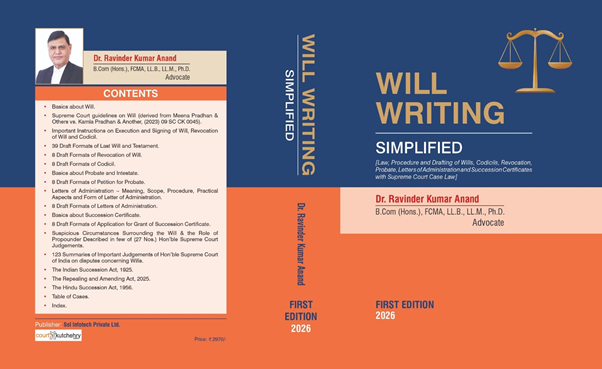
LEGAL RESEARCH RESOURCES: Check out 123 Key Judgements, as highlighted in the book, WILL WRITING SIMPLIFIED, for the quick research and reference purposes. Click the link here: https://www.courtkutchehry.com/pages/blog/123-supreme-court-judgments-on-wills/
Keywords:
- Venkatachala Iyengar v. B.N. Thimmajamma case, 1958 Supreme Court probate judgment, Indian succession law, proof of wills India, suspicious circumstances in will, Justice T.L. Venkatarama Ayyar, Lakshmamma will dispute, burden on propounder, Supreme Court probate ruling India, landmark will case