
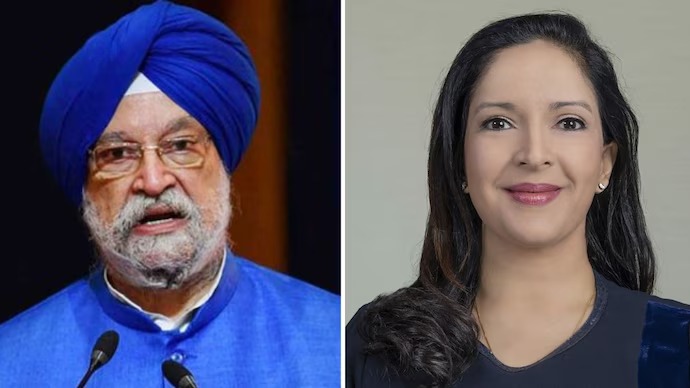
Delhi High Court Protects Hardeep Puri’s Daughter from Defamatory Epstein Report Claims
Court Orders Removal of False Allegations
Warns Media Against Irresponsible Reporting
By Legal Reporter
New Delhi: March 17, 2026:
Also Read: K. S. Dinachandran vs. Shyla Joseph & Ors: Supreme Court Upholds Validity of Contested Will
In a significant ruling on March 2026, the Delhi High Court stepped in to protect the reputation of Union Minister Hardeep Singh Puri’s daughter, who was falsely linked to the controversial Jeffrey Epstein report. Justice Neena Bansal Krishna issued an interim order directing media outlets and online platforms to take down defamatory content and refrain from publishing unverified allegations. The Court stressed that reputational harm caused by false reporting cannot be undone, making judicial intervention necessary.
Background of the Case
Also Read: Supreme Court Forms 9-Judge Bench to Decide ‘Industry’ Definition Under Labour Law
- Defamatory Content: Certain online platforms circulated claims that Puri’s daughter was named in the Epstein report.
- Petition Filed: She approached the Delhi High Court seeking protection against false and malicious reporting.
- Court’s Interim Order: The Court restrained further publication and directed removal of existing defamatory material.
Court’s Observations
- Reputation as a Fundamental Right: The Court reiterated that the right to reputation is part of the right to life under Article 21 of the Constitution.
- Irreparable Harm: False allegations, once circulated, can cause lasting damage to personal and professional life.
- Media Responsibility: The Court warned that media houses must verify facts before publishing, especially in sensitive matters involving public figures and their families.
[Legal Resources]
[📘 Legal professionals and students alike will benefit from Will Writing Simplified, which covers procedure and case law in detail.]
🔹 Buy online: Amazon | Flipkart
Also Read: Gift Deed vs Will: The Big Property Transfer Decision in India
Implications of the Ruling
- For Media: Reinforces accountability and responsibility in reporting.
- For Individuals: Provides legal recourse against defamatory and false allegations.
- For Judiciary: Demonstrates proactive protection of fundamental rights in the digital age.
- For Society: Sends a strong message against irresponsible journalism and online defamation.
Broader Context
The ruling comes amid global scrutiny of the Epstein scandal, where several high-profile names have been linked. In India, the case highlights the dangers of misinformation and the need for judicial safeguards against reputational harm. Courts have increasingly recognized the impact of digital defamation, where false claims spread rapidly across social media and online platforms.
Conclusion
The Delhi High Court’s order is a landmark in protecting individual reputation against digital defamation. By restraining media platforms and directing removal of false content, the Court has reinforced the principle that freedom of the press must coexist with responsibility and respect for fundamental rights.
Also Read: J&K High Court: No Monthly Maintenance for Wife Living Separately by Consent
Keywords for SEO & Faster Searches
Delhi High Court defamation case, Hardeep Singh Puri daughter Epstein report, digital defamation India, Article 21 right to reputation, Justice Neena Bansal Krishna ruling, media responsibility defamation India, online defamation court order
Also Read: Supreme Court Upholds SEBI Nod for WeWork India IPO