
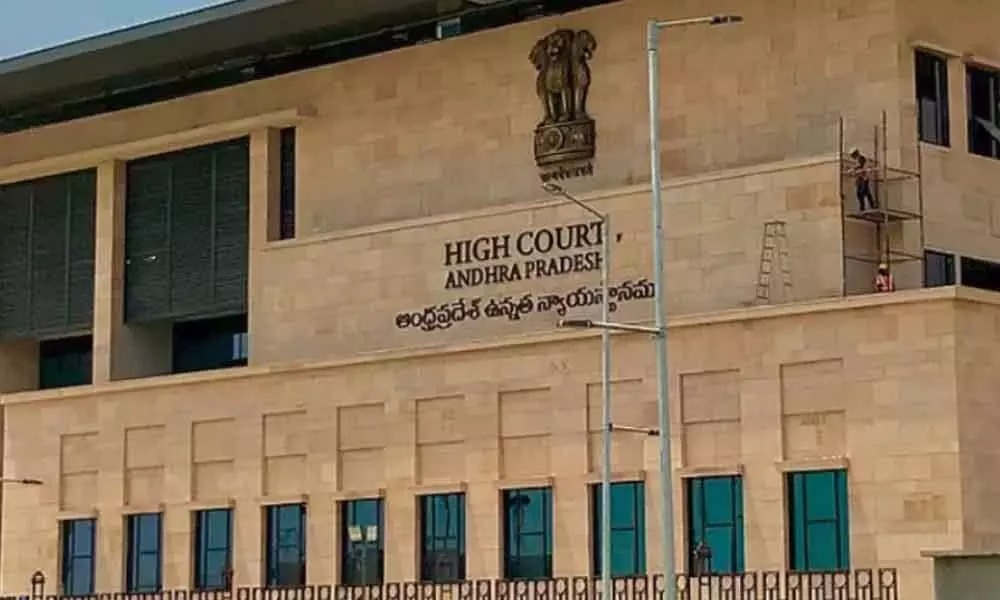
AP High Court: No DNA Tests of Children to Prove Wife’s Adultery
Children’s Welfare and Privacy Take Priority
Court Rejects Husband’s Plea in Divorce Case
By Our Legal Correspondent
New Delhi: March 18, 2026:
In a landmark decision, the Andhra Pradesh High Court has dismissed a husband’s plea seeking DNA tests of his two children to establish his wife’s alleged adultery. The ruling, delivered by Justice Tarlada Rajasekhar Rao on March 12, 2026, underscores the principle that children cannot be dragged into parental disputes and that their dignity must be protected in matrimonial litigation.
[📘 Recommended Reading]
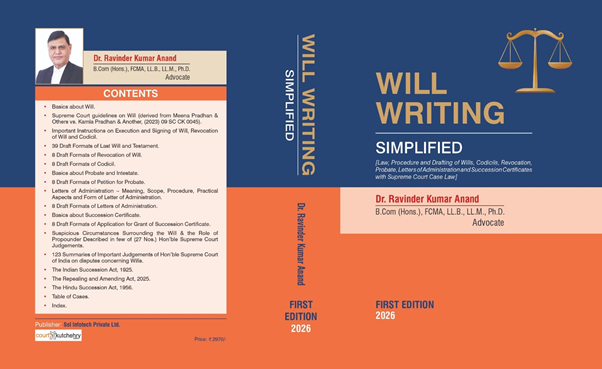
Legal professionals, families and students alike will benefit from Will Writing Simplified, which covers procedure and case law in detail.
🔹 Amazon
🔹 Flipkart
Also Read: Samiullah Vs. State of Bihar & Ors.: Supreme Court Quashes Bihar Mutation Rule
Case Background
- The husband filed for divorce, alleging that his wife had deserted him for over two years.
- He sought DNA tests of their children, claiming this would prove her alleged infidelity.
- The trial court rejected his request, prompting him to approach the High Court.
- The High Court upheld the trial court’s decision, ruling that children cannot be used to prove adultery between spouses.
Court’s Observations
- Justice Rao stated: “For the purpose of proving the wife’s adultery, the petitioner (husband) cannot seek a DNA test of his children.”
- The Court emphasized that:
- Children’s welfare and privacy must come first.
- Matrimonial disputes should not compromise the dignity of minors.
- Divorce proceedings based on desertion cannot be converted into adultery claims using DNA evidence.
- The ruling highlighted that DNA tests are not meant to settle allegations of infidelity but to resolve paternity disputes where necessary.
Also Read: Jyoti Sharma vs. Vishnu Goyal & Anr.: Supreme Court Upholds Landlord’s Rights, Orders Eviction
Legal Significance
- Protects children’s rights: Prevents minors from being subjected to invasive tests for parental disputes.
- Clarifies scope of DNA evidence: Courts will not allow DNA testing to prove adultery in divorce cases.
- Sets precedent: Reinforces that matrimonial litigation must respect the dignity of children.
Broader Implications
- For families: This ruling discourages misuse of children in divorce battles.
- For legal professionals: It provides clarity on how courts interpret DNA evidence in matrimonial disputes.
- For society: It strengthens the principle that children are not pawns in parental conflicts.
Keywords for SEO & Faster Searches
- Andhra Pradesh High Court DNA test ruling
- Husband adultery claim rejected
- Children’s privacy in divorce cases India
- DNA test adultery case AP HC
- Justice Tarlada Rajasekhar Rao ruling
- Divorce law India adultery evidence
- Matrimonial disputes children’s rights