

COURTKUTCHEHRY SPECIAL SERIES ON LANDMARKS JDUGEMENTS ON WILLS & PROBATE
Samiullah Vs. State of Bihar & Ors.: Supreme Court Quashes Bihar Mutation Rule
Apex Court rules impugned Rule 19 amendments ultra vires RegistrationAct,1908
Landmark judgment directs modernization of property registration, hints at Blockchain adoption
By Vishwas Kumar
New Delhi: March 18, 2026:
On 7 November 2025, the Supreme Court delivered a landmark ruling in Samiullah Vs. State of Bihar & Ors. (Civil Appeal No. 13429 of 2025, (2025) 11 SC CK 1733), allowing the appeal and striking down amendments to Rule 19 of the Bihar Registration Rules, 2008. The amendments—sub-rules (xvii) and (xviii)—empowered registering authorities to refuse registration of property sale documents unless proof of mutation (Jamabandi or holding allotment) was produced.
The bench comprising Justice Pamidighantam Sri Narasimha and Justice Joymalya Bagchi held that these provisions were ultra vires Section 69 of the Registration Act, 1908, as they imposed arbitrary preconditions beyond the scope of registration law. The Court emphasized that registration pertains to documents, not titles, and mutation does not confer ownership. By linking registration to mutation, the Bihar government had effectively curtailed citizens’ constitutional right to dispose of property.
Also Read: Jyoti Sharma vs. Vishnu Goyal & Anr.: Supreme Court Upholds Landlord’s Rights, Orders Eviction
The Court noted that property disputes constitute nearly 66% of civil litigation in India, and unnecessary procedural hurdles only exacerbate the problem. It criticized Bihar’s reliance on incomplete mutation and survey processes, observing that most Jamabandis remain outdated, with records still in the names of deceased ancestors.
Importantly, the judgment went beyond Bihar’s rules, highlighting the systemic flaws in India’s property registration regime. The Court urged the government to explore Blockchain technology for secure, transparent, and tamper-proof land records, and directed the Law Commission to examine reforms for conclusive titling.
This ruling not only restores transactional freedom in Bihar but also sets the stage for nationwide modernization of property laws, potentially transforming India’s real estate sector by reducing fraud, litigation, and uncertainty.
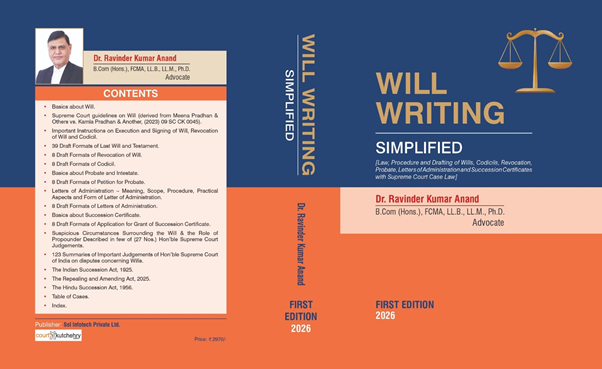
For More, Read Here the Summary of the Judgement from the Book: WILL WRITING SIMPLIFIED, read below or open page no 436, Chapter 14.1 in the book. (Online book purchase link available here on: Buy online: Amazon | Flipkart
| Case Summary | : | Samiullah Vs. State of Bihar & Ors. | |
| Court | : | Supreme Court of India | |
| Citations | : | (2025) 11 SC CK 0066: Civil Appeal No (S). 13429 of 2025. | |
| Link | : | View Judgment | |
| Decided on | : | 07 November 2025 | |
| Coram | : | Hon’ble Mr. Justice Pamidighantam Sri Narasimha; Hon’ble Mr. Justice Joymalya Bagchi | |
| Relevant Paragraphs | : | Paras 1–4 (background and issues); 9–13 (nature of impugned sub-rules); 14–25 (scope of Section 69 and ultra vires finding); 26–29 (ground realities of mutation and arbitrariness); 38–39 (final decision). |
1. Facts of the Case:
The appellants challenged the constitutional validity of sub-rules (xvii) and (xviii) inserted in Rule 19 of the Bihar Registration Rules, 2008 by Notification dated 10.10.2019. The impugned sub-rules empowered registering authorities to refuse registration of sale/gift deeds unless proof of jamabandi or holding allotment (mutation) in favour of the seller was produced. The Patna High Court dismissed the writ petitions and upheld the amendment. The appellants approached the Supreme Court contending that the amendment was ultra vires the Registration Act, arbitrary, and imposed an unlawful restriction on the right to transfer property.
2. Law Points Involved:
Scope of rule-making power under Section 69 of the Registration Act, 1908; distinction between registration of documents and proof of title; legality of insisting on mutation as a condition precedent for registration; arbitrariness of subordinate legislation restricting property transactions.
3. Acts / Provisions / Articles Referred:
(i). Registration Act, 1908 – Sections 21, 22, 34, 35, 51–55, 69
(ii). Bihar Registration Rules, 2008 – Rule 19 (xvii) & (xviii)
(iii). Bihar Land Mutation Act, 2011
(iv). Bihar Special Survey and Settlement Act, 2011
(v). Transfer of Property Act, 1882
(vi). Indian Stamp Act, 1899
(vii). Indian Evidence Act, 1872
4. Judgments Referred:
K. Gopi v. Sub-Registrar and Others, (2025) 04 SC CK 0009
[https://www.courtkutchehry.com/judgements/1218738/k-gopi-vs-the-sub-registrar-ors/?q=K.%20Gopi]
5. Obiter Dicta:
Registration under Indian law is registration of documents and not of title. Making mutation or revenue entries a pre-condition for registration, particularly when survey and mutation mechanisms are incomplete, unduly restricts the freedom to buy and sell property. The Court also observed the potential of emerging technologies, including Blockchain, for future convergence of registration with conclusive titling.
6. Ratio Decidendi:
The Inspector General of Registration has no power under Section 69 of the Registration Act, 1908 to frame rules requiring proof of mutation or jamabandi as a condition precedent for registration. The impugned sub-rules go beyond identification of property and impermissibly introduce an inquiry into title through subordinate legislation, rendering them ultra vires, arbitrary, and illegal.
7. Final Ruling:
The Civil Appeals were allowed. The judgment of the Patna High Court was set aside, and Notification dated 10.10.2019 inserting Rule 19 (xvii) and (xviii) was quashed. Parties were directed to bear their own costs.
8. Gist Highlighting Dispute with Final Decision:
The dispute concerned whether mutation/jamabandi could be made mandatory for registration of property documents. The Supreme Court held that such a requirement is beyond statutory power, arbitrary, and contrary to the scheme of the Registration Act, reaffirmed that registration does not confer title, and quashed the impugned Bihar amendment
Read Full Judgement Here
: Summary of Judgement in the case of Samiullah Vs. State of Bihar & Ors., decided on 07.11.2025, (2025) 11 SC CK 0066: Civil Appeal No (S). 13429 of 2025.
https://www.courtkutchehry.com/judgements/1215213/samiullah-vs-state-of-bihar-ors/?q=SAMIULLAH
You Can Also Purchase the Book from here on: Buy online: Amazon | Flipkart
Also Read: Delhi High Court: ED Can Attach Pre-PMLA Properties If Possession Continues
OUR RECOMMENDATION: Check out 123 Key Judgements, as highlighted in the book, WILL WRITING SIMPLIFIED, for the quick research and reference purposes. Click the link here: https://www.courtkutchehry.com/pages/blog/123-supreme-court-judgments-on-wills/
SEO-Friendly Keywords
- Samiullah Vs State of Bihar Supreme Court Judgment 2025
- Bihar Registration Rules 2008 Rule 19 struck down
- Mutation proof property registration India
- Supreme Court property rights India 2025
- Blockchain land registration India
- Civil Appeal No. 13429 of 2025 property law
Also Read: Supreme Court to Review Bihar Prohibition Law: Can Police Enter Homes for Alcohol Tests?