
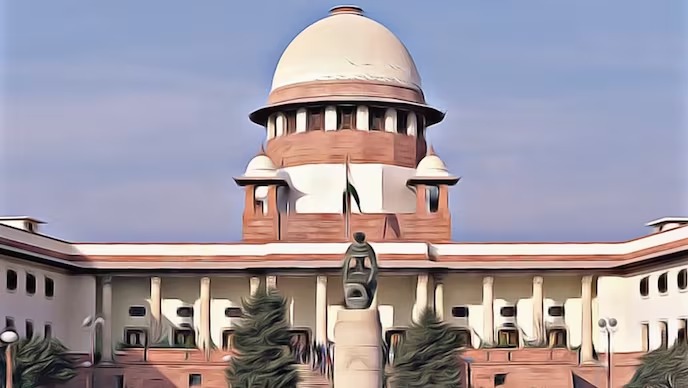
Supreme Court Quashes Madras HC Bail Condition: No Forced Marriage for Accused
Court Upholds Personal Liberty, Says Bail Cannot Be Linked to Marriage
Judges Stress Legal Process Must Not Pre-Judge Allegations of False Promise
By Our Legal Reporter
New Delhi: February 2026:
On January 30, 2026, the Supreme Court of India delivered a landmark ruling by striking down a Madras High Court order that had directed a man accused of deceiving a woman with a false promise of marriage to marry her in exchange for bail. The apex court held that such a condition was unconstitutional, violated the accused’s fundamental rights, and amounted to judicial overreach.
Also Read: Karnataka High Court Orders Probe into Illegal Sand Mining, Political Links Under Scrutiny
The case has sparked national debate on the intersection of criminal law, personal liberty, and gender justice, highlighting the need for courts to balance victim protection with constitutional safeguards.
[Courtkutchehry.com Book Recommendation. Please Check As you enjoy reading this story.)
📘 If you want practical guidance on drafting wills, codicils, and probate procedures, Will Writing Simplified is an invaluable resource.
🔹 Buy on Amazon
🔹 Buy on Flipkart
Background of the Case
- Accusation: The man was accused of inducing a woman into a sexual relationship by falsely promising marriage.
- Madras HC Order (Jan 5, 2026): The High Court granted interim bail on the condition that the accused submit an affidavit promising to marry the complainant and produce a marriage certificate.
- Supreme Court Appeal: The accused challenged the order, arguing that coercion into marriage violated his rights and pre-judged the allegations.
Supreme Court’s Observations
- No Coercion into Marriage: The Court held that marriage is a matter of free will and cannot be imposed by judicial order.
- Violation of Liberty: Linking bail to marriage infringes on the accused’s constitutional right to personal liberty under Article 21.
- Pre-Judging Allegations: The HC order assumed guilt before trial, undermining the presumption of innocence.
- Legal Principle: Bail conditions must relate to ensuring presence at trial or preventing misuse of liberty, not forcing personal decisions.
Broader Legal Context
- False Promise of Marriage Cases: Under the Bharatiya Nyaya Sanhita (BNS), 2023, sexual intercourse by deceit is a specific offence. Courts must assess evidence, not impose marriage as remedy.
- Live-In Relationships: The Madras HC had earlier equated live-in relationships with Gandharva marriages to protect women, but the SC clarified that legal remedies must follow statutory provisions, not forced marital arrangements.
- Judicial Discipline: The ruling reinforces that courts cannot impose conditions beyond the scope of law.
Also Read: Budget 2026 Amnesty: Small Taxpayers Can Declare Hidden Foreign Assets, Avoid Prosecution
Expert Opinions
- Legal Scholars: Applaud the SC for upholding liberty and preventing misuse of bail conditions.
- Women’s Rights Advocates: Stress that while protecting victims is crucial, forced marriage is not justice.
- Criminal Lawyers: Note that the ruling provides clarity on bail jurisprudence, ensuring conditions remain lawful and reasonable.
Comparative Global Context
- United States & UK: Courts focus on evidence and trial; marriage is never imposed as remedy.
- France & Australia: Similar emphasis on consent and liberty, with strict separation between criminal justice and personal relationships.
- India’s Position: The SC ruling aligns India with global standards, ensuring judicial orders respect autonomy.
Implications of the Ruling
Also Read: Supreme Court: Bail Cannot Be Cancelled Solely on Oral Dying Declaration, Upholds Allahabad HC Order
- For Courts: Clear guidance that bail conditions must not intrude into personal life choices.
- For Victims: Ensures justice is pursued through trial and evidence, not coerced settlements.
- For Accused: Reinforces presumption of innocence and protection of liberty.
- For Society: Sets precedent against judicial overreach in sensitive personal matters.
Conclusion
The Supreme Court’s decision to set aside the Madras HC order is a landmark in safeguarding personal liberty and judicial discipline. By ruling that marriage cannot be imposed as a bail condition, the Court has reaffirmed the principles of consent, autonomy, and presumption of innocence. The judgment will serve as a guiding precedent for future cases involving false promises of marriage, ensuring justice is pursued within the boundaries of law.
Keywords for Faster Searches
- Supreme Court Madras HC bail marriage case
- Forced marriage bail condition India
- Bharatiya Nyaya Sanhita false promise marriage
- Supreme Court personal liberty bail ruling
- Madras HC Gandharva marriage live-in relationships
- SC sets aside HC order bail condition
- Bail jurisprudence India Supreme Court ruling
- False promise of marriage criminal law India
Also Read: Supreme Court Restores Compensation Award for Innocent Landowner in Railway Project Case