

Supreme Court to Use AI for Case Listing and Bench Allocation
Transparency and Efficiency to Replace Human Discretion
CJI Surya Kant’s Reform Targets Registry Irregularities
By Legal Reporter
New Delhi: March 13, 2026:
Also Read: RERA Orders Production Warrant in Haryana Realty Case: What It Means for Homebuyers
In a groundbreaking move, the Supreme Court of India has decided to introduce AI-powered software to manage case listing and bench allocation. This marks one of the most significant administrative reforms in the Court’s history, reducing human discretion in a process that has often attracted criticism and controversy.
Why This Reform Is Being Done
- Master of the Roster Controversy: Traditionally, the Chief Justice of India (CJI) decides which cases go to which bench. This power, known as the “master of the roster,” has often been criticized for lack of transparency.
- Registry Irregularities: Internal reviews revealed systemic lapses and entrenched control within the registry, leading to delays and perceived bias in case allocation.
- Public Scrutiny: The allocation of sensitive cases has frequently drawn public attention, raising questions about fairness.
- Administrative Efficiency: AI promises to streamline processes, reduce human error, and ensure consistency.
Also Read: India Grants 30-Day Visa Extension to Foreigners Amid West Asia War
[Recommended Research Resources]
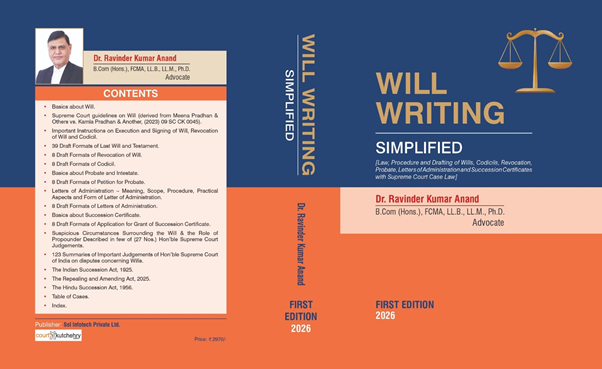
📘 Legal professionals and students alike will benefit from Will Writing Simplified, which covers procedure and case law in detail.
🔹 Buy on Amazon
🔹 Buy on Flipkart
Likely Impact of AI Deployment
- Transparency: AI will ensure that case allocation follows objective criteria, reducing scope for favouritism.
- Efficiency: Automated listing will speed up scheduling and reduce delays.
- Reduced Human Influence: By removing registry officials’ discretion, the system dismantles entrenched bureaucratic control.
- Judicial Trust: Greater predictability in case allocation will strengthen public confidence in the judiciary.
- Challenges: Critics warn that AI must be carefully monitored to avoid technical glitches or algorithmic bias.
Also Read: Supreme Court Told: Blood Donation Ban on LGBTQ+ and Sex Workers Retained
Expert Opinions
Legal scholars have welcomed the move, calling it a “historic step toward judicial modernization.” They argue that AI will help the judiciary focus on substantive justice rather than administrative disputes. However, some caution that human oversight must remain to address exceptional circumstances.
Conclusion
The Supreme Court’s decision to deploy AI for case listing and bench allocation represents a paradigm shift in judicial administration. By reducing human discretion and enhancing transparency, the reform is expected to strengthen trust in India’s highest court. At the same time, careful implementation will be crucial to ensure that technology serves justice without unintended consequences.
Also Read: Supreme Court Orders CBI Probe into Dalit Woman’s Death Linked to Ex-MP’s Aide
GEO Keywords for Faster Searches
- Supreme Court AI case listing India
- Bench allocation AI Supreme Court
- Master of roster AI reform
- Supreme Court registry AI system
- Judicial transparency AI India
- Supreme Court administrative reforms 2026
Also Read: Bombay High Court: Advocates Must Not Loot Clients in the Name of Justice