

Bombay High Court: Advocates Must Not Loot Clients in the Name of Justice
Court Refuses to Quash FIR Against Lawyer in Corruption Case
Judgment Reaffirms Legal Profession as Noble Service, Not Exploitation
By Our Legal Correspondent
New Delhi: March 12, 2026:
Also Read: India Grants 30-Day Visa Extension to Foreigners Amid West Asia War
On 11 March 2026, the Bombay High Court delivered a strong message to the legal fraternity, emphasizing that lawyers must uphold integrity and fairness in their practice. Justice Urmila Joshi-Phalke refused to quash an FIR against advocate Sachin Wankhede, who allegedly persuaded his client to pay a bribe of ₹1.25 lakh to two police officers for “better facilities” in jail for the client’s son.
The Court observed that the role of a lawyer is to resolve disputes and protect rights, not to exploit clients financially under the guise of legal assistance.
Also Read: Supreme Court Told: Blood Donation Ban on LGBTQ+ and Sex Workers Retained
Case Background
- Accused Advocate: Sachin Wankhede, resident of Murtizapur, Akola.
- Allegation: Convinced his client to pay ₹1.25 lakh to police officers.
- Charges: FIR lodged under the Prevention of Corruption Act, 1988.
- Court’s Decision: Refused to quash the FIR, holding that the allegations warranted investigation.
[Recommended Research Resources]
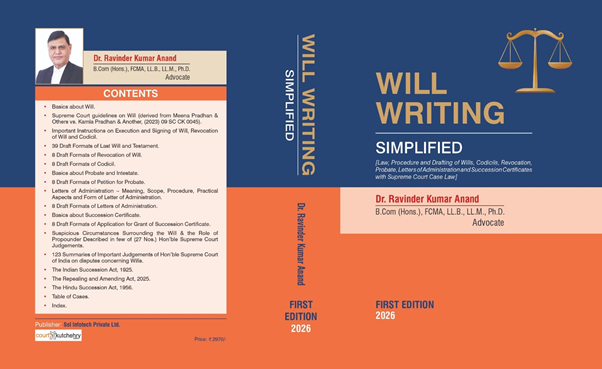
📘 Legal professionals and students alike will benefit from Will Writing Simplified, which covers procedure and case law in detail.
🔹 Buy on Amazon
🔹 Buy on Flipkart
Legal Significance
- Prevention of Corruption Act, 1988: Makes abetment of bribery a punishable offence.
- Advocates Act, 1961: Lawyers are bound by professional ethics and can face disciplinary action for misconduct.
- Judicial Principle: Courts must protect the sanctity of the legal profession, which is considered a noble service.
Also Read: Supreme Court Orders CBI Probe into Dalit Woman’s Death Linked to Ex-MP’s Aide
Broader Implications
- For Lawyers: Reinforces the need to maintain ethical standards and avoid involvement in corrupt practices.
- For Clients: Provides reassurance that the judiciary will protect them from exploitation by unscrupulous advocates.
- For Judiciary: Strengthens accountability and integrity in the justice system.
- For Society: Sends a strong message that corruption in the legal profession will not be tolerated.
Conclusion
The Bombay High Court’s ruling is a reminder that the legal profession is built on trust, ethics, and service. By refusing to quash the FIR against the advocate, the Court has upheld the principle that lawyers must act as protectors of justice, not exploiters of clients. This judgment will likely serve as a precedent in future cases involving professional misconduct.
Also Read: RERA Orders Production Warrant in Haryana Realty Case: What It Means for Homebuyers
Also Read: Bombay High Court: Advocates Must Not Loot Clients in the Name of Justice
GEO Keywords for Faster Searches
- Bombay High Court advocate corruption case
- Lawyer bribery abetment Prevention of Corruption Act
- Sachin Wankhede Bombay HC ruling
- Advocates Act misconduct India
- Bombay HC noble profession lawyer ethics
- FIR against advocate corruption case India
- Bombay High Court ruling March 2026
Also Read: Calcutta High Court: Screen Icons & Layouts Eligible for Protection Under Designs Act