
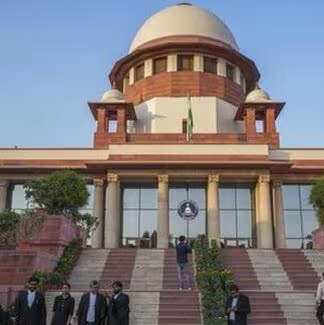
COURTKUTCHEHRY SPECIAL SERIES ON LANDMARKS JUDGEMENTS ON WILLS, CODICIL & PROBATE
Shashi Kumar Banerjee & Ors. v. Subodh Kumar Banerjee & Ors.: Supreme Court Upholds Probate of 1943 Will
Expert Evidence Found Inconclusive, Substantive Proof Prevails
District Judge’s Decree Restored, High Court’s Rejection Overturned
By Vishwas Kumar
New Delhi: March 31, 2026:
In a landmark judgment delivered on 13 September 1963, the Supreme Court of India resolved a long-standing probate dispute in Shashi Kumar Banerjee & Ors. v. Subodh Kumar Banerjee (Since Deceased) Through His Legal Representatives & Ors. The case revolved around the authenticity of a will allegedly executed on 29 August 1943. The central question was whether the testator’s signature on the will was genuinely affixed at that time or added later.
The Calcutta High Court had earlier refused probate, relying heavily on the testimony of a handwriting expert who cast doubt on the signature’s genuineness. However, the Supreme Court, emphasized that expert evidence is inherently inconclusive and cannot outweigh substantive oral and intrinsic proof. The Court noted that multiple witnesses and surrounding circumstances strongly supported the execution of the will in 1943.
The bench, comprising Justices P.B. Gajendragadkar, K. Subba Rao, K.N. Wanchoo, N. Rajagopala Ayyangar, and J.R. Mudholkar, unanimously held that the High Court erred in rejecting probate solely on expert testimony. The ruling reinstated the District Judge’s decree granting probate, reaffirming the principle that expert opinion must remain subordinate to direct and substantive evidence.
This decision is significant in Indian probate law, underscoring that while handwriting experts may assist courts, their opinions cannot override credible oral testimony and intrinsic evidence. The judgment strengthened the evidentiary value of substantive proof in will disputes, ensuring that technical doubts do not unjustly defeat genuine testamentary intentions.
For More, Read Here the Summary of the Judgement from the Book: WILL WRITING SIMPLIFIED, read below or open page no 436, Chapter 14.1 in the book. (Online book purchase link available here on: Buy online: Amazon | Flipkart
|
|
Case Summary |
: |
Shashi Kumar Banerjee & Ors. v. Subodh Kumar Banerjee (Since Deceased) Through His Legal Representatives & Ors. |
|
|
Court |
: |
Supreme Court of India |
|
|
Citations |
: |
(1963) 09 SC CK 0012: Civil Appeal No. 295 of 1960. |
|
|
Link |
: |
|
|
|
Decided on |
: |
13 September 1963 |
|
|
Coram |
: |
Hon’ble Mr. Justice P.B. Gajendragadkar, Hon’ble Mr. Justice K. Subba Rao, Hon’ble Mr. Justice K.N. Wanchoo, Hon’ble Mr. Justice N. Rajagopala Ayyangar and Hon’ble Mr. Justice J.R. Mudholkar. |
|
|
Relevant Paragraphs |
: |
Para Nos.1–26 |
1. Facts of the Case:
The appellants, sons of Ramtaran Banerjee (testator), sought probate of a will dated 29 August 1943. The testator, aged 97 at death (1 April 1947), had executed several property transfers during his lifetime. The will, wholly in his handwriting, was alleged to be his last testament. Other sons opposed probate, alleging lack of due execution, testamentary incapacity, and coercion. The District Judge held the will genuine, duly executed and attested, and granted probate. The High Court reversed, accepting a handwriting expert’s opinion that the signature was made after 1943.
2. Law Points Involved:
(i). Proof of due execution and attestation under Section 63, Indian Succession Act, 1925.
(ii). Role and value of expert evidence under Sections 3 & 45, Indian Evidence Act, 1872.
(iii). Burden of proof and removal of suspicious circumstances in propounding a will.
3. Acts / Provisions / Articles Referred:
(i). Succession Act, 1925 — Sections 63, 289.
(ii). Evidence Act, 1872 — Sections 3, 45.
4. Judgments Referred:
(i). H. Venkatachala Iyengar v. B.N. Thimmajamma, (1958) 11 SC CK 0008.
(ii). Rani Purnima Debi v. Kumar Khagendra Narayan Deb, (1961) 08 SC CK 0021.
5. Obiter Dicta:
Expert opinion cannot override positive testimony of attesting witnesses, especially where the will is holograph and devoid of suspicious circumstances. Opinion evidence must be corroborated by substantive or circumstantial proof.
6. Ratio Decidendi:
The Supreme Court held that:
(i). When a holograph will bears the admitted signature of the testator and no suspicious circumstance exists, minimal formal proof suffices.
(ii). The onus of proving due execution and attestation is discharged once the propounder establishes testamentary capacity and compliance with Section 63.
(iii). Expert handwriting opinion is merely advisory; it cannot displace direct and credible attesting-witness evidence.
7. Final Ruling:
Appeal allowed. High Court’s order set aside. Judgment of District Judge restored granting probate. Costs awarded to appellants throughout.
8. Gist highlighting dispute with final decision:
The dispute centered on whether the testator’s signature dated 29 August 1943 was genuine or made later. The High Court relied solely on the handwriting expert to reject probate. The Supreme Court, per K.N. Wanchoo J., found intrinsic and oral evidence overwhelmingly supported execution in 1943. It ruled that expert testimony was inconclusive and subordinate to substantive proof, reinstating the District Judge’s decree granting probate.
Read full Judgement Here:
Shashi Kumar Banerjee & Ors. v. Subodh Kumar Banerjee (Since Deceased) Through His Legal Representatives & Ors.
Supreme Court of India
(1963) 09 SC CK 0012: Civil Appeal No. 295 of 1960.
You Can Also Purchase the Book from here on: Buy online: Amazon | Flipkart
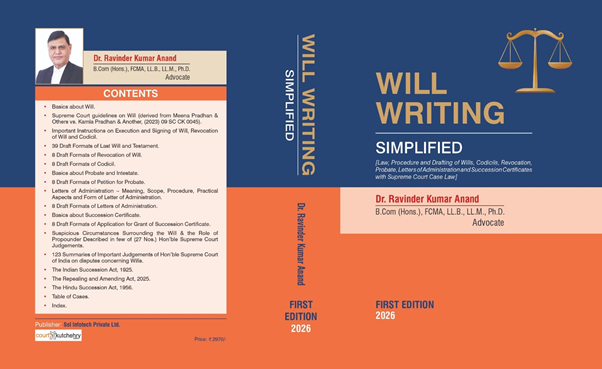
LEGAL RESEARCH RESOURCES: Check out 123 Key Judgements, as highlighted in the book, WILL WRITING SIMPLIFIED, for the quick research and reference purposes. Click the link here: https://www.courtkutchehry.com/pages/blog/123-supreme-court-judgments-on-wills/
Keywords:
Shashi Kumar Banerjee v. Subodh Kumar Banerjee case, 1963 Supreme Court probate judgment, Indian probate law, handwriting expert evidence, will authenticity dispute, Justice K.N. Wanchoo, District Judge decree restored, Supreme Court probate ruling, execution of will 1943, landmark probate case India