

COURTKUTCHEHRY SPECIAL SERIES ON LANDMARKS JDUGEMENTS ON WILLS, CODICIL & PROBATE
N.P. Saseendran v. N.P. Ponnamma & Ors.: Supreme Court Upholds Daughter’s Ownership Rights
1985 Document Ruled as Settlement/Gift, Not Will
Cancellation and Sale to Son Declared Void
By Vishwas Kumar
New Delhi: March 19, 2026
In a landmark judgment, the Supreme Court of India in N.P. Saseendran v. N.P. Ponnamma & Ors. (Civil Appeal No. 4312 of 2025) settled a long-standing family property dispute by affirming the daughter’s ownership rights. The Division Bench comprising, Justice J.B. Pardiwala and Justice R. Mahadevan ruled that the father’s 1985 document executed in favour of his daughter was not a testamentary Will but a settlement deed/gift operative in praesenti.
Also Read: Savitri Bai & Another v. Savitri Bai: Supreme Court Upholds Validity of Will Over Sale Deed
The dispute arose when the father’s document was contested by the son, who claimed it was merely a Will, effective only after the father’s death. The lower courts had accepted this interpretation. However, the High Court reversed the finding, holding that the document conveyed present ownership rights to the daughter, subject to the father’s reserved life interest. The Supreme Court upheld this view, emphasizing that the language and intent of the document clearly indicated a settlement/gift rather than a Will.
The Court further declared that the father’s subsequent cancellation of the deed and sale of the property to his son were legally void. Since the gift had already vested ownership in the daughter, the father had no authority to revoke or transfer the property thereafter. Consequently, the daughter’s ownership was confirmed as valid and binding.
This ruling reinforces the principle that once a gift or settlement deed is executed and accepted, it operates immediately, even if the donor reserves certain rights during their lifetime. The judgment is significant in clarifying the distinction between testamentary dispositions and present transfers, ensuring protection of women’s property rights in family disputes.
Also Read: Thangam & Another v. Navamani Ammal: Supreme Court Upholds Validity of Registered Will
For More, Read Here the Summary of the Judgement from the Book: WILL WRITING SIMPLIFIED, read below or open page no 436, Chapter 14.1 in the book. (Online book purchase link available here on: Buy online: Amazon | Flipkart
| Case Summary | : | N.P. Saseendran v. N.P. Ponnamma & Ors. | |
| Court | : | Supreme Court of India | |
| Citations | : | (2025) 03 SC CK 0067: Civil Appeal No. 4312 of 2025. | |
| Link | : | https://www.courtkutchehry.com/judgements/1214477/np-saseendran-vs-np-ponnamma-ors | |
| Decided on | : | 24 March 2025 | |
| Coram | : | Hon’ble Mr. Justice J.B. Pardiwala and Hon’ble Mr. Justice R. Mahadevan (Division Bench) | |
| Relevant Paragraphs | : | Paras 1–15.2, 11–15 (especially Paras 11.1–11.5, 13, 14, 15, 15.1 & 15.2) |
1. Facts of the Case:
The dispute arose between a daughter (plaintiff) and her brother (defendant-appellant) concerning a property conveyed by their father through a registered document dated 26.06.1985. The father later executed a cancellation deed and sale deed dated 19.10.1993 in favour of the son. The trial court and the first appellate court held the 1985 document to be a Will, not a gift, dismissing the daughter’s suit. The Kerala High Court reversed the findings, construing the document as a gift deed and declaring the later deeds void. The son appealed to the Supreme Court.
2. Law Points Involved:
(i). Whether the 1985 document constituted a Gift, Settlement, or Will.
(ii). Determination of substantial question of law under Section 100 CPC.
(iii). Effect of reservation of life interest and right of mortgage by donor.
(iv). Nature of acceptance of gift and requirement of possession.
(v). Principles governing distinction and overlap between Gift, Settlement, and Will.
3. Acts / Provisions / Articles Referred:
(i). Constitution of India — Articles 133, 142;
(ii). Code of Civil Procedure — Sections 100, 109;
(iii). Registration Act — Section 17;
(iv). Transfer of Property Act — Sections 11, 122, 123, 126, 127, 128;
(v). Specific Relief Act — Sections 2(b), 2(q);
(vi). Indian Stamp Act — Articles 31, 33;
(vi). Succession Act — Sections 2(h), 59, 61, 62, 63, 70, 89.
4. Judgments Referred:
(i). Ramaswami Naidu v. Gopalakrishna Naidu, (1977) 02 MAD CK 0018
(ii). P.K. Mohan Ram v. B.N. Ananthachary, (2010) 03 SC CK 0040.
(iii). K. Balakrishnan v. K. Kamalam, (2003) 12 SC CK 0070
(iv). Renikuntla Rajamma v. K. Sarwanamma, (2014) 07 SC CK 0039,
Also Read: Lilian Coelho & Others v. Myra Philomena Coalho: Supreme Court Restores Scrutiny of Suspicious Wills
(v). Daulat Singh v. State of Rajasthan, (2020) 12 SC CK 0020.
(vi). Ramachandra Reddy v. Ramulu Ammal, (2024) 11 SC CK 0034.
(vii). Satya Pal Anand v. State of M.P., (2016) 10 SC CK 0105.
(viii). Navneet Lal alias Rangi v. Gokul & Ors., (1975) 12 SC CK 0025, https://www.courtkutchehry.com/judgements/648579/navneet-lal-alias-rangi-appellant-hash-gokul-and-others-respondent
(ix). Mathai Samuel v. Eapen Eapen, (2012) 11 SC CK 0055.
(x). Mauleshwar Mani v. Jagdish Prasad, (2002) 01 SC CK 0081.
Also Read: Gopal Krishan & Others v. Daulat Ram & Others: Supreme Court Restores Validity of Will
(xi). Sawarni v. Inder Kaur, (1996) 08 SC CK 0169.
5. Obiter Dicta:
(i). Registration of a gift by the donee itself amounts to valid acceptance; delivery of possession is not mandatory.
(ii). Creation of life interest or limited right to mortgage does not alter the character of a settlement once ownership is transferred in praesenti.
(iii). Even if later clauses appear repugnant, earlier dispositive clauses vesting rights prevail (Section 11 TPA).
(iv). Nomenclature of document is immaterial; intention and content control interpretation.
6. Ratio Decidendi:
A document conveying property “in consideration of love and affection” and vesting rights in praesenti, even while reserving life interest or limited power to mortgage, constitutes a Settlement Deed and not a Will. Such transfer becomes effective on execution and registration; unilateral cancellation or subsequent sale by the donor is impermissible under Section 126 TPA. The High Court rightly treated the 1985 deed as a gift/settlement.
7. Final Ruling:
Appeal dismissed. The Supreme Court upheld the High Court’s decision that the 1985 instrument was a settlement deed creating vested rights in the daughter; the later cancellation and sale deeds were invalid.
8. Gist Highlighting Dispute with Final Decision:
Father’s 1985 document in favour of daughter—disputed as Will or Gift. Courts below termed it Will; High Court and Supreme Court held it to be Settlement/Gift, operative in praesenti despite life-interest reservation. Cancellation and subsequent sale to son held void; daughter’s ownership declared valid.
Read full Judgement Here:
Supreme Court of India
(2025) 03 SC CK 0067: Civil Appeal No. 4312 of 2025.
https://www.courtkutchehry.com/judgements/1214477/np-saseendran-vs-np-ponnamma-ors
You Can Also Purchase the Book from here on: Buy online: Amazon | Flipkart
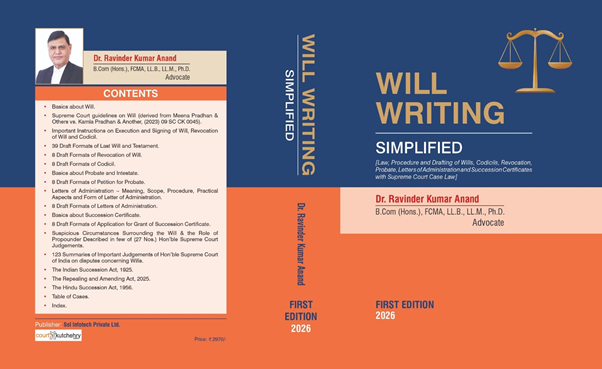
OUR RECOMMENDATION: Check out 123 Key Judgements, as highlighted in the book, WILL WRITING SIMPLIFIED, for the quick research and reference purposes. Click the link here: https://www.courtkutchehry.com/pages/blog/123-supreme-court-judgments-on-wills/
Also Read: N.P. Saseendran v. N.P. Ponnamma & Ors.: Supreme Court Upholds Daughter’s Ownership Rights
SEO-Friendly Keywords
- N.P. Saseendran v. N.P. Ponnamma Supreme Court judgment
- Settlement deed vs Will India case law
- Supreme Court property dispute daughter’s rights
- Gift deed with life interest validity
- Civil Appeal No. 4312 of 2025 property ruling