

Supreme Court Declares Age Limit for Maternity Benefits Unconstitutional
Adoptive Mothers Granted Equal Rights
Court Expands Scope of Maternity Protection
By Legal Reporter
New Delhi: March 17, 2026:
In a landmark judgment delivered recently, the Supreme Court of India held that the age limit imposed on maternity benefits for adoptive mothers is unconstitutional. The Court ruled that denying maternity leave to women adopting children older than three months violates their fundamental rights under Articles 14 and 21 of the Constitution. This decision marks a significant step toward gender equality and recognition of diverse forms of motherhood.
[Recommended Research Resources]
Also Read: Samiullah Vs. State of Bihar & Ors.: Supreme Court Quashes Bihar Mutation Rule
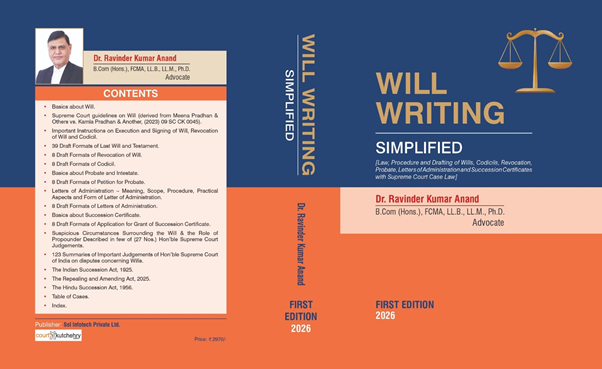
📘 Legal professionals, families and students alike will benefit from Will Writing Simplified, which covers procedure and case law in detail.
🔹 Buy online: Amazon | Flipkart
Background of the Case
- Maternity Benefit Act, 1961: Provides maternity leave to biological mothers and adoptive mothers, but only if the adopted child is below three months of age.
- Legal Challenge: A petition was filed challenging the discriminatory provision, arguing that adoptive mothers of older children also require time to bond and care for their child.
- Supreme Court Bench: Led by Justice Pardiwala and Justice R. Mahadevan, the bench examined whether the restriction was arbitrary and violative of constitutional rights.
Also Read: Jyoti Sharma vs. Vishnu Goyal & Anr.: Supreme Court Upholds Landlord’s Rights, Orders Eviction
Court’s Observations
- Equality Principle: The Court held that motherhood cannot be divided into categories of biological and adoptive, and both deserve equal protection.
- Right to Life & Dignity: Denying maternity benefits to adoptive mothers of older children undermines their right to dignity and family life.
- Unconstitutional Restriction: The three-month age limit was declared arbitrary, discriminatory, and violative of Article 14 (Equality before Law).
- Progressive Interpretation: The Court emphasized that laws must evolve with social realities, recognizing adoption as a legitimate path to motherhood.
Implications of the Ruling
- For Adoptive Mothers: Ensures equal access to maternity leave regardless of the age of the adopted child.
- For Employers: Mandates compliance with expanded maternity benefit provisions, requiring policy changes in workplaces.
- For Lawmakers: Signals the need to amend the Maternity Benefit Act, 1961 to align with constitutional principles.
- For Society: Strengthens the recognition of adoption as a valid and respected form of family building.
Broader Context
India has been progressively expanding maternity rights, with amendments in 2017 increasing maternity leave to 26 weeks for biological mothers. However, adoptive mothers faced restrictions that limited their ability to bond with older children. The Supreme Court’s ruling bridges this gap, ensuring that all mothers—biological or adoptive—are treated equally under the law.
Globally, countries like the UK and US provide parental leave to adoptive parents without age restrictions, and India’s ruling brings its legal framework closer to international standards.
Conclusion
The Supreme Court’s judgment is a milestone in gender justice and family law. By striking down the age limit for maternity benefits, the Court has ensured that adoptive mothers receive equal recognition and support. This ruling not only strengthens constitutional protections but also promotes inclusivity and dignity in motherhood.
Keywords for SEO & Faster Searches
Supreme Court maternity benefits ruling, adoptive mothers’ rights India, age limit unconstitutional maternity leave, Maternity Benefit Act 1961 adoption, Justice Hima Kohli maternity judgment, Article 14 equality motherhood India, adoption maternity leave Supreme Court