

Karnataka High Court Quashes Case Against Septuagenarian Husband
Court Finds No Evidence of Cruelty
Warns Against Misuse of Section 498A IPC
By Our Legal Correspondent
New Delhi: March 17, 2026:
Also Read: K. S. Dinachandran vs. Shyla Joseph & Ors: Supreme Court Upholds Validity of Contested Will
In a significant ruling, the Karnataka High Court has quashed criminal proceedings against a septuagenarian husband accused of cruelty under Section 498A of the Indian Penal Code (IPC). Justice Anil B. Katti observed that the allegations lacked substance and that continuing the case would amount to harassment of an elderly man. The decision highlights judicial concern over the misuse of dowry and cruelty provisions in matrimonial disputes.
[Recommended Research Resources]
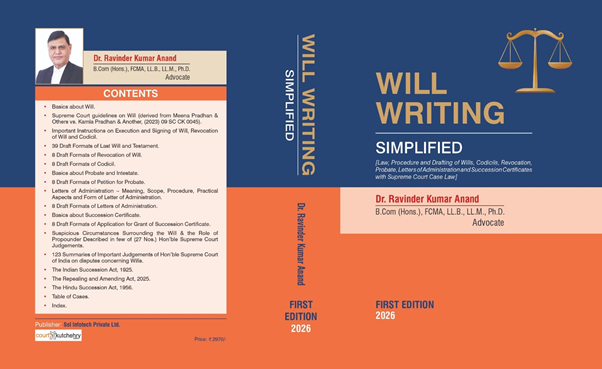
[📘 Legal professionals, families and students alike will benefit from Will Writing Simplified, which covers procedure and case law in detail.
🔹 Buy online: Amazon | Flipkart
Also Read: Supreme Court Forms 9-Judge Bench to Decide ‘Industry’ Definition Under Labour Law
Background of the Case
- The wife had filed a complaint alleging cruelty and harassment by her husband and in-laws.
- The police registered a case under Section 498A IPC and related provisions.
- The husband, aged over 70, approached the High Court seeking quashing of proceedings, arguing that the allegations were vague and unsupported by evidence.
- The Court found that the complaint did not disclose specific acts of cruelty and was filed after a long delay, raising doubts about its credibility.
Court’s Observations
- No Prima Facie Case: The Court held that the allegations were general in nature and did not establish cruelty as defined under Section 498A IPC.
- Elderly Accused: The Court noted that dragging a septuagenarian into prolonged criminal litigation without evidence was unjust.
- Misuse of Law: Justice Katti emphasized that while Section 498A was enacted to protect women from dowry-related cruelty, it should not be misused to settle personal scores.
- Quashing Power: Exercising powers under Section 482 CrPC, the Court quashed the proceedings to prevent abuse of process and secure justice.
Also Read: Gift Deed vs Will: The Big Property Transfer Decision in India
Implications of the Ruling
- For Judiciary: Reinforces the principle that criminal law should not be used as a tool of harassment.
- For Families: Highlights the need for genuine evidence in matrimonial disputes.
- For Society: Balances protection of women with safeguards against misuse of legal provisions.
- For Legal Practice: Encourages careful scrutiny of complaints before invoking serious criminal charges.
Broader Context
Section 498A IPC has been a subject of debate for decades. While it provides crucial protection against dowry harassment and cruelty, courts have repeatedly cautioned against its misuse. The Supreme Court has earlier directed that complaints under 498A should be examined carefully to avoid unnecessary arrests and harassment of families. The Karnataka High Court’s ruling adds to this judicial trend of balancing protection with fairness.
Conclusion
The Karnataka High Court’s decision to quash proceedings against a septuagenarian husband underscores the judiciary’s role in preventing misuse of criminal law. By insisting on evidence and protecting elderly citizens from harassment, the Court has reinforced the principle that justice must be fair to both sides in matrimonial disputes.
Also Read: J&K High Court: No Monthly Maintenance for Wife Living Separately by Consent
Keywords for SEO & Faster Searches
Karnataka High Court 498A ruling, septuagenarian husband case quashed, misuse of Section 498A IPC, cruelty allegations India law, Justice Anil B Katti ruling, dowry harassment law misuse, quashing proceedings matrimonial disputes India
Also Read: Supreme Court Upholds SEBI Nod for WeWork India IPO