

Supreme Court: Banks Must Follow Customer Instructions, Canara Bank Held Liable for Wrongful Remittance
Court Upholds Madras High Court Ruling Against Canara Bank
Guarantee Is Independent and Enforceable Under Contract Act
By Legal Reporter
New Delhi: March 18, 2026:
In a landmark ruling, the Supreme Court of India has emphasized that banks are strictly bound to follow customer instructions and cannot act contrary to them. The Court upheld the liability of Canara Bank for erroneously remitting USD 100,000 to a vessel owner instead of the intended recipient, Goltens, a Dubai-based company. The judgment, delivered by a bench of Justices JB Pardiwala and R Mahadevan, dismissed the bank’s appeal and affirmed the Madras High Court’s ruling requiring indemnification of Archean Industries Pvt. Ltd.
Case Background
Also Read: Samiullah Vs. State of Bihar & Ors.: Supreme Court Quashes Bihar Mutation Rule
- The dispute dates to 1998, involving repair charges for the vessel Master Panos.
- Goltens carried out repair works but remained unpaid. A settlement required USD 100,000 to be paid.
- Archean Industries, which had a charter party agreement with the vessel owner, agreed to divert part of its freight payment to Goltens.
- Archean issued a corporate guarantee and instructed Canara Bank to remit the amount to Goltens.
- Instead, Canara Bank mistakenly transferred the funds to the vessel owner’s account in the US.
- Goltens filed a recovery suit, leading to prolonged litigation.
[📘 Recommended Reading]
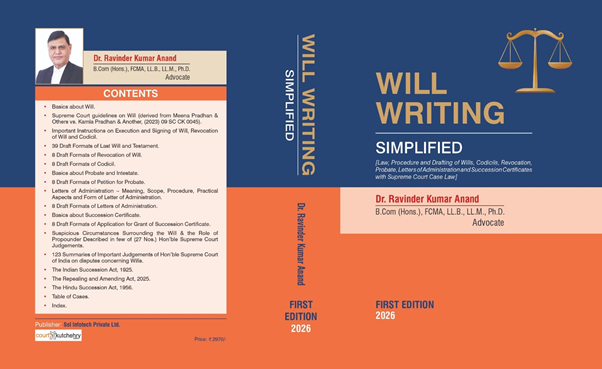
Legal professionals, families and students alike will benefit from Will Writing Simplified, which covers procedure and case law in detail.
🔹 Amazon
🔹 Flipkart
Also Read: Jyoti Sharma vs. Vishnu Goyal & Anr.: Supreme Court Upholds Landlord’s Rights, Orders Eviction
Supreme Court’s Observations
- Banks must comply with clear customer instructions.
- If regulatory approval (like RBI clearance) was required, the bank should have sought clarification rather than diverting funds.
- The Court rejected Canara Bank’s reliance on the charter party agreement, noting the bank was not a party to it.
- The Court emphasized the fiduciary nature of banking relationships, stating: “The funds in question belonged to the customer, and the Bank could not have acted contrary to the mandate given by it.”
Guarantee as Independent Contract
- The Court held that Archean’s corporate guarantee was enforceable under Section 126 of the Indian Contract Act, 1872.
- Liability of a surety is co-extensive with that of the principal debtor under Section 128.
- Archean was estopped from denying liability since it acted upon the guarantee by retaining funds and issuing instructions.
Legal Significance
- Strengthens customer protection: Banks cannot override instructions.
- Clarifies liability: Mistakes in remittance fall on banks, not customers.
- Reinforces fiduciary duty: Banks must act as custodians of customer funds.
- Guarantee law clarified: Corporate guarantees are enforceable contracts.
Broader Implications
- For banks: Greater accountability in remittance and compliance with mandates.
- For businesses: Assurance that banks cannot divert funds without consent.
- For legal professionals: Case serves as precedent in banking law and contract enforcement.
Keywords for SEO & Faster Searches
- Supreme Court bank liability India
- Canara Bank wrongful remittance case
- Archean Industries corporate guarantee
- Banking fiduciary duty Supreme Court
- Customer instructions binding on banks
- Indian Contract Act Section 126 and 128
- Madras High Court Canara Bank ruling