
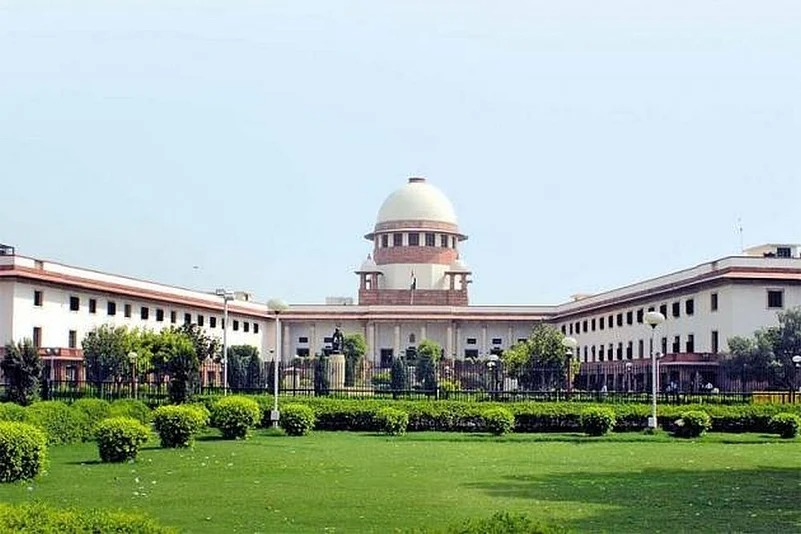
COURTKUTCHEHRY SPECIAL SERIES ON LANDMARKS JUDGEMENTS ON WILLS, CODICIL & PROBATE
A. Kamala Bai (D) Thr. Lrs. v. B. Kanna Rao (D) Thr. Lrs.: Supreme Court Dismisses Appeal Over Unproven Will
Unreliable Attesting Witness Undermines Testamentary Claim
Trial Court Decree and Natural Succession Left Intact
By Vishwas Kumar
New Delhi: March 31, 2026:
On 4 December 2025, the Supreme Court of India delivered a decisive ruling in A. Kamala Bai (D) Thr. Lrs. v. B. Kanna Rao (D) Thr. Lrs., clarifying the evidentiary burden in probate disputes. The case arose when the appellant sought to continue an appeal as a legal heir, relying on the strength of a contested will. The central issue was whether the will had been validly proved in accordance with law.
The bench, comprising Justice Prashant Kumar Mishra and Justice Vipul M. Pancholi, scrutinized the testimony of the sole attesting witness. The Court found the evidence unreliable and insufficient to establish due execution and attestation of the will. It emphasized that under Indian succession law, the propounder of a will must discharge the burden of proof by producing credible attesting witnesses and demonstrating that the testator executed the document freely and consciously.
Since the appellant failed to meet this standard, the Supreme Court dismissed the appeal. Importantly, the Court clarified that the decree of the Trial Court remained unaffected and that succession would follow the natural line of inheritance, rather than the disputed testamentary claim.
This ruling reinforces the principle that wills must be proved with strict compliance to statutory requirements. It underscores that unreliable or perfunctory testimony cannot override the safeguards designed to protect against fraudulent or coerced dispositions. By upholding natural succession in the absence of a validly proved will, the Supreme Court has once again highlighted the judiciary’s commitment to preserving the integrity of testamentary law in India.
For More, Read Here the Summary of the Judgement from the Book: WILL WRITING SIMPLIFIED, read below or open page no 436, Chapter 14.1 in the book. (Online book purchase link available here on: Buy online: Amazon | Flipkart
|
|
Case Summary |
: |
A. Kamala Bai (D) Thr. Lrs. Vs. B. Kanna Rao (D) Thr. Lrs. |
|
|
Court |
: |
Supreme Court of India |
|
|
Citations |
: |
(2025) 12 SC CK 0073: Civil Appeal No. 136 of 2013. |
|
|
Link |
: | |
|
|
Decided on |
: |
04 December 2025 |
|
|
Coram |
: |
Hon’ble Mr. Justice Prashant Kumar Mishra; Hon’ble Mr. Justice Vipul M. Pancholi |
|
|
Relevant Paragraphs |
: |
Paras 4–6 (limited scope of appeal and substitution issue); 7–14 (assessment of evidence of the attesting witness and proof of Will); 15–18 (conclusions, dismissal of appeal and clarification of effect). |
1. Facts of the Case:
The original plaintiff, Avanthakar Kamala Bai, filed a suit against her son seeking declaration of title, possession, recovery of past rent/damages and future rent in respect of the suit property. The Trial Court partly decreed the suit. The plaintiff preferred a first appeal. During pendency of the appeal, the plaintiff died. The present appellant sought substitution as legal representative on the basis of a Will dated 11.03.1999. The High Court rejected the application for substitution holding that the Will was not duly proved. The matter reached the Supreme Court limited to the question whether the appellant had authority to continue the appeal as legal representative of the deceased plaintiff.
2. Law Points Involved:
Proof of Will for substitution of legal representatives; evidentiary value and credibility of a sole attesting witness; mandatory compliance with statutory requirements for proving a Will; scope of appellate consideration confined to locus to continue proceedings.
3. Acts / Provisions / Articles Referred:
(i). Section 63(c), Indian Succession Act, 1925
(ii). Section 68, Indian Evidence Act, 1872
(iii). Order XXII Rule 3, Code of Civil Procedure, 1908
(iv). Section 96, Code of Civil Procedure, 1908
4. Judgments Referred:
No specific precedents cited; reliance placed on statutory provisions governing proof of Wills under the Indian Succession Act and the Evidence Act.
5. Obiter Dicta:
When a Will is sought to be proved through a sole attesting witness, the credibility of such witness is of paramount importance. If the witness admits that his examination-in-chief affidavit was not prepared on his instructions and that he is unaware of its contents, the Court must view such evidence with extreme caution.
6. Ratio Decidendi:
Where the sole attesting witness to a Will does not inspire confidence and statutory requirements under Section 63(c) of the Indian Succession Act and Section 68 of the Indian Evidence Act are not satisfied, the Will cannot be held to be proved, and a claimant deriving rights thereunder cannot be substituted as legal representative to continue the appeal.
7. Final Ruling:
8. Gist Highlighting Dispute with Final Decision:
The dispute concerned the right of the appellant to continue an appeal as legal heir on the strength of a Will. The Supreme Court held that the Will was not proved in accordance with law due to unreliable testimony of the sole attesting witness, dismissed the appeal, and clarified that the Trial Court decree and natural line of succession remained unaffected.
|
A. Kamala Bai (D) Thr. Lrs. Vs. B. Kanna Rao (D) Thr. Lrs. |
|
Supreme Court of India |
|
(2025) 12 SC CK 0073: Civil Appeal No. 136 of 2013. |
You Can Also Purchase the Book from here on: Buy online: Amazon | Flipkart
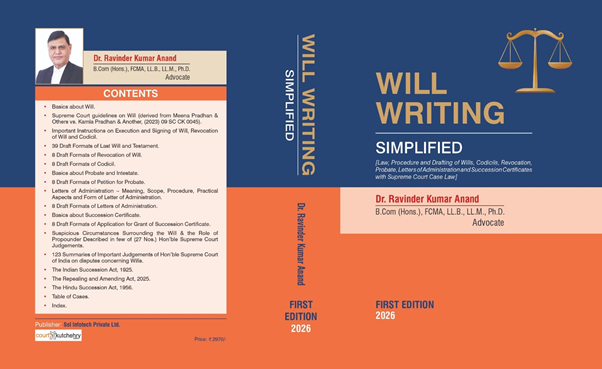
LEGAL RESEARCH RESOURCES: Check out 123 Key Judgements, as highlighted in the book, WILL WRITING SIMPLIFIED, for the quick research and reference purposes. Click the link here: https://www.courtkutchehry.com/pages/blog/123-supreme-court-judgments-on-wills/
Keywords:
- Kamala Bai v. B. Kanna Rao case, 2025 Supreme Court probate judgment, Indian succession law, proof of wills India, attesting witness unreliable, Justice Prashant Kumar Mishra, Justice Vipul M. Pancholi, dismissal of appeal probate, natural line of succession India, landmark will dispute case