
Supreme Court Examines DPDP Act: Public vs Personal Data Debate
CJI Surya Kant Questions Scope of ‘Public Data’
Petitioners Warn Against Privacy Risks in Sweeping Provisions
By Legal Reporter
New Delhi: March 13, 2026:
Also Read: RERA Orders Production Warrant in Haryana Realty Case: What It Means for Homebuyers
The Supreme Court of India has issued notice in petitions challenging the Digital Personal Data Protection Act, 2023 and its subsequent rules. The case, filed by journalist Geeta Seshu and the Software Freedom Law Centre, questions whether the Act adequately distinguishes between public data and personal data. The Court, led by Chief Justice Surya Kant, observed that data privacy is now a global issue and requires careful judicial scrutiny.
Crux of the Legal Debate
- Public vs Personal Data: Petitioners argue that the Act’s definition of “public data” is vague. For example, data shared on social media may be treated as public, but it can still reveal sensitive personal details.
- Sweeping Powers: The Act allows the government broad authority to exempt certain data processing activities, raising fears of surveillance and misuse.
- Privacy vs Governance: The challenge centers on balancing the right to privacy under Article 21 with the state’s need to regulate and use data for governance.
- RTI Act Amendment: Petitioners also highlight that amendments to the Right to Information Act, 2005 could weaken transparency by restricting access to public records.
Also Read: India Grants 30-Day Visa Extension to Foreigners Amid West Asia War
[Recommended Research Resources]
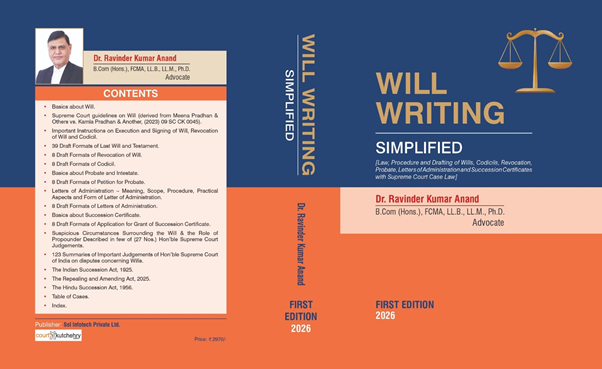
📘 Legal professionals and students alike will benefit from Will Writing Simplified, which covers procedure and case law in detail.
🔹 Buy on Amazon
🔹 Buy on Flipkart
Supreme Court’s Observations
- CJI Surya Kant: “If there are sweeping provisions in the Act, then how do we protect individuals?”
- Bench Composition: Chief Justice Surya Kant, Justice Joymalya Bagchi, and Justice Vipul Pancholi are hearing the matter.
- Global Context: The Court acknowledged that data protection is a worldwide concern, citing parallels with EU’s GDPR and other international frameworks.
Also Read: Supreme Court Told: Blood Donation Ban on LGBTQ+ and Sex Workers Retained
Implications of the Case
- For Citizens: Clarification of what counts as personal data will directly affect how individuals’ information is collected, stored, and shared.
- For Government: The ruling will determine the extent of state power in accessing and processing citizen data.
- For Businesses: Tech companies and digital platforms must align with stricter compliance standards if personal data definitions are broadened.
- For Transparency: The balance between privacy and the public’s right to information will shape democratic accountability.
Expert Views
Legal experts argue that the case could become a landmark in India’s data protection jurisprudence, like the Puttaswamy v. Union of India (2017) ruling that recognized privacy as a fundamental right. They warn that vague definitions of public data could undermine privacy protections and enable mass surveillance.
Conclusion
The Supreme Court’s scrutiny of the DPDP Act highlights the tension between privacy and governance in India’s digital age. By questioning the scope of “public data,” the Court is set to define how far the state can go in regulating information without infringing on citizens’ rights. The outcome will shape India’s data protection framework for years to come.
Also Read: Supreme Court Orders CBI Probe into Dalit Woman’s Death Linked to Ex-MP’s Aide
GEO Keywords for Faster Searches
- Supreme Court DPDP Act challenge
- Public vs personal data India
- Digital Personal Data Protection Act ruling
- SC privacy judgment DPDP Act
- RTI amendment DPDP Act Supreme Court
- India data protection law 2026
- Supreme Court data privacy case
Also Read: Bombay High Court: Advocates Must Not Loot Clients in the Name of Justice