
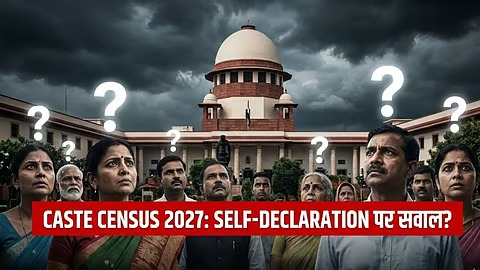
Supreme Court Flags Concerns Over Self-Verification of Caste in Census 2027, Asks Centre to Ensure Transparency
Apex Court Declines PIL but Urges Government to Review Methodology
Debate Over Accuracy and Misuse of Self-Declared Caste Data Intensifies
By Our Legal Reporter
New Delhi: February 02, 2026:
The Supreme Court of India has stepped into the ongoing debate surrounding the Census 2027 caste enumeration, asking the Centre to examine concerns about the proposed self-verification method. The Court refused to entertain a Public Interest Litigation (PIL) that challenged the procedure but directed the government to consider suggestions made by experts and petitioners.
Also Read: Lower TDS Certificates Go Digital: Relief for Small Taxpayers
This development comes amid growing public and political debate over how caste data should be collected, verified, and used. The Court’s cautious approach reflects the sensitivity of caste enumeration in India, where data accuracy directly impacts policies on reservations, welfare schemes, and social justice.
Background of Census 2027
- Two-Phase Structure: The Census will be conducted in two phases.
- Phase 1 (April 2026): House listing and Housing Census, focusing on housing conditions and amenities.
- Phase 2 (February 2027): Population enumeration, including caste data.
- Caste Enumeration: Scheduled for the second phase, except in snowbound regions where it will be conducted earlier in September 2026.
- Methodology Debate: While the government has clarified that caste enumeration will be part of the Census, the exact methodology for recording and verifying caste data remains undecided.
Supreme Court’s Observations
Also Read: Delhi High Court Restores Right to File Execution Petitions Below ₹2 Crore
- No Direct Interference: The Court refused to interfere with the Census process, noting that it is a policy matter.
- Consider Suggestions: The Centre and Registrar General were asked to examine concerns raised by petitioners, particularly regarding transparency and verification.
- Self-Verification Concerns: Petitioners argued that allowing individuals to self-declare caste could lead to inaccuracies, misuse, and manipulation of data.
- Court’s Balance: The Court emphasized that while it cannot dictate Census methodology, the government must ensure fairness and accuracy.
Why This Matters
- Policy Impact: Caste data influences reservations, welfare schemes, and resource allocation.
- Accuracy Concerns: Self-verification may lead to inflated or false claims, undermining the credibility of Census data.
- Transparency: Ensuring clear guidelines and verification mechanisms is crucial to maintain public trust.
- Judicial Oversight: The Court’s directive signals judicial caution but also accountability for the government.
Note for Readers:
If you want practical guidance on drafting wills, codicils, and probate procedures, Will Writing Simplified is an invaluable resource. PURCHASE HERE: Amazon 🔹 Flipkart.
Broader Implications
- For Governance: Accurate caste data is essential for effective policymaking and social justice.
- For Politics: Caste enumeration has long been a politically sensitive issue, with parties divided over its scope and use.
- For Citizens: Self-verification may simplify the process but raises questions about misuse.
- For Researchers: Reliable caste data is critical for sociological and economic studies.
Also Read: India–US Trade Deal: Tariff Cut to 18% Boosts Indian Exports
Human Angle
The debate reflects the tension between simplicity and accuracy. While self-verification makes enumeration easier, it risks undermining trust in data. Citizens, especially from marginalized communities, fear that inaccurate data could affect their access to benefits.
Conclusion
The Supreme Court’s directive on Census 2027 caste enumeration highlights the importance of transparency and accuracy in data collection. By asking the Centre to examine concerns over self-verification, the Court has ensured that the government remains accountable while respecting its policy domain. The final methodology, expected to be clarified by mid-2026, will shape India’s social justice framework for years to come.
Keywords for Faster Searches
Also Read: Gen Naravane’s Memoir Sparks Debate on Rules for Retired Officers
- Supreme Court Census 2027 caste self-verification
- Census 2027 caste enumeration methodology India
- PIL on caste census Supreme Court ruling
- Self-declared caste data concerns India
- Census 2027 transparency Supreme Court directive
- Caste census India 2027 government clarification
- Census 2027 Supreme Court Centre directions
Also Read: Supreme Court Warns High Courts: End Delays in Delivering Judgments