
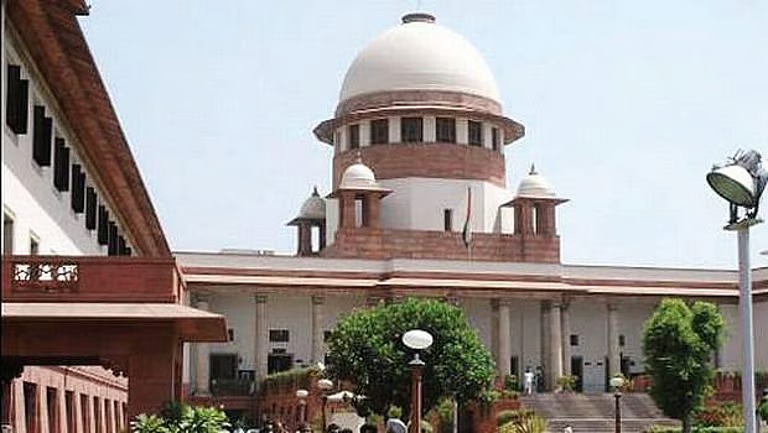
Supreme Court Warns High Courts: End Delays in Delivering Judgments
Judges Must Not Reserve Cases Indefinitely Without Pronouncing Verdicts
Timely Justice Is Essential to Maintain Public Trust
By Our Legal Reporter
New Delhi: February 03, 2026:
The Supreme Court has once again highlighted a chronic issue plaguing India’s judicial system—delayed pronouncement of judgments by High Courts. In a stern observation, the Court said that the practice of reserving judgments and failing to deliver them for months is unacceptable and must be eradicated. The ruling comes after complaints that judgments were orally pronounced but not uploaded or made available to litigants for extended periods.
(Related Valuable Legal Resource)
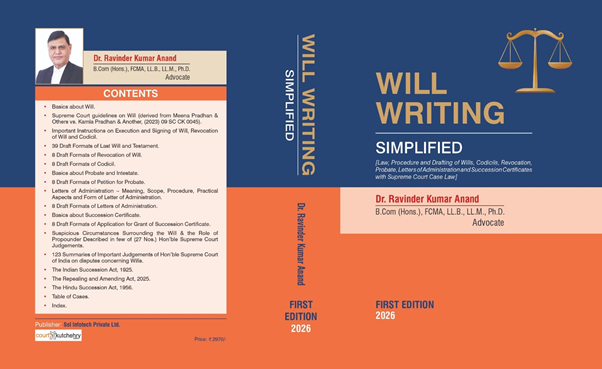
If you want practical guidance on drafting wills, codicils, and probate procedures, Will Writing Simplified is an invaluable resource. ORDER HERE: Amazon 🔹 Flipkart
Also Read: Budget 2026: Interest Deduction on Dividend Income Withdrawn, Self-Funded Investors Stand to Benefit
Case Background
- Incident: A plea was filed after the Jharkhand High Court orally dismissed a petition in December 2025 but failed to upload the judgment months later.
- Supreme Court’s response: Chief Justice Surya Kant, along with Justices Joymalya Bagchi and Vipul M Pancholi, expressed concern over such delays.
- Observation: The Court said there are “two types of judges”—those who work diligently and deliver judgments promptly, and those who reserve matters but fail to pronounce verdicts.
- Directive: The Court indicated that a Standing Operating Procedure (SOP) may soon be introduced to ensure judgments are delivered within a fixed timeframe.
Why the Supreme Court Intervened
- Erosion of trust: Delayed judgments weaken public confidence in the justice system.
- Impact on litigants: Parties remain in limbo, unable to seek remedies or move forward.
- Judicial accountability: The Court stressed that judges must respect the principle that “justice delayed is justice denied.”
Also Read: Budget 2026: Tax Holiday for Foreign Firms Using Indian Data Centres, Investment Boom Expected
Previous Directions
The Supreme Court has earlier directed that:
- Judgments reserved must be delivered within three months.
- If not delivered, the matter should be placed before the Chief Justice of the High Court for necessary action.
- Registrars General of High Courts were instructed to monitor delays and report them.
Broader Implications
- For High Courts: The ruling is a reminder to adopt stricter internal monitoring of reserved judgments.
- For litigants: Ensures greater transparency and predictability in case outcomes.
- For judiciary: Reinforces the principle that justice must not only be done but also be seen to be done in a timely manner.
Practical Takeaways
- Judges must prioritize timely pronouncements.
- Litigants should track reserved judgments and raise concerns if delays persist.
- Judicial reforms may soon mandate SOPs to prevent indefinite delays.
Also Read: ITAT Delhi Restricts Profit Estimate in Milk Trading Case to 5%, Rejects Arbitrary 20% Addition
In Summary
- In summary, the Supreme Court’s warning to High Courts marks a decisive step toward judicial accountability. By calling delayed judgments an “ailment,” the Court has signalled that reforms are imminent to ensure justice is delivered swiftly and fairly.
Keywords for SEO & Faster Searches
- Supreme Court on delayed judgments
- High Court reserved judgments India
- Justice delayed justice denied India
- SOP for judicial delays Supreme Court
- Indian judiciary reforms 2026
- Supreme Court directive on High Courts
Also Read: Budget 2026 Customs & Excise Reforms: Tariff Simplification, Green Energy Boost, Consumer Relief