
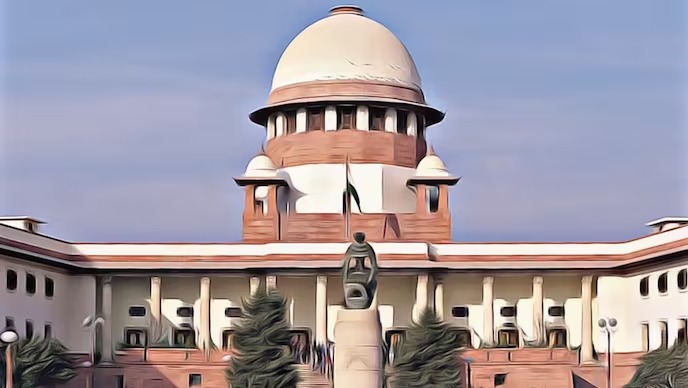
Supreme Court Slams ‘Acting DGP’ Culture, Empowers UPSC to Seek Court’s Intervention on Delayed Appointments
Court Says States Cannot Bypass Prakash Singh Guidelines by Naming Temporary Police Chiefs
UPSC Authorized to Initiate Contempt Proceedings Against Defaulting States
By Legal Reporter
New Delhi: February 07, 2026:
In a landmark ruling delivered on February 5, 2026, the Supreme Court of India expressed serious concern over the increasing tendency of state governments to appoint “acting” Directors General of Police (DGPs) instead of following the mandated process of regular appointments. The Court emphasized that such practices deprive senior and meritorious officers of fair consideration and undermine the principle of police reforms laid down in the Prakash Singh case (2006).
Also Read: Supreme Court: Leasing Apartment Does Not Bar Flat Buyer’s Consumer Complaint Against Builder
Background of the Case
- The Prakash Singh judgment mandated that DGPs must be selected from a panel of three senior-most IPS officers empanelled by the UPSC, with a fixed tenure of two years.
- Several states, however, have delayed sending proposals to the UPSC, opting instead to appoint acting DGPs.
- The UPSC raised concerns before the Court, highlighting repeated delays and violations of the guidelines.
- The Supreme Court bench, comprising Chief Justice Surya Kant, Justice Joymalya Bagchi, and Justice Vipul Pancholi, took strong note of the issue.
[Related Legal Resources]
For readers interested in understanding legal procedures, property rights, and succession law, a recommended resource is Will Writing Simplified [Law, Procedure and Drafting of Wills, Codicils, Revocation, Probate, Letters of Administration and Succession Certificates with Supreme Court Case Law], available on Amazon 🔹 Flipkart. This book provides practical guidance for navigating complex legal matters with clarity and confidence
Supreme Court’s Observations
Also Read: Punjab & Haryana High Court Denies Bail to Senior Advocate Accused of ₹30 Lakh Judicial Bribe
- The Court described the “acting DGP culture” as unacceptable, stressing that it undermines police leadership.
- It directed the UPSC to send reminders to states for timely proposals.
- If states fail to comply, the UPSC has been authorized to approach the Supreme Court or initiate contempt proceedings.
- The Court also ordered the UPSC to convene meetings within four weeks to finalize recommendations for pending appointments, including in Telangana, where the last regular DGP retired in 2017.
Key Takeaways
- Acting DGP appointments criticized: States cannot bypass reforms by naming temporary chiefs.
- UPSC empowered: Commission can approach the Court or initiate contempt against defaulting states.
- Fixed tenure reaffirmed: DGPs must serve a minimum of two years to ensure stability.
- Accountability enforced: States must send proposals promptly to avoid judicial intervention.
Why This Matters
- For police officers: Ensures merit-based appointments and career stability.
- For governance: Strengthens rule of law and prevents political interference in police leadership.
- For citizens: Reinforces public trust in impartial policing and effective law enforcement.
Also Read: Bombay High Court Bans Sale of Basements and Parking Spaces, Declares Them Common Amenities
Wider Implications
- Police reforms strengthened: The ruling reaffirms the Prakash Singh guidelines as binding.
- Judicial oversight expanded: UPSC can now directly seek the Court’s help against erring states.
- Federal accountability: States must align with national standards for police appointments.
Expert Reactions
- Legal experts hailed the ruling as a step toward depoliticizing police leadership.
- Retired IPS officers noted that acting appointments often weaken morale and disrupt continuity.
- Civil society groups welcomed the judgment, saying it will improve policing standards across India.
Conclusion
Also Read: Supreme Court: Pre-2015 Section 11 Arbitration Orders Are Final, Cannot Be Reopened Under Section 34
The Supreme Court’s ruling against the “acting DGP culture” marks a decisive step in strengthening police reforms in India. By empowering the UPSC to approach the Court and initiate contempt proceedings against states that delay appointments, the judgment ensures that merit, transparency, and accountability remain central to police leadership. This decision is expected to have far-reaching implications for governance and law enforcement across the country.
- Supreme Court acting DGP culture ruling 2026
- UPSC contempt proceedings DGP appointments
- Prakash Singh police reforms Supreme Court
- Telangana DGP vacancy Supreme Court order
- Supreme Court UPSC empowered police leadership
- Acting DGP appointments unconstitutional India
- Supreme Court police reforms judgment
Also Read: Supreme Court: Armed Forces Tribunal Can Hear Appeals Against ICC Findings Under POSH Act