
Public Interest Litigation: India’s Gift to Global Jurisprudence
From environmental battles to human rights, PIL has transformed Indian democracy.
How India’s unique legal innovation resonates worldwide and shapes global debates on justice.
By Vishwas Kumar
New Delhi: June 04, 2026:
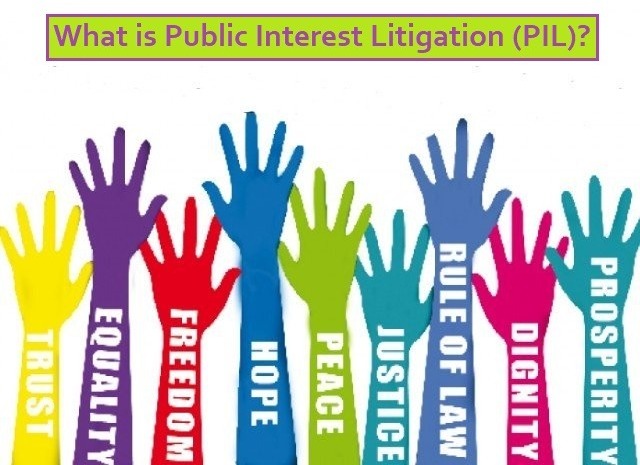
In the late 1970s, India’s judiciary introduced a revolutionary concept: Public Interest Litigation (PIL). Unlike traditional litigation, which required a person to prove direct harm, PIL allowed any concerned citizen to approach the courts on matters affecting society at large. This shift democratized access to justice, enabling the poor, marginalized, and voiceless to seek remedies through the judiciary.
One of the most significant constitutional developments in modern India was the transformation of Jammu & Kashmir's special status. Readers seeking a deeper understanding of the historical background, constitutional debates, and judicial scrutiny surrounding this issue can explore our detailed analysis on Article 370: A Turning Point in Indian Constitutional History, which examines the legal and political implications of this landmark constitutional change.
Over the decades, PIL has become a powerful instrument of social change. It has tackled issues ranging from bonded labour and prison conditions to environmental pollution and women’s rights. Landmark judgments have expanded constitutional protections, enforced accountability, and reshaped governance.
Globally, PIL is recognized as India’s unique contribution to jurisprudence. While mechanisms like class‑action suits exist elsewhere, none match the breadth and accessibility of India’s PIL system. Today, scholars and policymakers’ study PIL as a model for participatory justice, especially in developing democracies.
This article traces the origins of PIL, landmark cases, constitutional dimensions, global relevance, criticisms, and its future in the digital age.
Section 1: Origins of PIL
PIL emerged during a period of judicial activism in the late 1970s. Justices P.N. Bhagwati and V.R. Krishna Iyer pioneered the concept, recognizing that strict rules of “locus standi” (standing to sue) excluded the poor from accessing justice. By relaxing these rules, the courts allowed any public‑spirited individual to file petitions on behalf of disadvantaged groups.
This innovation was rooted in constitutional values of equality and justice. It reflected the judiciary’s role as guardian of fundamental rights and its willingness to expand access to justice beyond traditional boundaries.
Section 2: Landmark PIL Cases
Several PILs have shaped Indian democracy:
Health
1. Right to Food Case (PUCL v. Union of India, 2001)
- Outcome/Impact: Directed governments to provide mid‑day meals in schools and strengthen food security schemes. It expanded the right to food as part of Article 21.
2. Common Cause v. Union of India (2018)
- Outcome/Impact: Legalized passive euthanasia under strict guidelines, recognizing the right to die with dignity as part of the right to life.
Education
3. Unni Krishnan v. State of Andhra Pradesh (1993)
- Outcome/Impact: Declared the right to education a fundamental right, paving the way for the later Right to Education Act (2009).
4. Environmental Education PIL (MC Mehta v. Union of India, 2003)
- Outcome/Impact: Made environmental education compulsory in schools, integrating sustainability into curricula.
Civil Rights
5. Hussainara Khatoon v. State of Bihar (1979)
- Outcome/Impact: Highlighted plight of undertrials, establishing the right to a speedy trial as part of Article 21.
6. Vishaka v. State of Rajasthan (1997)
- Outcome/Impact: Laid down guidelines against sexual harassment at workplaces, later codified in the POSH Act (2013).
Environment & Public Policy
7. MC Mehta v. Union of India (Ganga Pollution Case, 1985 onwards)
- Outcome/Impact: Ordered closure of polluting industries near the Ganga, strengthening environmental jurisprudence.
8. Delhi Vehicular Pollution PIL (MC Mehta, 1998)
- Outcome/Impact: Directed conversion of Delhi’s public transport to CNG, drastically reducing air pollution levels.
Governance & Accountability
9. Vineet Narain v. Union of India (1997)
- Outcome/Impact: Known as the “Hawala case,” it led to greater independence for the CBI and vigilance bodies, strengthening anti‑corruption mechanisms.
10. Right to Information PILs (1990s, spearheaded by activists like Aruna Roy)
- Outcome/Impact: Judicial support for transparency movements eventually led to the Right to Information Act (2005), empowering citizens to hold government accountable.
Health & Civil Rights
11. Olga Tellis v. Bombay Municipal Corporation (1985)
- Outcome/Impact: Recognized the right to livelihood as part of the right to life under Article 21. This case protected pavement dwellers from arbitrary eviction, linking economic survival to constitutional rights.
Education & Child Rights
12. Bandhua Mukti Morcha v. Union of India (1984)
- Outcome/Impact: Addressed the plight of bonded laborers, directing governments to rehabilitate them. It expanded the scope of PIL to enforce Directive Principles of State Policy on labor welfare and dignity.
Environment & Public Policy
13. Rural Litigation and Entitlement Kendra v. State of Uttar Pradesh (1985)
- Outcome/Impact: Known as the Dehradun Quarrying Case, it ordered the closure of limestone quarries to protect the environment. This was India’s first environmental PIL, setting the stage for ecological jurisprudence.
Governance & Accountability
14. Shreya Singhal v. Union of India (2015)
- Outcome/Impact: Struck down Section 66A of the IT Act, which criminalized online speech. The judgment safeguarded freedom of expression in the digital age, reinforcing constitutional protections against vague and arbitrary laws.
These cases illustrate PIL’s transformative power in enforcing rights and shaping policy.
Section 3: Constitutional Dimensions
PIL is rooted in Articles 32 and 226, which empower the Supreme Court and High Courts to issue writs for rights enforcement. Through PIL, courts have expanded the scope of fundamental rights and enforced Directive Principles of State Policy, which are otherwise non‑justiciable.
The judiciary has used PIL to interpret constitutional provisions dynamically, ensuring that justice remains accessible. However, debates persist about judicial activism versus judicial overreach, with critics warning against courts encroaching on executive functions.
Section 4: Global Relevance
India’s PIL system has inspired other democracies. South Africa’s post‑apartheid constitution adopted similar mechanisms to expand access to justice. NGOs worldwide use PIL‑like strategies to challenge governments and corporations.
Comparisons with US class‑action suits highlight differences: while class actions represent groups with shared grievances, PIL allows any citizen to raise issues of public concern. This makes PIL uniquely participatory and accessible.
Globally, PIL is studied as a model for empowering citizens and strengthening democracy.
Section 5: Criticisms & Challenges
Despite its successes, PIL faces criticism. Frivolous petitions often clog courts, diverting attention from genuine issues. Some argue that PIL enables judicial overreach, with courts stepping into policy domains reserved for the legislature or executive.
To address these concerns, the judiciary has issued guidelines to filter petitions and discourage misuse. The challenge lies in balancing accessibility with responsibility.
Section 6: Future Outlook
PIL is evolving in the digital age. Online petitions and e‑courts expand access further, enabling citizens to raise issues more easily. Future PILs may address emerging concerns like data privacy, AI ethics, and climate change.
India’s PIL system positions it to lead global debates on participatory justice. By adapting to new challenges, PIL can continue to embody constitutional morality and strengthen democracy.
Conclusion
Public Interest Litigation remains one of India’s most significant legal innovations. It has transformed the judiciary into a forum for social justice, empowered marginalized communities, and expanded constitutional rights. While criticisms of misuse and judicial overreach persist, PIL’s core value—democratizing access to justice—remains vital.
Globally, PIL is recognized as India’s gift to jurisprudence, inspiring similar mechanisms in other democracies. As technology reshapes society, PIL must evolve to address digital rights, environmental crises, and global governance challenges.
In conclusion, PIL is more than a legal tool—it is a symbol of India’s constitutional commitment to justice, equality, and democracy. Its journey reflects the adaptability of law in meeting the needs of society, and its future promises to shape not just India, but global debates on justice in the 21st century.
40 FAQs with Answers
Basics of PIL
1. What is Public Interest Litigation (PIL)?
PIL allows any citizen to approach the courts on matters of public concern, even if they are not directly affected.
2. When did PIL emerge in India?
It began in the late 1970s, pioneered by Justices P.N. Bhagwati and V.R. Krishna Iyer.
3. Why was PIL introduced?
To democratize access to justice and empower marginalized communities.
4. How is PIL different from traditional litigation?
Traditional cases require direct standing, while PIL relaxes this rule to allow broader participation.
5. Which courts hear PILs?
Primarily the Supreme Court and High Courts under their writ jurisdiction.
Constitutional Context
6. Which Articles empower PIL?
Articles 32 and 226 give citizens the right to approach the Supreme Court and High Courts.
7. How does PIL expand fundamental rights?
By interpreting rights dynamically, courts extend protections to new social issues.
8. Can PIL enforce Directive Principles?
Yes, PIL often bridges the gap between non‑justiciable Directive Principles and enforceable rights.
9. Is PIL part of judicial activism?
Yes, it reflects the judiciary’s proactive role in social justice.
10. Is PIL unique to India?
Yes, though similar mechanisms exist elsewhere, India’s PIL is broader and more accessible.
Landmark Cases
11. What was Hussainara Khatoon case?
It established the right to a speedy trial for undertrials.
12. What did MC Mehta’s PILs achieve?
They addressed environmental issues like Ganga pollution and vehicular emissions.
13. What was Vishaka v. State of Rajasthan?
It laid down guidelines against sexual harassment at workplaces.
14. Have PILs addressed bonded labor?
Yes, courts used PIL to abolish exploitative bonded labor practices.
15. Did PILs improve prison conditions?
Yes, several PILs highlighted overcrowding and human rights violations in prisons.
Global Relevance
16. How does PIL compare to US class‑action suits?
Class actions represent groups with shared grievances, while PIL allows any citizen to raise public issues.
17. Has PIL influenced South Africa?
Yes, South Africa adopted similar mechanisms in its post‑apartheid constitution.
18. Do NGOs use PIL‑like strategies globally?
Yes, NGOs worldwide file petitions to challenge governments and corporations.
19. Is PIL studied internationally?
Yes, scholars view it as India’s unique contribution to global jurisprudence.
20. Can PIL inspire other democracies?
Yes, especially in countries seeking participatory justice models.
Criticisms & Challenges
21. Are frivolous PILs a problem?
Yes, they often clog courts and divert attention from genuine issues.
22. Is judicial overreach a concern?
Critics argue PIL sometimes lets courts encroach on executive functions.
23. How do courts filter PILs?
By issuing guidelines to discourage misuse and frivolous petitions.
24. Can PIL be misused politically?
Yes, some petitions are filed for publicity or political gain.
25. Does PIL slow down justice delivery?
Frivolous PILs can add to delays, though genuine ones improve accountability.
Modern Applications
26. Can PIL address digital rights?
Yes, courts can use PIL to tackle privacy, surveillance, and data protection issues.
27. Can PIL address climate change?
Yes, environmental PILs already set precedents for ecological protection.
28. Is PIL relevant to AI ethics?
Emerging concerns about AI bias and accountability could be raised through PIL.
29. Can PIL be filed online?
Yes, e‑courts and online petitions are expanding access.
30. Does PIL empower marginalized groups?
Yes, it gives voice to communities often excluded from traditional litigation.
Citizen Participation
31. Who can file a PIL?
Any public‑spirited citizen or organization can file.
32. Do PILs require legal expertise?
Not necessarily; courts accept petitions even from ordinary citizens.
33. Can PILs be filed for economic issues?
Yes, issues like corruption and food security have been addressed.
34. Are PILs costly?
They are relatively inexpensive compared to traditional litigation.
35. Do PILs always succeed?
Not always; courts dismiss frivolous or poorly argued petitions.
Future Outlook
36. Will PIL evolve in the digital age?
Yes, with online petitions and new issues like cybercrime.
37. Can PIL strengthen democracy?
Yes, by holding governments accountable and empowering citizens.
38. Will PIL address global governance issues?
Potentially, especially in areas like climate change and digital rights.
39. Is PIL sustainable long‑term?
Yes, if misuse is curbed and genuine petitions prioritized.
40. Why is PIL called India’s gift to jurisprudence?
Because it uniquely democratizes justice and inspires global legal innovation.