
The Unraveling of Article 370: A Turning Point in Indian Constitutional History
Understanding Article 370 in the Constitution of India
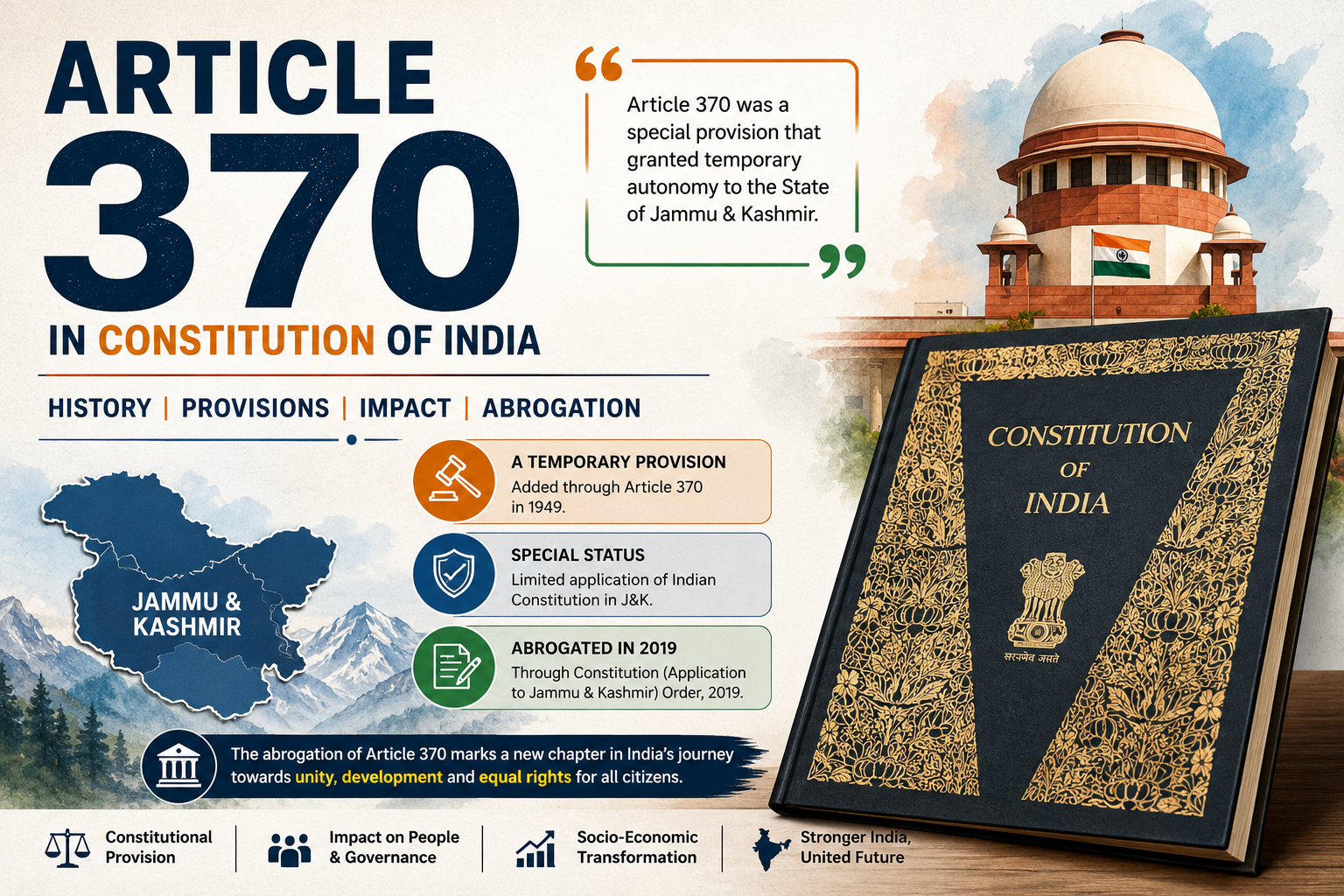
Article 370 in the Constitution of India was a provision that granted special autonomy to the region of Jammu and Kashmir. This unique arrangement was a part of the accession of the princely state to India in 1947. The article allowed the state to have its own constitution, flag, and autonomy over all matters except foreign affairs, defense, finance, and communications.
The autonomy under Article 370 was meant to be temporary, pending the resolution of the Kashmir issue. However, over the years, it became a point of contention, both politically and legally. The article has been the subject of numerous debates, both in the Parliament and the courts of India.
Legal and Constitutional Perspectives
Judicial Precedents and Challenges
Over the decades, various cases have challenged the validity and application of Article 370. The Supreme Court of India has heard several petitions questioning the continuation of the article. One significant case was the Prem Nath Kaul v. State of Jammu & Kashmir, where the court upheld the temporary nature of Article 370, emphasizing its transitional intent.
Abrogation of Article 370
On August 5, 2019, the Government of India took the historic step of abrogating Article 370. This was achieved by a Presidential Order and the passage of a resolution in the Parliament. The move was justified on grounds of integrating Jammu and Kashmir more fully into India, promoting development, and curbing terrorism.
Comparative Perspectives
In comparison, other countries have addressed regional autonomy differently. For instance, Spain's autonomous communities and the UK's devolved governments in Scotland, Wales, and Northern Ireland showcase varied approaches to regional autonomy within a unified state structure. These models provide valuable insights into the challenges and benefits of balancing central authority with regional autonomy.
Sociological, Economic, and Ethical Impacts
The abrogation of Article 370 has had profound sociological and economic impacts on the region. The integration aimed to bring about economic development and improve infrastructure. However, it also led to concerns about cultural identity and demographic changes among the local population.
Ethically, the decision sparked debates about democratic principles, federalism, and the rights of the people of Jammu and Kashmir. The manner of the abrogation, with a significant military presence and communication lockdown, raised human rights concerns.
Humanizing the Issue: Case Studies
Several narratives emerge from the region post-abrogation. For instance, business owners in the region have reported mixed impacts on trade and tourism. Some have seen opportunities for growth, while others have struggled with the uncertainty and restrictions.
On the ground, the youth in Jammu and Kashmir have expressed both hope and skepticism. Educational opportunities and employment prospects are seen as potential positives, but the political uncertainty remains a challenge.
Conclusion
The unraveling of Article 370 marks a significant shift in India's constitutional and political landscape. While the intention is to integrate Jammu and Kashmir fully, the path forward requires careful balancing of national interests with regional aspirations. As India moves forward, it is crucial to address the socio-economic challenges and ensure that the voices of the people in the region are heard and respected.
For more insights into Indian legal developments, visit CourtKutchehry.
Frequently Asked Questions
- What was Article 370?
Article 370 was a provision in the Indian Constitution granting special autonomy to Jammu and Kashmir.
- Why was Article 370 abrogated?
The government aimed to integrate Jammu and Kashmir more fully into India and promote development.
- What are the impacts of abrogation?
Economic development, cultural identity concerns, and political debates are some impacts of the abrogation.