
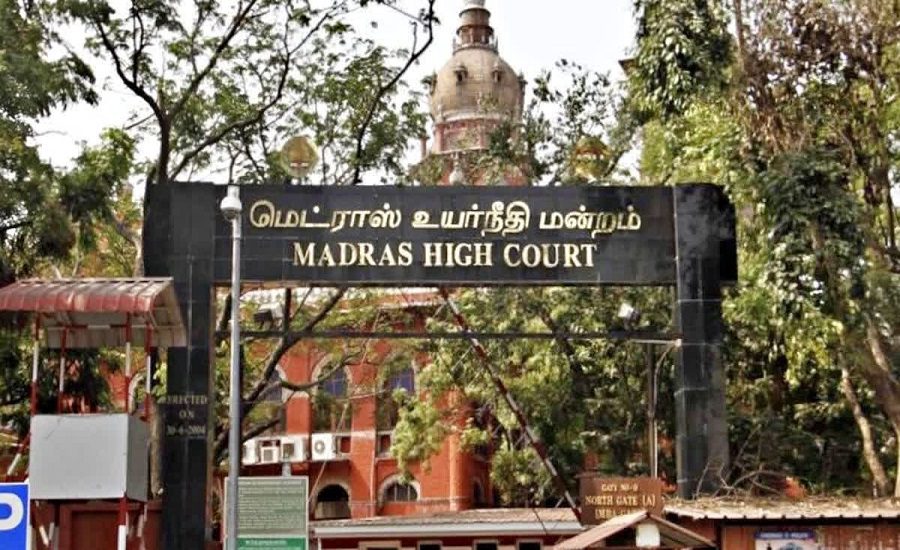
Madras High Court Orders Vigilance Probe Into State’s Delay in Filing Appeals
Court Questions Negligence or Connivance by Officials
Greater Chennai Corporation’s Land Dispute Highlights Larger Issue
By Our Legal Correspondent
Chennai, March 04, 2026:
The Madras High Court has raised serious concerns over repeated delays by the Tamil Nadu government in filing appeals against judicial orders, directing the Chief Secretary to initiate a vigilance probe. The court observed that such delays, often stretching over months or years, were either the result of negligence or possible connivance between officials and private parties.
Background of the Case
The issue came to light during a hearing involving the Greater Chennai Corporation (GCC) and Kannammal Education Trust over a land dispute. The GCC sought condonation of delay in filing its appeal against a single judge’s order. However, the first bench, comprising Chief Justice Manindra Mohan Shrivastava and Justice G. Arul Murugan, dismissed the plea, noting that the government’s explanation for the delay was unsatisfactory.
The judges emphasized that this was not an isolated incident. In numerous cases, government departments had failed to file appeals within the legally prescribed time, often citing vague or “lame” reasons. Such lapses, the court warned, could undermine the credibility of the administration and cause significant financial and legal setbacks to the state.
Court’s Observations
Also Read: Allahabad High Court: FIR Lodged with Advocate’s Help Retains Credibility
- The bench noted that delays in filing appeals were becoming a pattern.
- Officials offered no convincing justification for missing deadlines.
- The court remarked that the conduct suggested either gross negligence or collusion with private parties.
- It directed the Chief Secretary to conduct a discreet inquiry through the Directorate of Vigilance and Anti-Corruption (DVAC).
The judges stressed that when high‑stakes cases involving public property or finances are at risk, the government cannot afford to be casual. They warned that failure to act promptly could result in irreversible losses to the state exchequer.
Larger Implications
This directive has wide‑ranging implications:
- Accountability of Officials: The vigilance probe is expected to identify whether delays were deliberate or due to systemic inefficiency.
- Public Interest: Many of these cases involve land disputes, encroachment matters, and financial claims where the state has significant stakes.
- Judicial Integrity: The court’s intervention underscores the judiciary’s role in ensuring that government departments do not compromise public interest through inaction.
Legal experts note that if connivance is proven, disciplinary action and even criminal proceedings could follow against erring officials.
Pattern of Delays
Reports suggest that government departments often take months to process files before deciding whether to appeal. This bureaucratic sluggishness has led to repeated dismissals of condonation petitions. The High Court’s strong words indicate frustration with the state’s inability to streamline its legal machinery.
[LEGAL RESOURCE]
[💡 If you want practical guidance on drafting wills, codicils, and probate procedures, Will Writing Simplified is an invaluable resource. BUY HERE: Amazon 🔹 Flipkart
Conclusion
The Madras High Court’s order is a wake‑up call for the Tamil Nadu government. By directing a vigilance probe, the judiciary has signalled that negligence or collusion in protecting public assets will not be tolerated. The outcome of the inquiry could reshape how government departments handle litigation in the future.
Also Read: NMC Warns Medical Colleges: Fake Patients Could Lead to Rejection of Extra Seats and Courses
Keywords for Faster Search
- Madras High Court vigilance probe
- Tamil Nadu government delay in appeals
- GCC land dispute Kannammal Education Trust
- Negligence or connivance in filing appeals
- Directorate of Vigilance and Anti-Corruption DVAC
- Madras HC Chief Justice Manindra Mohan Shrivastava
- Justice G Arul Murugan Madras HC
- Tamil Nadu litigation delays
Also Read: Supreme Court: Consideration of Scheme of Arrangement Not Alien to Insolvency Proceedings Under IBC