

Chhattisgarh High Court: Blacklisting Orders Must Meet Tests of Fairness, Proportionality, and Reasoned Decision-Making
Court sets aside disproportionate blacklisting of construction firms
Judges stress that blacklisting amounts to ‘civil death’ of a business
By Our Legal Correspondent
New Delhi: March 03, 2026:
In a landmark judgment, the Chhattisgarh High Court has ruled that government blacklisting orders must satisfy the principles of fairness, proportionality, and reasoned decision-making. The Division Bench comprising Chief Justice Ramesh Sinha and Justice Ravindra Kumar Agrawal delivered the ruling on February 28, 2026, while hearing a batch of writ petitions filed by several construction firms.
Also Read: IRDAI Plans to Scrap High Upfront Commissions for Life Insurance Agents
The Court partially allowed the petitions, setting aside the State’s decision to blacklist the firms for three years, while upholding the termination of their contracts. The ruling underscores that blacklisting is an extraordinary remedy that cannot be imposed casually, as it effectively amounts to the “civil death” of a business.
Background of the Case
- Several construction firms were awarded contracts by the State government.
- Later, doubts arose regarding the eligibility documents submitted by these firms.
- The government terminated the contracts and imposed a three‑year blacklisting penalty.
- The firms challenged the blacklisting, arguing that it was disproportionate and lacked a clear finding of fraud.
- The High Court agreed, noting that while termination was justified, blacklisting was excessive without conclusive proof of deliberate fraud.
Court’s Observations
- Blacklisting as Civil Death: The Court described blacklisting as the civil death of a business, depriving it of opportunities and credibility.
- Proportionality Principle: Penalties must be proportionate to the misconduct proved. Without clear evidence of fraud, a three‑year blacklisting was excessive.
- Fairness and Reasoning: Administrative orders must be reasoned and fair, not arbitrary or punitive beyond necessity.
- Termination vs. Blacklisting: While termination of contracts was upheld due to doubtful eligibility documents, blacklisting was struck down for failing the fairness test.
Also Read: Madras High Court Orders Vigilance Probe Into State’s Delay in Filing Appeals
[Suggested Legal Resource]
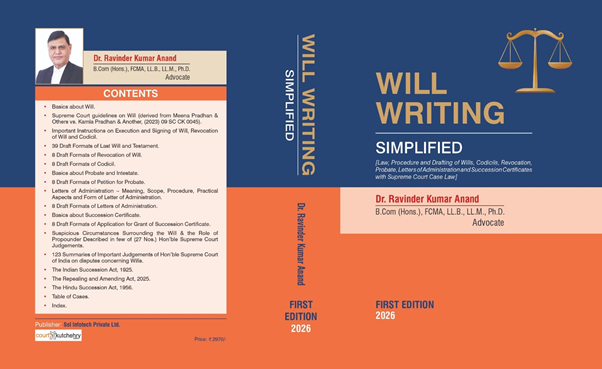
If you want practical guidance on drafting wills, codicils, and probate procedures, Will Writing Simplified is an invaluable resource. AVAILABLE ON: Amazon 🔹 Flipkart
Why This Matters
- Business Protection: The ruling protects companies from disproportionate penalties that can destroy livelihoods.
- Administrative Accountability: It reinforces that government decisions must be backed by clear reasoning and fairness.
- Legal Clarity: The judgment provides guidance on how blacklisting should be applied, ensuring it is not misused as a blanket punishment.
Reactions and Implications
Also Read: Varinder Singh Ghuman Death: Medical Board Finds Hospital Negligence
- Legal Experts: Many hailed the ruling as a progressive step that balances state interests with business rights.
- Industry Stakeholders: Construction firms welcomed the judgment, noting that blacklisting often cripples businesses without fair hearings.
- Government Authorities: Officials acknowledged the ruling but stressed the need for vigilance against fraudulent practices.
Wider Context
- The Supreme Court has previously held that blacklisting is an extraordinary remedy and must be exercised sparingly.
- Courts across India have emphasized proportionality in administrative decisions, aligning with constitutional principles of fairness.
- This ruling adds to the jurisprudence, ensuring that penalties like blacklisting are not imposed without clear findings of fraud or deliberate misconduct.
Conclusion
The Chhattisgarh High Court’s decision to strike down disproportionate blacklisting orders while upholding contract termination is a landmark in administrative law. By insisting on fairness, proportionality, and reasoned decision-making, the Court has ensured that businesses are not unfairly penalized and that government actions remain accountable. The ruling will likely influence future cases involving blacklisting and reinforce the principle that punishment must fit proven misconduct.
Also Read: Madhya Pradesh High Court Orders Return of Withheld Documents to Doctor Who Quit PG Seat
Keywords for SEO & Faster Searches
Chhattisgarh High Court blacklisting ruling, fairness proportionality administrative law, construction firms blacklisting case, Chief Justice Ramesh Sinha judgment, Ravindra Kumar Agrawal ruling, blacklisting civil death of business, contract termination vs blacklisting India, administrative law proportionality India, Chhattisgarh HC February 2026 judgment, business rights vs government penalties
<Also Read: Supreme Court Issues Contempt Notice to 51 Delhi Hospitals Over EWS Patient Shortfall