
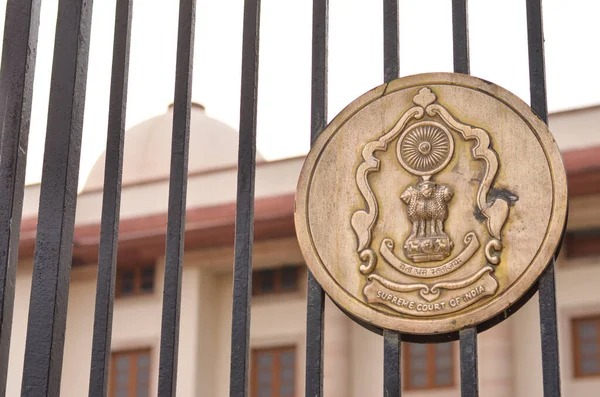
Supreme Court: Consideration of Scheme of Arrangement Not Alien to Insolvency Proceedings Under IBC
Court clarifies interplay between Companies Act and IBC
Remarks made while hearing transfer application in Omkara Assets case
By Legal Reporter
New Delhi: March 04, 2026:
In a significant ruling, the Supreme Court of India has clarified that the consideration of a Scheme of Arrangement (SoA) is not alien to proceedings under the Insolvency and Bankruptcy Code (IBC), 2016. The Court made these observations while hearing a transfer application in the case of Omkara Assets Reconstruction Pvt. Ltd. vs. Amit Chaturvedi & Ors., decided in February 2026.
Also Read: IRDAI Plans to Scrap High Upfront Commissions for Life Insurance Agents
The judgment addresses a recurring legal conflict: whether pending proceedings under the Companies Act, 1956 (Sections 391–394) involving a Scheme of Arrangement can stall or override insolvency proceedings initiated under Section 7 of the IBC.
[Suggested Legal Resource]
If you want practical guidance on drafting wills, codicils, and probate procedures, Will Writing Simplified is an invaluable resource. BUY TODAY: Amazon 🔹 Flipkart
Background of the Case
Also Read: Madras High Court Orders Vigilance Probe Into State’s Delay in Filing Appeals
- The financial creditor, Omkara Assets Reconstruction Pvt. Ltd., filed a petition under Section 7 of the IBC to initiate Corporate Insolvency Resolution Process (CIRP) against the debtor.
- The debtor argued that a pending Scheme of Arrangement under the Companies Act should prevent or delay insolvency proceedings.
- The National Company Law Appellate Tribunal (NCLAT) had earlier paused CIRP proceedings, citing the pending scheme.
- The Supreme Court overturned this decision, holding that IBC proceedings cannot be stalled by a defunct or non‑compliant scheme under the Companies Act.
Court’s Observations
- IBC Overrides Defunct Schemes: The Court held that once insolvency proceedings are initiated under Section 7, they cannot be stalled by a pending but procedurally defective Scheme of Arrangement.
- SoA Not Alien to IBC: While schemes can be considered, they must comply with statutory timelines and procedures. A defunct scheme cannot override IBC proceedings.
- Transfer Application: The Court allowed transfer of proceedings to the National Company Law Tribunal (NCLT), reinforcing that insolvency matters fall squarely under IBC jurisdiction.
- Balance of Interests: The Court emphasized that creditors’ rights under IBC cannot be undermined by outdated or non‑compliant schemes under the Companies Act.
Relevant Laws and Rules
- Companies Act, 1956 (Sections 391–394): Allowed companies to restructure debts and obligations through Schemes of Arrangement, subject to court approval.
- Insolvency and Bankruptcy Code, 2016 (Section 7): Enables financial creditors to initiate CIRP against defaulting companies.
- Supreme Court Precedent: The Court reiterated that IBC is a special law designed to override conflicting provisions of older statutes, including the Companies Act.
- Principle of Harmonization: While SoAs can be considered, they cannot stall insolvency unless they are valid, compliant, and timely.
Why This Matters
Also Read: Varinder Singh Ghuman Death: Medical Board Finds Hospital Negligence
- Clarity in Law: The ruling settles confusion about the interplay between Companies Act schemes and IBC proceedings.
- Creditor Protection: It ensures that creditors’ rights under IBC are not diluted by outdated restructuring schemes.
- Judicial Efficiency: By rejecting defunct schemes, the Court prevents unnecessary delays in insolvency resolution.
Reactions and Implications
- Legal Experts: Many hailed the ruling as a landmark clarification, ensuring that IBC remains the primary framework for insolvency.
- Financial Institutions: Creditors welcomed the judgment, noting that it strengthens their ability to recover dues without procedural hurdles.
- Corporate Sector: Companies acknowledged the need for compliance with IBC timelines, though some expressed concern about reduced flexibility in restructuring.
Wider Context
- Since its enactment in 2016, the IBC has become India’s primary insolvency framework, replacing older mechanisms under the Companies Act.
- Courts have consistently emphasized that IBC overrides conflicting provisions of earlier laws.
- This ruling adds to jurisprudence by clarifying that while Schemes of Arrangement can be considered, they cannot stall insolvency unless valid and compliant.
Also Read: Madhya Pradesh High Court Orders Return of Withheld Documents to Doctor Who Quit PG Seat
Conclusion
The Supreme Court’s observation that consideration of a Scheme of Arrangement is not alien to IBC proceedings provides crucial clarity in India’s insolvency law. By rejecting defunct schemes and reinforcing creditor rights, the Court has ensured that insolvency resolution remains efficient, fair, and consistent with statutory timelines. The ruling strengthens the IBC’s role as India’s cornerstone insolvency framework.
Keywords for SEO & Faster Searches
Supreme Court IBC ruling SoA, Omkara Assets Reconstruction case, Scheme of Arrangement vs IBC, Section 7 IBC insolvency proceedings, Companies Act Sections 391–394 scheme, NCLAT CIRP pause overturned, Supreme Court February 2026 insolvency judgment, IBC overrides Companies Act schemes, creditor rights insolvency India, Supreme Court transfer application IBC case
Also Read: Supreme Court Issues Contempt Notice to 51 Delhi Hospitals Over EWS Patient Shortfall