
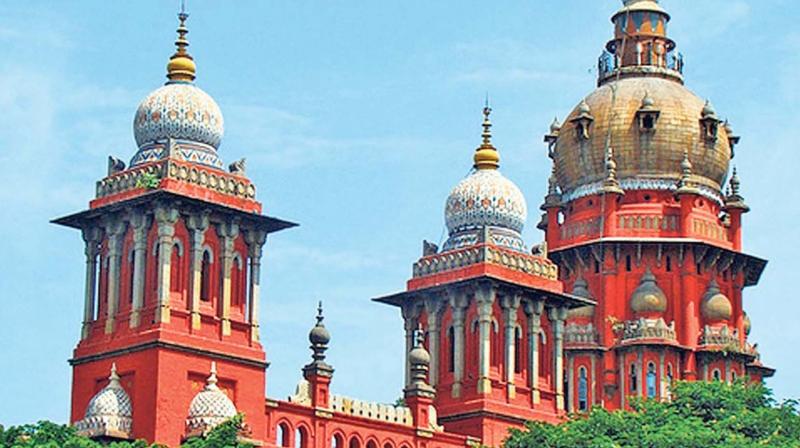
Madras High Court: Deity Cannot Be Left Remediless in Temple Land Encroachment Case
Court Flags Delay in Removing Encroachment Over 507 Acres
Governance Cannot Be Subordinate to Electoral Expediency
By Our Legal Correspondent
Chennai, March 2026:
The Madras High Court has delivered a strong message to the Tamil Nadu government, ruling that a temple deity cannot be left remediless merely because it does not have voting rights. The Division Bench of Justice P. Velmurugan and Justice B. Pugalendhi expressed dismay over the state’s failure to remove encroachments on 507 acres of land belonging to Arulmigu Balasubramaniaswamy Temple at Vennimalai, Karur district.
Also Read: Supreme Court Clarifies Guarantor Liability Under Section 133 of Contract Act
The court criticized the delay in complying with earlier directions, remarking that constitutional governance must not be compromised for electoral considerations.
[Research Resources]
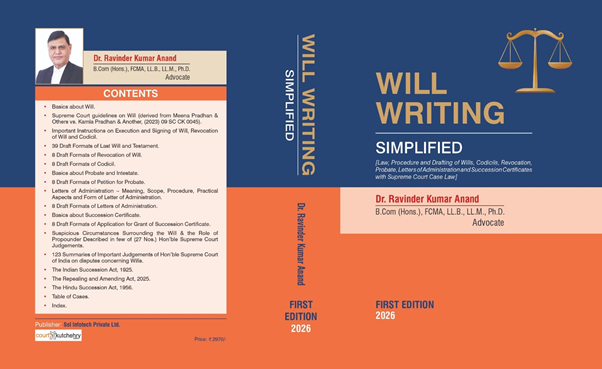
📘 Legal professionals and students alike will benefit from Will Writing Simplified, which covers procedure and case law in detail. AVAILABLE ON: Amazon 🔹 Flipkart
Background of the Case
Also Read: Forming a US LLC from India: The Hidden Tax and Compliance Costs
- The case arose from petitions filed by devotees highlighting encroachments on vast temple lands.
- Despite earlier High Court orders, the Hindu Religious and Charitable Endowments (HR&CE) Department and district administration failed to take effective steps.
- The court noted that the deity, as a juristic person, has rights over temple property and must be protected.
- The matter was heard under the title A. Radhakrishnan v. P. Madhusudhan Reddy.
Court’s Observations
- Deity’s Rights: A temple deity, recognized as a legal entity, cannot be deprived of remedies simply because it does not vote.
- Delay in Action: The state’s failure to remove encroachments despite repeated directions amounts to wilful disobedience.
- Governance vs. Politics: Constitutional governance should not be subordinate to electoral expediency.
- Public Trust: Temple lands are public trust properties meant for religious and charitable purposes, not private exploitation.
Legal Framework
Deity as Juristic Person
- Indian law recognizes deities as juristic persons capable of owning property.
- Trustees and state authorities act as guardians of temple property.
Also Read: CESTAT Remands Service Tax Refund Claim Over CA Certificate
Hindu Religious and Charitable Endowments Act
- Governs administration of temple lands in Tamil Nadu.
- Mandates protection of temple property from encroachment.
Constitutional Principles
- Article 25 & 26: Protect religious freedom and management of religious institutions.
- Article 300A: Safeguards property rights, applicable to temple lands as well.
Larger Implications
- For Temples: Reinforces protection of temple lands against encroachment.
- For Devotees: Ensures that religious properties remain safeguarded for worship and charity.
- For Government: Highlights accountability in protecting public trust properties.
- For Judiciary: Demonstrates proactive judicial intervention in safeguarding religious heritage.
Also Read: ITAT Orders Reassessment of STCG on Property Sale
Conclusion
The Madras High Court’s ruling is a landmark in temple land protection jurisprudence. By declaring that a deity cannot be left remediless, the court has reinforced the principle that religious institutions are entitled to constitutional protection and state accountability. The judgment is expected to accelerate removal of encroachments and strengthen governance of temple lands across Tamil Nadu.
Keywords for Faster Search
- Madras High Court temple land encroachment
- Deity rights temple property India
- Arulmigu Balasubramaniaswamy Temple Karur case
- HR&CE temple land protection Tamil Nadu
- Deity as juristic person India law
- Temple land encroachment Madras HC ruling
- Governance electoral expediency temple lands
Also Read: Chhattisgarh High Court: GST Demand on Plot Allotment Cannot Be Challenged in Writ