

Karnataka High Court Allows Probe into Jar Gold Digital Gold Scheme
Startup’s Plea to Quash FIR Under BUDS Act Rejected
Customers Advised to Stay Alert Amid Regulatory Concerns
By Our Legal Correspondent
New Delhi: March 05, 2026:
The Karnataka High Court has refused to quash an investigation against Bengaluru-based startup Jar Gold Retail Pvt Ltd, which operates a popular digital gold investment platform. The court dismissed the company’s plea challenging a First Information Report (FIR) filed under the Banning of Unregulated Deposit Schemes (BUDS) Act, 2019, paving the way for the Criminal Investigation Department (CID) to continue probing its operations.
Also Read: Kerala High Court Upholds Surprise Checks by Delegated Officers
Jar Gold, launched in 2021, claims to have over 3.3 crore users and a turnover exceeding ₹4,000 crore. The app allows users to invest in digital gold starting at just ₹10 via UPI. However, regulators including the Reserve Bank of India (RBI) and the Securities and Exchange Board of India (SEBI) flagged concerns about its business model, prompting police action.
[Recommended Research Resources]
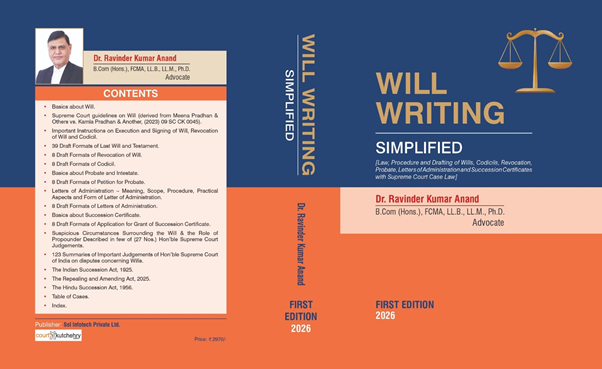
📘 Legal professionals, families and students alike will benefit from Will Writing Simplified, which covers procedure and case law in detail.
🔹 Buy on Amazon
🔹 Buy on Flipkart
Also Read: Delhi High Court: Summoning Orders in Cheque Bounce Cases Must Show Judicial Application of Mind
The Legal Issue Explained
The central legal issue revolves around whether Jar Gold’s operations amount to an unregulated deposit scheme under the BUDS Act, 2019.
- Company’s Argument: Jar Gold argued that it does not accept deposits in the traditional sense. Instead, it facilitates purchases of digital gold, stored in secure vaults. The firm claimed its activities fall outside the scope of the BUDS Act.
- Court’s View: The High Court disagreed, noting that modern financial schemes often disguise deposits in new forms—commodities, digital assets, or gold-linked assurances. The court emphasized that customer complaints and the unregulated nature of the scheme warranted investigation.
- Outcome: The plea to quash the FIR was rejected, and the CID was allowed to continue its probe.
Why Customers Should Pay Attention
For millions of Indian users investing in digital gold, the case raises important concerns:
1. Regulatory Uncertainty
Digital gold platforms operate in a grey area. Unlike banks or mutual funds, they are not directly regulated by RBI or SEBI. This means investor protections are weaker compared to traditional financial products.
2. Risk of Misuse
If a platform is found to be running an unregulated deposit scheme, customers may face difficulties in recovering their money. Assets stored in vaults could be frozen during investigations.
3. Customer Complaints
Reports suggest that some users raised complaints about delayed withdrawals and unclear terms. Such grievances often trigger regulatory scrutiny.
4. Legal Consequences
If the CID finds violations, the company could face penalties, and customers may need to go through lengthy legal processes to claim their investments.
Broader Implications for Digital Gold in India
The case highlights the challenges of regulating digital gold, a product that has grown rapidly in popularity:
- Ease of Access: Apps allow micro-investments starting at ₹10, attracting young investors.
- Lack of Regulation: Unlike sovereign gold bonds or gold ETFs, digital gold is not covered by SEBI or RBI frameworks.
- Market Growth: With millions of users, startups like Jar Gold have become major players, but without clear oversight.
- Regulatory Push: The case may accelerate efforts to bring digital gold under formal regulation, ensuring investor safety.
Also Read: Bombay High Court: Divorce Cannot Be Granted Solely on WhatsApp Chats
Expert Opinions
- Legal Experts: Stress that the BUDS Act was designed to prevent schemes that lure investors with promises outside regulated channels. The court’s decision reflects caution against new-age financial products that may bypass oversight.
- Financial Analysts: Warn that while digital gold is convenient, investors should prefer regulated options like ETFs or sovereign gold bonds.
- Consumer Rights Groups: Urge customers to read terms carefully and avoid platforms that lack clear regulatory backing.
Conclusion
The Karnataka High Court’s refusal to quash the FIR against Jar Gold Retail Pvt Ltd underscores the risks of investing in unregulated financial products. While digital gold offers convenience and accessibility, customers must remain cautious until clear regulatory frameworks are established.
For now, investors should monitor developments closely, diversify their portfolios, and consider safer, regulated alternatives for gold investments.
Also Read: Bombay High Court: Right to Refund of Unutilised ITC Accrues on Relevant Date
GEO Keywords for Faster Searches
Also Read: Madras High Court: Deity Cannot Be Left Remediless in Temple Land Encroachment Case
- Jar Gold Karnataka High Court case
- Digital gold investigation India
- BUDS Act 2019 digital gold
- CID probe Jar Gold Retail
- RBI SEBI concerns digital gold
- Customer complaints Jar Gold app
- Unregulated deposit schemes India
- Digital gold regulation India
Also Read: Chhattisgarh High Court: GST Demand on Plot Allotment Cannot Be Challenged in Writ