

Haryana to Mandate Registration of Property Sale Agreements
Govt move to curb fraud and double selling in real estate
Reform expected to boost transparency and buyer confidence
By Legal Reporter
New Delhi: March 07, 2026:
The Haryana government, led by Chief Minister Nayab Singh Saini, has proposed a major reform in property transactions: making the registration of Agreements to Sell compulsory. Currently, most property sale agreements are executed on plain paper or notarised privately, without being entered into official records. This leaves buyers vulnerable to fraud, delayed possession, and weak legal protection in disputes.
Also Read: AGR Panel Slashes Vodafone Idea Dues by ₹27,000 Crore: What It Means for Telecom Sector
[Recommended Research Resources]
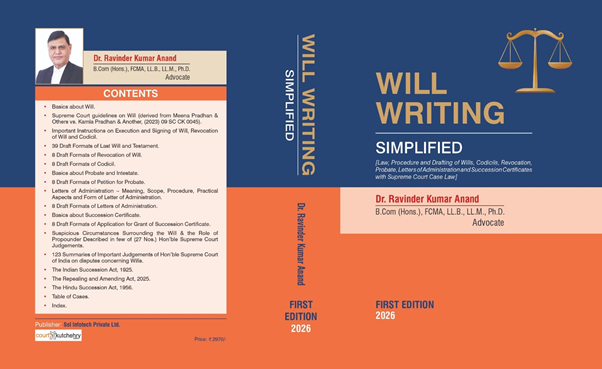
📘 Legal professionals and students alike will benefit from Will Writing Simplified, which covers procedure and case law in detail.
🔹 Buy online: Amazon | Flipkart
Also Read: NO MUNNABHAI: NMC Orders Medical Colleges to Link Patient Records with ABHA IDs for Transparency
Why the Government is Taking This Step
- Fraud Prevention: Unregistered agreements allow sellers to enter multiple deals for the same property, leading to double-selling scams.
- Legal Security: Registered agreements will have stronger evidentiary value in court compared to notarised documents.
- Transparency: Every property-related commitment will be formally documented, time-stamped, and recorded with revenue authorities.
- Dispute Reduction: Mandatory registration will help resolve ownership disputes faster and reduce prolonged litigation.
- Market Accountability: The reform will increase trust in real estate transactions, making the market more transparent and secure.
Current Situation
- Unregistered Agreements: Most resale property transactions rely on notarised agreements, which are not part of official land records.
- Legal Weakness: Such documents have limited evidentiary value, making it difficult for buyers to enforce possession or payment claims.
- Court Cases: Many disputes reach courts when sellers back out or buyers demand specific performance based on unregistered agreements.
- Registration Act, 1908: Currently mandates registration of sale deeds, conveyance deeds, and certain leases, but not Agreements to Sell unless state rules specify.
RERA vs General Market
Also Read: ED Arrests Chartered Accountants in ₹641 Crore Cyber Fraud: Complex Modus Operandi Exposed
- RERA Projects: Haryana RERA already mandates registered sale agreements once builders receive 10% of the sale consideration.
- Standardised Format: RERA requires agreements to include payment schedules, possession timelines, penalties, and rights of both parties.
- General Market: Outside RERA, agreements remain optional for registration, creating two parallel systems—one transparent, one vulnerable to fraud.
Broader Implications
- For Buyers: Stronger protection against fraud and ownership disputes.
- For Sellers: Clear documentation reduces chances of litigation.
- For Market: Boosts investor confidence and strengthens Haryana’s real estate sector.
- For Judiciary: Reduces burden of property-related disputes in courts.
Conclusion
Also Read: Chandigarh Realtor Named Mastermind in ₹590 Crore Government Funds Fraud
The Haryana government’s decision to mandate registration of property sale agreements is a landmark reform in real estate governance. By ensuring that every transaction is formally recorded, the move will curb fraud, protect buyers, and increase transparency in the property market.
Keywords for SEO & Faster Searches
Haryana property sale agreement registration, Agreement to Sell mandatory Haryana, real estate fraud prevention Haryana, Nayab Singh Saini property reform, RERA vs property registration Haryana, property transparency law India.
Also Read: Supreme Court Opens Door for Non-Parties to Challenge Judgments in India