
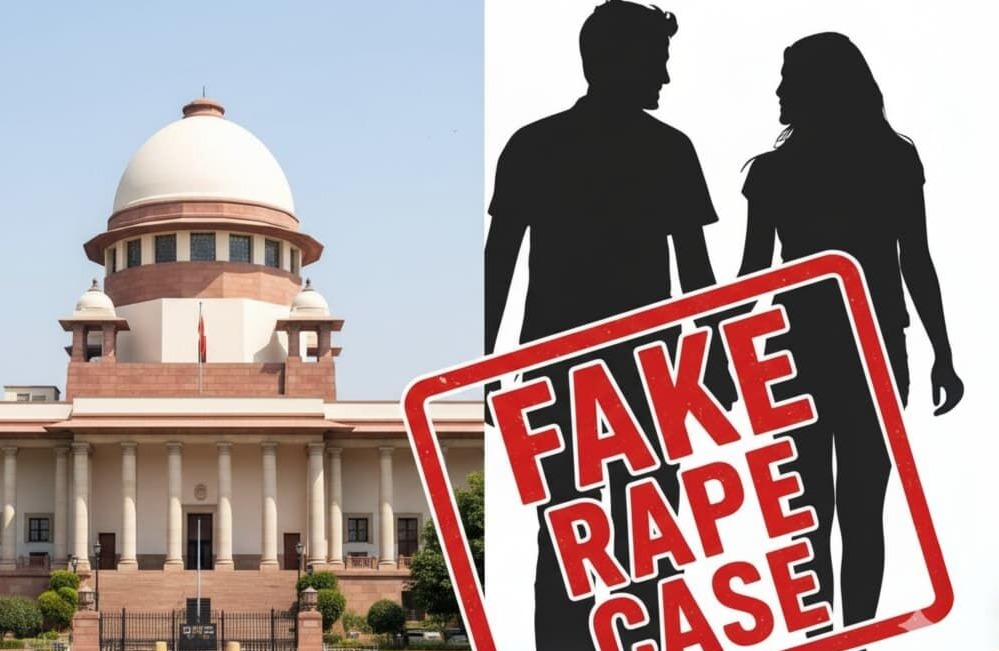
Supreme Court Quashes Rape Case Based on False Promise of Marriage
Clarifies distinction between breach of promise and fraudulent intent
Reinforces evidentiary standards in sexual offence prosecutions
By Legal Reporter
New Delhi: May 05, 2026:
The Supreme Court’s decision to quash the rape case based on a false promise of marriage is a landmark clarification in sexual offence jurisprudence. It draws a sharp line between genuine relationships that fail and fraudulent promises made to exploit women. By reinforcing evidentiary standards, the Court ensures that criminal law is applied fairly, protecting both victims of deceit and individuals from false accusations.
To gain better clarity on how Indian courts resolve disputes involving ancestral property, co-ownership rights, and succession claims among family members, refer to the significant ruling in Shivakumar & Others vs Sharanabasappa & Others case . This judgment highlights important legal principles relating to partition of property, rights of co-parceners, and the evidentiary standards applied by courts in determining lawful ownership under Indian civil law.
Key Laws and Rules Discussed
1. Indian Penal Code (IPC), Section 375 & 376
- Defines rape and prescribes punishment.
- Courts have repeatedly held that consent obtained under a false promise of marriage may amount to rape if the promise was made with fraudulent intent from the outset.
2. Section 90 IPC – Consent under Misconception of Fact
- Consent is invalid if obtained under a misconception of fact.
- The Court clarified that not every broken promise qualifies as a “misconception of fact.” Only promises made with no intention to marry from the beginning fall under this category.
3. Judicial Precedents
- Pramod Suryabhan Pawar v. State of Maharashtra (2019): SC held that breach of promise is not rape unless the promise was false from inception.
- Deepak Gulati v. State of Haryana (2013): Distinguished between genuine relationships that fail and promises made to deceive.
- Uday v. State of Karnataka (2003): Consent based on genuine love and later refusal to marry does not amount to rape.
4. Evidentiary Standards
- The Court emphasized the need for clear evidence of fraudulent intent.
- Mere failure to marry after a consensual relationship cannot automatically be criminalized as rape.
Analytical Commentary
- Clarifying Consent: This ruling reinforces that consent in sexual relationships must be assessed carefully. A failed relationship does not equal criminal liability unless deceit is proven.
- Preventing Misuse of Rape Law: The Court sought to prevent misuse of rape provisions in cases of broken relationships, ensuring that criminal law is not weaponized for civil disputes.
- Balancing Rights: The judgment balances women’s rights against exploitation with protection for men from false accusations.
- Legal Evolution: Over the years, the Supreme Court has refined the doctrine of “false promise of marriage,” narrowing liability to cases of deliberate fraud.
- Social Impact: The ruling may influence how lower courts handle similar cases, ensuring that genuine relationships are not criminalized while fraudulent conduct is punished.
Detailed FAQ
Q1: Can a broken promise of marriage amount to rape?
Yes, but only if the promise was made with fraudulent intent from the beginning. A genuine promise that later fails does not amount to rape.
Q2: What law governs consent under false promises?
Section 90 IPC states that consent obtained under a misconception of fact is invalid. Courts apply this to false promises of marriage.
Q3: What did the Supreme Court decide in this case?
It quashed the rape case, holding that the evidence did not show fraudulent intent at the time of making the promise.
Q4: What precedents support this ruling?
- Pramod Pawar (2019): Breach of promise ≠ rape unless fraudulent intent exists.
- Deepak Gulati (2013): Genuine love relationships failing do not constitute rape.
- Uday (2003): Consent based on genuine affection is valid.
Q5: Does this mean women cannot file cases in such situations?
Women can file cases if they can prove that the man never intended to marry and used the promise solely to obtain consent.
Q6: How does this ruling protect against misuse?
It prevents criminalization of consensual relationships that fail, ensuring rape laws are reserved for genuine cases of exploitation.
Q7: What happens next in such cases?
Lower courts must carefully examine evidence of intent at the time of the promise before framing charges.