
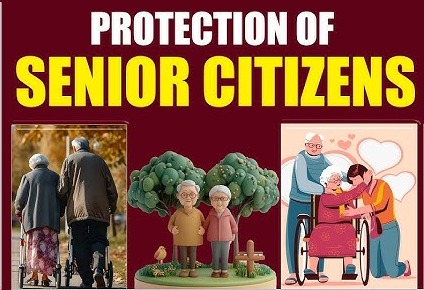
Delhi HC: Senior Citizens’ Right to Peace Prevails Over Shared Household Claims
Eviction upheld against daughter-in-law despite residence rights
Protective rights under DV Act cannot defeat ownership and dignity of elders
By Legal Reporter
New Delhi: May 12, 2026:
The Delhi High Court has ruled that a daughter-in-law’s right to reside in a “shared household” under the Domestic Violence Act cannot override senior citizens’ statutory right to peaceful residence under the Maintenance and Welfare of Parents and Senior Citizens Act, 2007. The Court upheld the eviction of a daughter-in-law and her son, emphasizing that residence rights are protective, not proprietary.
For authoritative guidance on inheritance law, validity of Wills and the evidentiary burden in testamentary disputes, readers should also read the Supreme Court decision in M.B. Ramesh (D) By LRs Vs K.M. Veeraje Urs (D) By LRs & Others, where the Court clarified the standards for proving due execution, attestation and genuineness of a Will while dealing with complex family succession claims.
Case Background
In Smt. Ritu Taneja & Anr. v. Govt. of NCT of Delhi & Ors. (W.P. (C) 12721/2023), the Delhi High Court upheld an eviction order against a daughter-in-law and her son from a property owned by her senior citizen in-laws. Following her husband’s death in 2020, disputes arose, leading the in-laws to file a complaint under the Maintenance and Welfare of Parents and Senior Citizens Act, 2007 (Senior Citizens Act).
The Maintenance Tribunal initially ordered partial eviction, but the Divisional Commissioner directed complete eviction, citing untenable cohabitation.
Key Legal Frameworks
- Maintenance and Welfare of Parents and Senior Citizens Act, 2007
- Provides senior citizens the right to seek eviction of abusive or harassing family members.
- Proceedings are summary in nature, aimed at ensuring dignity and peaceful residence.
- Delhi Maintenance and Welfare of Parents and Senior Citizens Rules, 2009
- Operationalizes eviction powers of District Magistrates and Commissioners.
- Protection of Women from Domestic Violence Act, 2005 (DV Act)
- Grants’ women the right to reside in a “shared household.”
- However, this right is protective, not proprietary, and cannot override ownership rights.
- Supreme Court Precedents
- S. Vanitha v. Deputy Commissioner (2020): Residence rights must be balanced with senior citizens’ rights.
- Satish Chander Ahuja v. Sneha Ahuja (2020): Clarified scope of “shared household” but emphasized it does not confer ownership.
Court’s Observations
- Justice Purushaindra Kumar Kaurav held that the Senior Citizens Act is beneficial legislation ensuring aged parents live with dignity.
- The daughter-in-law’s claim of “shared household” was rejected, as she was financially independent and not destitute.
- The Court noted that proceedings under the Senior Citizens Act cannot be converted into forums for deciding complex inheritance disputes.
- The balance tilted in favor of senior citizens, given the strained relationship and untenable cohabitation.
Analytical Impact
- Strengthens Senior Citizens’ Rights: Confirms that peaceful residence is paramount.
- Limits Misuse of DV Act: Prevents residence rights from being misapplied to defeat ownership.
- Clarifies Jurisdiction: Senior Citizens Act tribunals cannot adjudicate inheritance or ancestral property claims.
- Practical Relief: Provides a mechanism for elderly parents to evict abusive family members without lengthy civil litigation.
Risks & Trade-offs
- Risk of Narrowing DV Act Protections: Some women may feel vulnerable if residence rights are curtailed.
- Balance of Rights: Courts must carefully weigh genuine protection needs against misuse.
- Need for Alternate Housing: Evicted individuals must secure alternative accommodation, though in this case the daughter-in-law had other property.
Conclusion
The Delhi High Court’s ruling reinforces that residence rights under the DV Act are protective, not proprietary, and cannot override senior citizens’ statutory rights under the Senior Citizens Act. This judgment ensures dignity for elders while clarifying the scope of “shared household” claims.
Detailed FAQ for Quick Understanding
Q1: What was the Delhi High Court’s ruling?
That a daughter-in-law’s right to reside in a shared household cannot defeat senior citizens’ right to peaceful residence.
Q2: Which laws were involved?
- Senior Citizens Act, 2007
- Delhi Rules, 2009
- Domestic Violence Act, 2005
Q3: What is a “shared household”?
A residence where a woman lives with her husband or in-laws, protected under the DV Act.
Q4: Does the DV Act give ownership rights?
No. It only provides a protective right of residence, not proprietary interest.
Q5: Why was eviction upheld?
Because the daughter-in-law was financially independent, had alternative housing, and the relationship was untenable.
Q6: Can Senior Citizens Act tribunals decide inheritance disputes?
No. They only provide summary relief for peaceful residence, not complex civil claims.
Q7: What Supreme Court precedents were cited?
S. Vanitha v. Deputy Commissioner and Satish Chander Ahuja v. Sneha Ahuja.
Q8: What is the broader implication?
Senior citizens’ dignity and autonomy take precedence over residence claims when cohabitation becomes impossible.
In essence, the Delhi High Court has drawn a clear line: protective residence rights cannot be weaponized against senior citizens’ statutory right to live peacefully in their own home.