
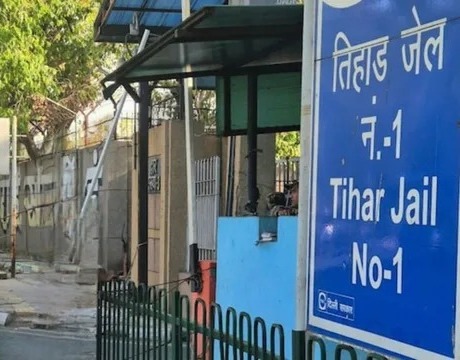
Delhi HC Orders Aadhaar QR Scanning for Bail Releases: Speeding Justice with Digital Tools
Court mandates prisons to use UIDAI-linked apps for instant verification
Move aims to prevent undue detention and uphold Article 21 rights
By Legal Reporter
New Delhi: May 27, 2026:
The Delhi High Court has directed jails in the capital to adopt Aadhaar QR code scanning apps for faster release of prisoners granted bail, aiming to reduce delays caused by manual verification. This ruling integrates digital identity verification into judicial processes, ensuring efficiency and safeguarding fundamental rights.
Background
The Supreme Court decision in Noble M Paikada vs Union is a significant constitutional and administrative law judgment concerning the exercise of governmental authority and the protection of citizens’ legal rights under the Constitution of India. The case examines the scope of judicial review over executive decisions, procedural fairness in administrative actions, and the requirement that public authorities act transparently and within the limits of law. The Supreme Court emphasized that arbitrary state action cannot survive constitutional scrutiny, making this ruling highly relevant for constitutional law, administrative governance, and public law litigation in India.
The Delhi High Court’s directive comes in response to repeated concerns over delays in releasing prisoners who have already secured bail. Traditionally, verification of identity and bail orders involved manual checks, often leading to prolonged detention. By mandating the use of Aadhaar QR code scanning apps, the Court seeks to modernize prison administration and align it with India’s digital governance framework.
Key Legal Provisions Discussed
- Article 21 of the Constitution of India
- Guarantees the right to life and personal liberty.
- The Court emphasized that unnecessary detention after bail violates Article 21, making speedy release a constitutional imperative.
- Prisons Act, 1894 & Delhi Prison Rules, 2018
- Provide the framework for prison administration and inmate management.
- The directive supplements these rules by introducing digital verification mechanisms to ensure compliance with bail orders.
- Aadhaar Act, 2016
- Establishes Aadhaar as a unique identity number linked to biometric and demographic data.
- The Court’s order leverages Aadhaar’s QR code functionality for instant authentication, ensuring accuracy and reducing fraud.
- Information Technology Act, 2000
- Governs electronic records and digital signatures.
- By using QR code scanning apps, prisons integrate IT-enabled verification consistent with statutory recognition of electronic records.
Court’s Observations
- Delays in Release: The Court noted that prisoners often remain in custody for days despite bail orders due to slow verification.
- Digital Efficiency: Aadhaar QR scanning provides real-time authentication, minimizing bureaucratic hurdles.
- Safeguarding Rights: The directive ensures that liberty is not compromised by administrative inefficiency.
Implications
- For Prisoners: Faster release upon bail, reducing instances of unlawful detention.
- For Judiciary: Reinforces the principle that judicial orders must be executed promptly.
- For Prison Administration: Introduces accountability and modernization in prison management.
- For Digital Governance: Strengthens Aadhaar’s role in legal and administrative processes.
Critical Analysis
The Delhi High Court’s order reflects a progressive approach to justice delivery. By integrating Aadhaar-based verification, the judiciary acknowledges the role of technology in safeguarding fundamental rights. However, concerns remain regarding data privacy, potential misuse of biometric information, and reliance on a single identity system. Policymakers must ensure robust safeguards under the Aadhaar Act and IT Act to prevent abuse.
This directive also sets a precedent for other states, potentially leading to nationwide adoption of digital verification in prisons. While efficiency gains are clear, balancing them with privacy protections will be crucial for sustainable implementation.
Detailed FAQ on Key Legal Points
Q1: Why did the Delhi High Court issue this directive?
A: To prevent delays in releasing prisoners who have already secured bail, ensuring compliance with Article 21’s guarantee of personal liberty.
Q2: What technology will be used?
A: Aadhaar QR code scanning apps linked to UIDAI databases for instant identity verification.
Q3: Which laws support this move?
A: Article 21 of the Constitution, Prisons Act (1894), Delhi Prison Rules (2018), Aadhaar Act (2016), and IT Act (2000).
Q4: How does this protect prisoners’ rights?
A: It ensures timely release, preventing unlawful detention and safeguarding the constitutional right to liberty.
Q5: Are there privacy concerns?
A: Yes. While Aadhaar provides efficiency, concerns about data misuse and over-reliance on biometric identity remain.
Q6: Will this be extended nationwide?
A: The directive currently applies to Delhi prisons, but it may serve as a model for other states.
Q7: What happens if Aadhaar verification fails?
A: Alternative verification methods under prison rules and judicial oversight must be used to ensure no prisoner is unlawfully detained.
In essence, the Delhi High Court’s order to adopt Aadhaar QR code scanning apps in prisons is a landmark step toward digital justice, ensuring that bail orders translate into immediate liberty while reinforcing constitutional protections.