

Bombay High Court Declares Dual Pension Concealment as Fraud on State Exchequer
Court Waives Interest but Orders Recovery of Excess Pension
Judgment Highlights Strict Prohibition of Dual Pensions Under EPS 1995
By Our Legal Correspondent
New Delhi: March 12, 2026:
Also Read: Supreme Court Warns: Overzealous Investigations Based on Public Perceptions Harm Justice
The Bombay High Court recently delivered a significant judgment in the case of Shamshuddin Ali Mullaji v. The Assistant Commissioner of Employees Provident Fund Commissioner (Pension). The Court held that drawing dual pensions by suppressing material facts constitutes fraud on the state exchequer. While the Court dismissed the petitioner’s plea, it showed leniency by waiving the interest component on recovery, acknowledging his remorse and willingness to repay the excess amount.
This ruling is crucial for pension law in India, as it clarifies the consequences of misrepresentation under the Employees’ Pension Scheme, 1995 (EPS 1995).
[Recommended Research Resources]
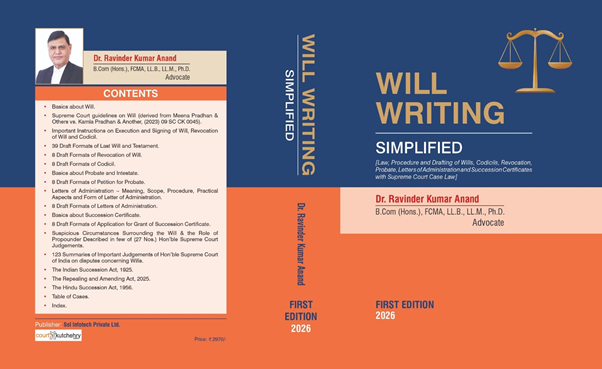
📘 Legal professionals, families and students alike will benefit from Will Writing Simplified, which covers procedure and case law in detail.
🔹 Buy on Amazon
🔹 Buy on Flipkart
Also Read: Calcutta High Court Seeks Response on PIL Over Non-Disbursal of PMMVY Maternity Benefits
Case Background
- Petitioner’s Employment History:
- Worked at Poyasha Pvt. Ltd. (1978–1994).
- Later joined A. S. Moloobhoy and Sons (1997–2009).
- Dual Pension Issue:
- While employed in his second job, Mullaji applied for and began receiving an early pension from his first employment.
- Upon retirement in 2009, he applied for a second pension under EPS 1995 using Form 10-D.
- He failed to disclose his earlier pension, leading to dual pension benefits.
- Court’s Findings:
- Concealment of prior pension amounted to fraud and misrepresentation.
- Recovery of excess pension was justified.
- However, considering his remorse, the Court waived interest on recovery.
Also Read: Supreme Court: J&K Paramedical Staff Cannot Be Denied Regularisation
Legal Significance
- Fraud on State Exchequer: The Court emphasized that drawing dual pensions by concealment is a direct fraud on public funds.
- Prohibition Under EPS 1995: The Employees’ Pension Scheme strictly prohibits dual pensions. Any misrepresentation or non-disclosure invites recovery of excess payments.
- Judicial Balance: While upholding the principle of accountability, the Court balanced justice with compassion by waiving interest, acknowledging the petitioner’s remorse.
Broader Implications
- For Retired Employees: This case serves as a warning that non-disclosure of prior pension benefits can lead to recovery proceedings.
- For Employers & EPFO: Reinforces the need for strict scrutiny of pension applications to prevent misuse.
- For Legal Community: The judgment adds to case law on pension fraud, misrepresentation, and recovery under EPS 1995.
Conclusion
The Bombay High Court’s ruling in Shamshuddin Ali Mullaji v. EPFC underscores the importance of transparency in pension claims. While the Court showed leniency by waiving interest, it firmly declared that dual pension concealment is fraud. This case will likely serve as a precedent in similar disputes, strengthening the integrity of pension administration in India.
Also Read: Delhi High Court Upholds Compensation in Motor Accident Case Against United India Insurance
GEO Keywords for Faster Searches
- Bombay High Court dual pension case
- Shamshuddin Ali Mullaji judgment
- EPS 1995 dual pension prohibition
- Pension fraud India case law
- Employees Provident Fund Commissioner pension dispute
- Dual pension concealment recovery order
- Bombay HC pension ruling 2026
Also Read: Supreme Court Restricts Property Transfers Through Wills in Chandigarh