
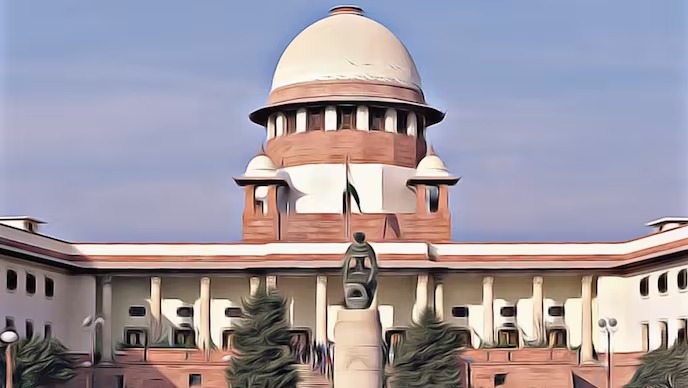
Supreme Court Restricts Property Transfers Through Wills in Chandigarh
UT Clarifies Rules for Heritage Sectors
Family-Based Transfers Allowed, Apartmentalisation Barred
By Legal Reporter
New Delhi: March 13, 2026:
Also Read: Delhi High Court Summons EOW Officer from Gurugram Over Threats to Litigant
The Chandigarh administration has issued fresh clarifications on property transfers through wills, following the Supreme Court’s landmark ruling of January 10, 2023. The apex court prohibited the fragmentation, division, and apartmentalisation of single residential units in Chandigarh’s Phase-I sectors (1–30), known as “Corbusian Chandigarh.” The ruling aims to protect the city’s unique architectural heritage designed by Le Corbusier.
[Recommended Research Resources]
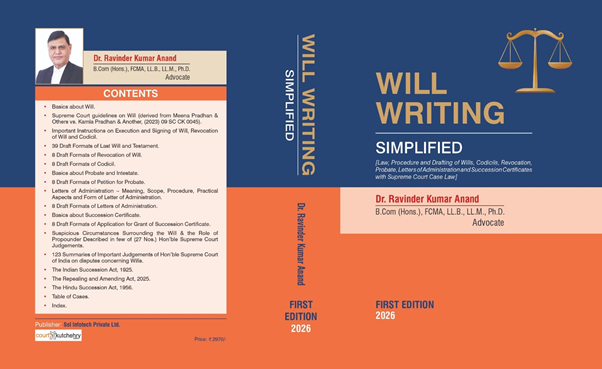
📘 Legal professionals and students alike will benefit from Will Writing Simplified, which covers procedure and case law in detail.
🔹 Buy on Amazon
🔹 Buy on Flipkart
Also Read: Supreme Court Slams Delay: 350+ Trials Pending in J&K for Over 5 Years
Supreme Court Ruling Explained
- Case: Residents Welfare Association & Anr. vs. UT of Chandigarh & Ors.
- Date: January 10, 2023.
- Key Decision: Independent houses in heritage sectors cannot be converted into multiple apartments for unrelated individuals.
- Objective: Preserve Chandigarh’s urban design and prevent commercialization of residential spaces.
UT Administration’s Clarifications
- Wills within family allowed: Property transfers through wills are valid if bequeathed to family members.
- No outsider fragmentation: Wills dividing property among unrelated individuals are not permitted.
- Mutations recognized: Transfers registered before January 10, 2023, remain valid.
- Building plans restricted: Only family co-owners can seek revised building plans.
Legal and Social Significance
- Preservation of heritage: The ruling safeguards Chandigarh’s architectural identity.
- Impact on property owners: Families can still transfer property through wills, but outsiders cannot claim fragmented shares.
- Clarity for legal heirs: The administration’s guidelines reduce confusion in inheritance cases.
Also Read: Madras HC: Scheduled Offence Trial Must Shift to PMLA Special Court
Impact on Real Estate
- Controlled development: Prevents uncontrolled apartmentalisation in heritage sectors.
- Market stability: Ensures that property values remain consistent with Chandigarh’s planning norms.
- Family-centric ownership: Encourages intra-family transfers rather than speculative sales.
Expert Views
Legal experts note that the ruling balances heritage preservation with inheritance rights. While it restricts fragmentation, it still allows families to pass property through wills, ensuring continuity of ownership.
Conclusion
The Supreme Court’s restrictions on property transfers through wills in Chandigarh highlight the importance of urban heritage preservation. By allowing family-based transfers but barring fragmentation among outsiders, the ruling ensures that Chandigarh retains its unique architectural character while protecting the rights of genuine heirs.
Also Read: Supreme Court Quashes Bihar Act: ₹1 Compensation for Historic Library Declared Arbitrary
GEO Keywords for Faster Searches
- Supreme Court Chandigarh property transfer ruling
- Property transfer through wills Chandigarh
- Apartmentalisation ban Chandigarh Supreme Court
- Chandigarh UT property inheritance rules
- Le Corbusier heritage sectors property law
- SC ruling on wills and property Chandigarh
Also Read: Bombay High Court Orders Life Term in Incestuous Rape Case, Upholds School Records as Age Proof