
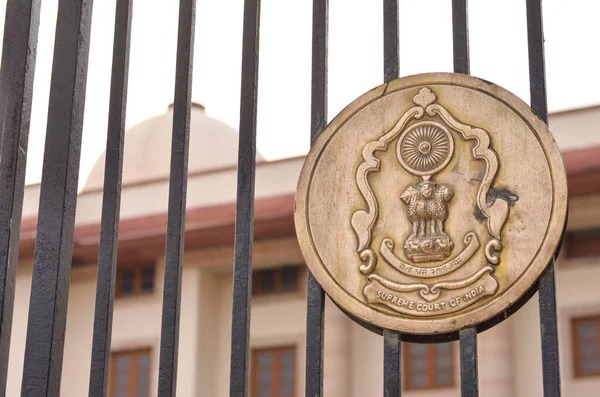
Supreme Court: J&K Paramedical Staff Cannot Be Denied Regularisation
Court Says Exclusion of Academic Arrangement Staff Is Unconstitutional
Judgment Strengthens Equality in Public Employment
By Legal Reporter
New Delhi: March 12, 2026:
Also Read: Delhi High Court Summons EOW Officer from Gurugram Over Threats to Litigant
In a landmark ruling, the Supreme Court of India has upheld the rights of paramedical staff, including female nurses and multipurpose health workers, who were appointed under the Jammu & Kashmir Medical and Dental Education (Appointment on Academic Arrangement Basis) Rules, 2009. The Court declared that excluding them from regularisation under the Jammu & Kashmir Civil Services (Special Provisions) Act, 2010 was unconstitutional.
The judgment, delivered on 9 March 2026 by a bench of Justice Vikram Nath and Justice Sandeep Mehta, is expected to benefit thousands of healthcare workers who have served for years without job security.
Case Background
- Appellants: Paramedical staff including junior nurses and female multipurpose health workers.
- Appointment Basis: Academic arrangement under SRO 384 of 2009.
- Exclusion: Section 3(b) of the J&K Civil Services (Special Provisions) Act, 2010 excluded academic arrangement staff from regularisation.
- Court’s Findings:
- Exclusion violated Articles 14 and 16 (Equality and Equal Opportunity in Public Employment).
- Nomenclature of appointment cannot determine eligibility for regularisation.
- State must act as a model employer, ensuring fairness and dignity for workers.
[Recommended Research Resources]
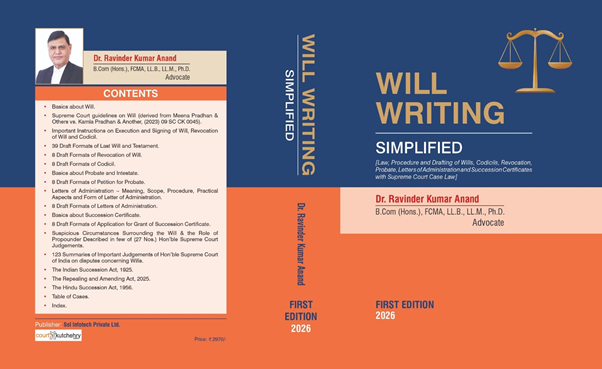
📘 Legal professionals and students alike will benefit from Will Writing Simplified, which covers procedure and case law in detail.
🔹 Buy on Amazon
🔹 Buy on Flipkart
Also Read: Supreme Court Slams Delay: 350+ Trials Pending in J&K for Over 5 Years
Legal Significance
- Articles 14 & 16: Guarantee equality before law and equal opportunity in employment.
- Civil Services (Special Provisions) Act, 2010: Intended to regularise ad hoc, contractual, and consolidated employees.
- Judicial Principle: Exclusionary clauses based on nomenclature are unconstitutional if they deny equal treatment.
Broader Implications
- For Paramedical Staff: Thousands of nurses and health workers in J&K will now be eligible for regularisation, securing job stability and benefits.
- For State Governments: Reinforces that contractual or temporary staff cannot be arbitrarily excluded from regularisation schemes.
- For Healthcare Sector: Ensures better morale and retention of frontline medical staff, crucial for public health delivery.
- For Legal Community: Adds to jurisprudence on equality in employment and the role of the State as a fair employer.
Also Read: Madras HC: Scheduled Offence Trial Must Shift to PMLA Special Court
Conclusion
The Supreme Court’s ruling in Abhishek Sharma v. State of J&K is a milestone in employment law, ensuring that paramedical staff are not denied regularisation merely due to the label of “academic arrangement.” By striking down discriminatory exclusions, the Court has reinforced constitutional guarantees of equality and fairness in public employment.
GEO Keywords for Faster Searches
Also Read: Supreme Court Quashes Bihar Act: ₹1 Compensation for Historic Library Declared Arbitrary
- Supreme Court J&K paramedical staff regularisation
- Abhishek Sharma v State of J&K judgment
- Female nurses regularisation Supreme Court India
- Academic arrangement exclusion unconstitutional
- Articles 14 and 16 employment rights India
- J&K Civil Services Special Provisions Act 2010
- Supreme Court healthcare workers ruling 2026
Also Read: Bombay High Court Orders Life Term in Incestuous Rape Case, Upholds School Records as Age Proof