
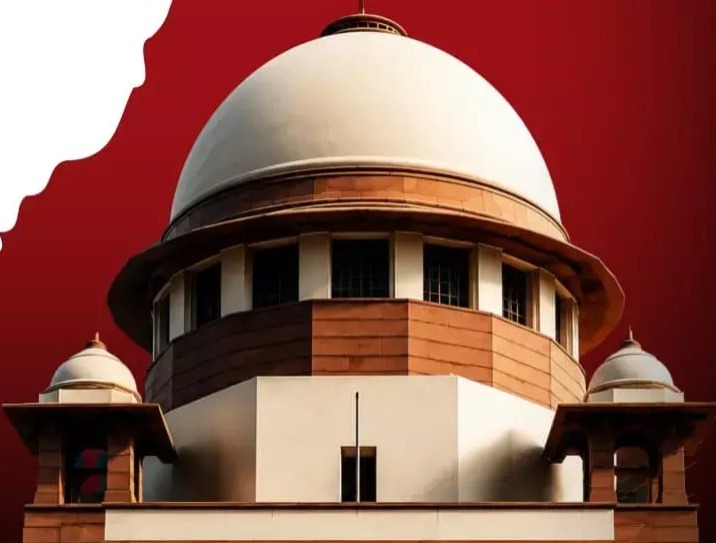
Supreme Court: Bank Negligence in Cheque Validity Is Deficiency in Service
Failure to Present Cheques on Time Breaches Consumer Rights
Court Moderates Compensation but Upholds Liability
By Legal Reporter
New Delhi: June 02, 2026:
The Supreme Court has held that banks are liable for negligence if they fail to present cheques within their validity period, ruling that such conduct amounts to “deficiency in service” under consumer protection law. In Canara Bank v. Kavita Chowdhary (2026), the Court clarified that banks act as agents of customers and must exercise due diligence, while also reducing excessive compensation awarded by the consumer forum.
Readers seeking clarity on inheritance rights, family property disputes, and succession-related litigation may find the Supreme Court judgment in Murthy & Others v. C. Saradambal & Others particularly relevant, as it discusses important legal principles governing succession, ownership claims, and the resolution of disputes among legal heirs and interested parties.
1. Case Background
The dispute arose when Canara Bank failed to present two cheques worth ₹1.06 crore before their expiry date (June 2, 2018). The cheques, deposited on May 29, 2018, were returned due to a bank strike on May 30–31. Despite reopening on June 1, the bank did not re-present them, causing them to become stale. The complainant, Kavita Chowdhary, lost the opportunity to recover funds or initiate proceedings under Section 138 of the Negotiable Instruments Act, 1881.
The National Consumer Disputes Redressal Commission (NCDRC) found the bank guilty of deficiency in service and awarded compensation equivalent to 10% of the cheque amount plus 8% interest. Canara Bank appealed to the Supreme Court.
2. Supreme Court’s Findings
The bench of Justice B.V. Nagarathna and Justice Ujjal Bhuyan upheld the finding of negligence but reduced compensation. Key observations:
- Section 75A, Negotiable Instruments Act: Delay in presentment can only be excused if caused by circumstances beyond the holder’s control, not by negligence.
- Banks act as agents of customers and must exercise due diligence in presenting cheques within validity.
- Failure to do so constitutes deficiency in service under the Consumer Protection Act.
- Compensation must reflect actual loss; awarding 10% of cheque value was excessive. The Court reduced it to 6% with 6% annual interest.
3. Legal Framework
- Negotiable Instruments Act, 1881:
- Section 75A: Delay in presentment excused only if beyond control.
- Section 138: Dishonour of cheque creates criminal liability, but stale cheques deprive customers of this remedy.
- Consumer Protection Act, 1986 & 2019:
- Defines “service” to include banking.
- “Deficiency” covers negligence, omission, or failure in service.
- Indian Contract Act, 1872 (Section 73): Compensation for loss caused by breach of duty.
4. Judicial Precedents Cited
- Lucknow Development Authority v. M.K. Gupta (1994): Expanded scope of “service” under consumer law.
- Arun Bhatia v. HDFC Bank (2022): Banking negligence amounts to deficiency in service.
- MSR Leathers v. S. Palaniappan (2013): Clarified cheque re-presentation rights.
5. Broader Implications
- For Banks: Reinforces duty of diligence; negligence can trigger liability under consumer law.
- For Consumers: Strengthens rights to compensation for banking lapses.
- For Legal System: Balances consumer protection with proportional compensation.
6. Comparative Perspective
- UK: Banks must follow strict cheque clearing timelines; negligence can lead to liability under Financial Ombudsman rules.
- US: Uniform Commercial Code requires timely presentment; failure may result in damages.
7. Critical Analysis
The ruling underscores that consumer protection extends to banking services. By moderating compensation, the Court balanced deterrence against fairness, ensuring banks are accountable without imposing disproportionate penalties.
Detailed FAQ for Quick Understanding
Q1: What was the Supreme Court’s ruling?
Banks are liable for deficiency in service if they fail to present cheques within validity.
Q2: Which law governs cheque presentment?
Section 75A of the Negotiable Instruments Act, 1881.
Q3: Why was Canara Bank found negligent?
It failed to re-present cheques on June 1–2, 2018, despite knowing they expired on June 2.
Q4: What is “deficiency in service”?
Any negligence, omission, or failure in providing services under the Consumer Protection Act.
Q5: Can consumers claim compensation for banking negligence?
Yes, consumer forums can award compensation for losses caused by negligent banking conduct.
Q6: Why did the Supreme Court reduce compensation?
Because awarding 10% of cheque value was excessive; actual loss was indeterminate.
Q7: What compensation was finally awarded?
6% of cheque amount plus 6% annual interest.
Q8: Does this ruling apply to all banks?
Yes, both public and private banks fall under consumer protection law.
.