
COURTKUTCHEHRY SPECIAL ON SC RULING ON RULES ON EXPERT TESTIMONY IN WILL CASES
Supreme Court: No Need for Handwriting Expert if Will Signatures Are Undisputed
Apex Court Emphasizes Consent Over Technical Evidence
Ruling Simplifies Probate Proceedings and Reduces Delays
By Our Legal Reporter
New Delhi: January 29, 2026:
In a significant ruling, the Supreme Court of India has set aside a Kerala High Court order that directed a will to be sent to a handwriting expert for verification. The apex court observed that when the signatures of the testator are not in dispute, such an exercise is unnecessary and only delays the process of justice.
Also Read: Unregistered Wills in India: How Property Is Divided Among Siblings Under Succession Laws
The judgment, delivered by a bench comprising Justice Sanjay Kumar and Justice K. Vinod Chandran, is expected to streamline probate proceedings and reduce unnecessary reliance on expert testimony in cases where the authenticity of signatures is not challenged.
Case Background
- Origin of Dispute: The case arose from a challenge to a will where the appellant did not dispute the signatures but claimed the document was executed without free will and consent.
- Kerala High Court’s Order: The High Court had directed the will to be sent to a handwriting expert for examination.
- Supreme Court’s Intervention: The apex court overturned this order, stating that expert opinion was irrelevant since the signatures were not contested.
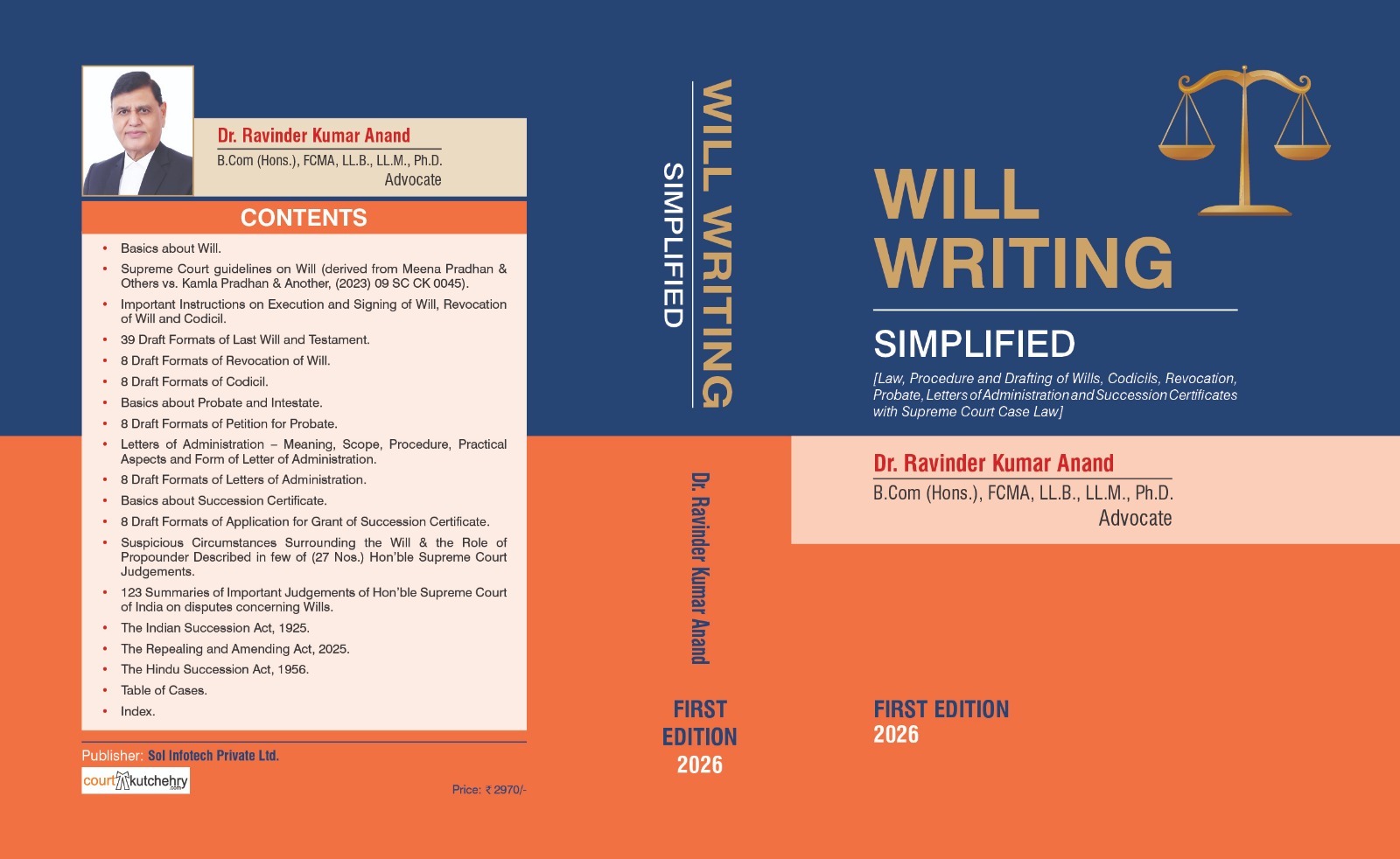
(DO YOU WANT TO KNOW ABOUT WILL WRITING LAWS? OR JUST WANT TO GIFT IT? COURTKUTCHEHRY.COM HAS JUST PUBLISHED A VALUABLE BOOK ON WILL WITH PRACTICAL DRAFTS AND SIMPLE LEGAL EXPLANATIONS. YOU CAN ORDER FROM HERE. JUST CLICK ON FLIPKART & AMAZON LINK.
For readers interested in understanding wills, codicils, probate, and succession law in detail, a recommended resource is the book Will Writing Simplified [Law, Procedure and Drafting of Wills, Codicils, Revocation, Probate, Letters of Administration and Succession Certificates with Supreme Court Case Law], available on Amazon and Flipkart. This book provides practical guidance for lawyers, students, and families navigating inheritance disputes.
Court’s Observations
Also Read: Karnataka High Court: Pleadings Can Be Amended Anytime; Proviso Cannot Override Main Rule
The Supreme Court made several important points:
- Focus on Consent: The real issue was whether the will was executed voluntarily, not whether the signatures were genuine.
- Avoiding Delays: Sending documents for expert opinion when signatures are undisputed causes unnecessary delay in probate matters.
- Legal Principle: Courts must prioritize substantive issues like free will, coercion, or undue influence rather than technicalities.
Legal Context
- Sections 45 & 73 of the Indian Evidence Act: Allow expert opinion and court comparison of handwriting.
- Supreme Court’s Clarification: These provisions should not be invoked when signatures are admitted.
- Probate Law: The ruling simplifies probate proceedings, ensuring faster resolution of inheritance disputes.
Significance of the Judgment
Also Read: Allahabad High Court: Judges Must Verify Juvenility Claims, Cannot Simply Refer to JJ Board
- Streamlining Probate Cases: Reduces reliance on handwriting experts when not needed.
- Clarity in Law: Establishes that consent and voluntariness are more important than technical verification.
- Impact on Families: Helps heirs avoid prolonged litigation and unnecessary expenses.
Broader Implications
This ruling has wider implications for inheritance and succession disputes:
- Reduced Litigation Costs: Families save money by avoiding expert fees.
- Faster Justice: Courts can focus on substantive issues.
- Legal Certainty: Provides clear guidance for lower courts handling will disputes.
Expert Commentary
Legal experts have welcomed the ruling, noting that it balances efficiency with fairness. They emphasize that while handwriting experts are valuable in cases of disputed signatures, their involvement should not be automatic.
Conclusion
The Supreme Court’s ruling that handwriting expert opinion is unnecessary when signatures are not disputed marks a turning point in Indian probate law. By emphasizing free will and consent over technicalities, the judgment ensures faster resolution of inheritance cases and reduces unnecessary litigation.
This decision not only clarifies legal procedure but also strengthens the principle that justice must be efficient, fair, and focused on substantive issues rather than procedural delays.
Suggested Keywords for Faster Searches
- Supreme Court handwriting expert will ruling
- Kerala High Court will dispute case
- Probate law India Supreme Court judgment
- Will signatures undisputed expert opinion unnecessary
- Indian Evidence Act Section 45 handwriting expert
- Succession law Supreme Court ruling 2026
- Probate proceedings simplified India
- Will disputes Supreme Court India
Also Read: Karnataka High Court Refuses to Quash FIR in Voyeurism Case: ‘No Woman Is Safe’