
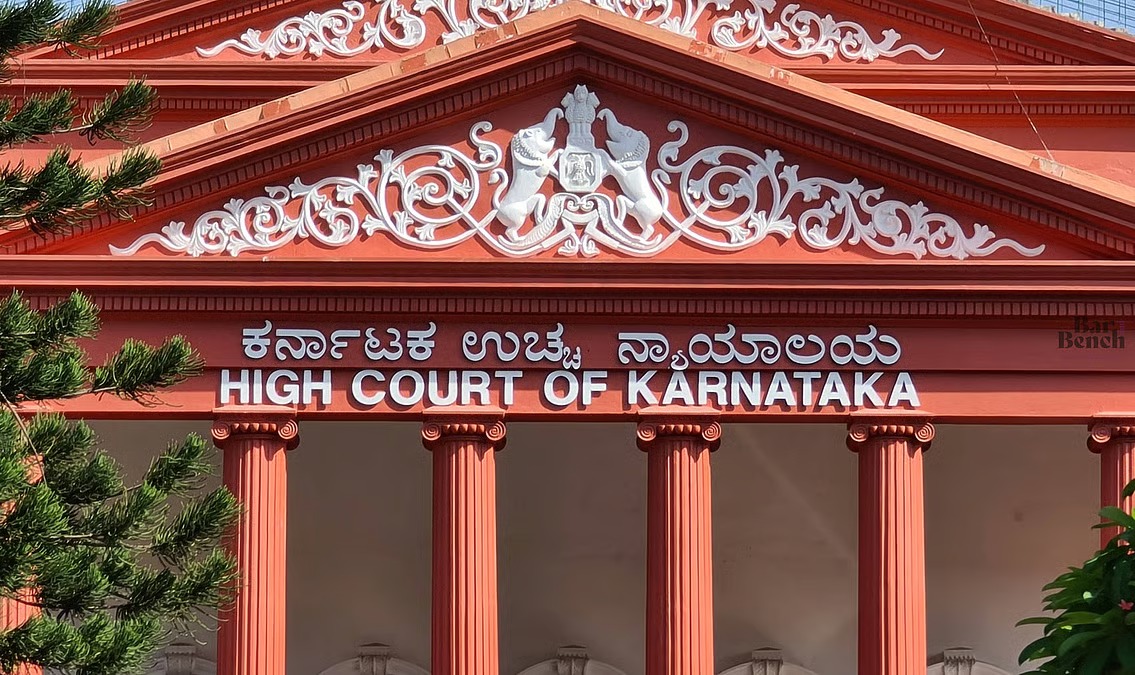
Karnataka High Court: Pleadings Can Be Amended Anytime; Proviso Cannot Override Main Rule
Court says substantive justice must prevail over procedural technicalities in civil disputes
Order VI Rule 17 CPC interpreted to allow amendments at any stage of proceedings
By Our Legal Correspondent
New Delhi: January 28, 2026:
In a significant ruling, the Karnataka High Court has held that the proviso to Order VI Rule 17 of the Code of Civil Procedure (CPC) cannot defeat the main provision, which permits amendment of pleadings at any stage of proceedings. The judgment underscores the judiciary’s commitment to ensuring that litigants are not denied justice due to procedural hurdles.
This ruling is particularly important in civil litigation, where amendments to pleadings often become necessary to reflect new facts, correct errors, or clarify issues. By reaffirming the broad scope of Order VI Rule 17, the court has strengthened the principle that justice must not be sacrificed at the altar of technicalities.
Case Background
- Provision in Question: Order VI Rule 17 CPC deals with amendment of pleadings.
- Main Rule: Allows parties to amend pleadings at any stage of proceedings, subject to court approval.
- Proviso: Added by the 2002 amendment, restricts amendments after commencement of trial unless the court is satisfied that the party could not have raised the matter earlier despite due diligence.
- Dispute: Whether the proviso should be interpreted strictly to bar amendments once trial begins.
- Court’s Decision: The Karnataka High Court ruled that the proviso cannot override the main provision, and amendments must be allowed if they serve the cause of justice.
Court’s Observations
- Substantive Justice Over Technicalities
- The court emphasized that procedural rules are meant to aid justice, not obstruct it.
- Denying amendments solely on technical grounds would defeat the purpose of civil litigation.
- Interpretation of Proviso
- The proviso is meant to regulate, not restrict, the power of courts to allow amendments.
- Courts must adopt a liberal approach when amendments are necessary to resolve disputes fairly.
- Judicial Discretion
- Judges retain discretion to allow or reject amendments based on relevance, necessity, and fairness.
- Amendments that cause prejudice or delay may be rejected, but genuine corrections must be permitted.
Wider Legal Context
Also Read: Supreme Court Orders Inclusion of 49 HIMSR PG Seats in NEET-PG Counselling 2025–26
1. Order VI Rule 17 CPC
- Introduced to ensure flexibility in pleadings.
- Recognizes that litigation is dynamic and facts may evolve.
- Courts have consistently interpreted it liberally to avoid miscarriage of justice.
2. 2002 Amendment
- Added the proviso to prevent misuse of amendments for delaying trials.
- However, courts have clarified that the proviso cannot nullify the main provision.
3. Supreme Court Precedents
- Revajeetu Builders vs. Narayanaswamy (2009): Laid down principles for allowing amendments, including necessity, relevance, and absence of prejudice.
- Baldev Singh vs. Manohar Singh (2006): Held that amendments should be allowed if they help determine the real controversy.
- Rajkumar Gurawara vs. S.K. Sarwagi (2008): Clarified that amendments cannot be refused merely because they are sought late.
Implications of the Judgment
- For Litigants: Provides reassurance that genuine amendments will be allowed even after trial begins.
- For Lawyers: Encourages careful drafting but also offers flexibility to correct errors.
- For Judiciary: Reinforces discretion to balance fairness with efficiency.
Recent Related Judgments
Also Read: Supreme Court: No Need for Handwriting Expert if Will Signatures Are Undisputed
Court & Date | Case | Key Ruling | Impact |
Supreme Court, 2009 | Revajeetu Builders vs. Narayanaswamy | Principles for allowing amendments | Liberal interpretation of Rule 17 |
Supreme Court, 2006 | Baldev Singh vs. Manohar Singh | Amendments help determine real controversy | Strengthened litigants’ rights |
Supreme Court, 2008 | Rajkumar Gurawara vs. S.K. Sarwagi | Late amendments cannot be refused outright | Ensured fairness in trials |
Karnataka HC, Jan 2026 | Order VI Rule 17 CPC case | Proviso cannot override main provision | Reinforced substantive justice |
Why This Judgment Matters
- Protects Litigants: Prevents denial of justice due to procedural rigidity.
- Clarifies Law: Provides clear guidance on interpreting Order VI Rule 17 CPC.
- Strengthens Judiciary: Empowers courts to prioritize fairness over technicalities.
Conclusion
The Karnataka High Court’s ruling on Order VI Rule 17 CPC is a landmark in civil procedure law. By holding that the proviso cannot defeat the main provision, the court has reaffirmed the principle that justice must prevail over technicalities. This judgment will serve as a guiding precedent for courts across India, ensuring that litigants are not unfairly penalized for procedural lapses when substantive justice demands flexibility.
Also Read: Is a Hiba Valid for Unborn Grandchildren? Legal Experts Explain Muslim Gift Law in India
Suggested Keywords (SEO + ChatGPT)
- Karnataka High Court Order VI Rule 17 CPC
- Amendment of pleadings civil procedure India
- CPC proviso amendment stage of proceedings
- Revajeetu Builders vs Narayanaswamy amendment case
- Baldev Singh vs Manohar Singh CPC ruling
- Rajkumar Gurawara amendment pleadings case
- Civil procedure amendment rights India
- Karnataka HC landmark judgment CPC
- Pleadings amendment substantive justice India
- Order VI Rule 17 CPC interpretation
Also Read: Karnataka High Court Refuses to Quash FIR in Voyeurism Case: ‘No Woman Is Safe’