
COURTKUTCHEHRY SPECIAL ON PERILS OF UNREGISTERED WILLS
Unregistered Wills in India: How Property Is Divided Among Siblings Under Succession Laws
Indian Succession Act makes unregistered wills valid, but disputes often reach courts
Hindu Succession Act ensures equal rights for sons and daughters in inherited property
By Our Legal Reporter
New Delhi: January 28, 2026:
Inheritance disputes are among the most common legal battles in Indian courts. When a parent passes away leaving behind an unregistered will, siblings often find themselves in conflict over property division. While many assume that registration is mandatory, the Indian Succession Act, 1925 clarifies that a will does not need registration to be valid. Yet, the absence of registration can make proving authenticity harder, leading to prolonged litigation.
This article explains how property is divided among siblings when a parent leaves an unregistered will, the governing laws, and the subtexts that shape inheritance rights in India.
What the Law Says
- Indian Succession Act, 1925:
- A will is valid even if unregistered.
- The testator (parent) must have signed it voluntarily, with witnesses.
- Courts examine handwriting, signatures, and witness testimony to confirm authenticity.
- Hindu Succession Act, 1956 (amended in 2005):
- Applies when property is not covered by the will.
- Sons and daughters inherit equally.
- Married daughters have the same rights as sons.
- If the deceased dies intestate (without a valid will), property is divided equally among Class I heirs (children, spouse, mother).
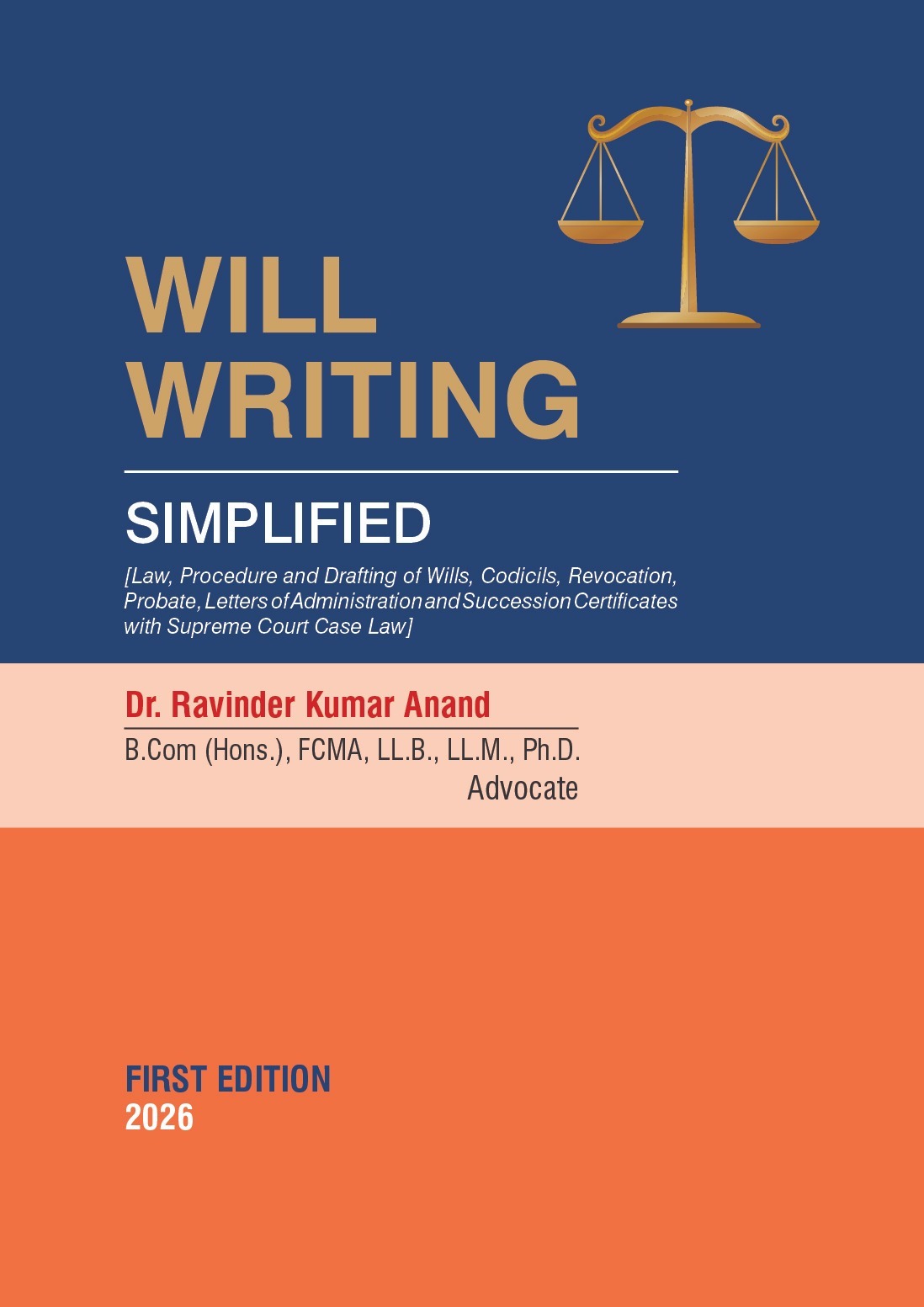
NEED A HELP IN WRITING WILL? MUST GRAB THIS BOOK!!! [Amazon](https://www.amazon.in/dp/B0GHYPNX6D?ref=cm_sw_r_ffobk_cso_wa_apan_dp_JYCVQH2S74NTQA0RF6GB&ref_=cm_sw_r_ffobk_cso_wa_apan_dp_JYCVQH2S74NTQA0RF6GB&social_share=cm_sw_r_ffobk_cso_wa_apan_dp_JYCVQH2S74NTQA0RF6GB&bestFormat=true)
Also Read: Supreme Court Orders Inclusion of 49 HIMSR PG Seats in NEET-PG Counselling 2025–26
Case Study: Dispute Among Eleven Siblings
In a recent case reported, a father passed away in 2022 leaving behind six daughters and five sons. He had written a will, but it was not registered. The property remained undivided, and in 2024, the daughters approached the court seeking their rightful share. The court applied the Hindu Succession Act to ensure equal distribution, since parts of the estate were not clearly bequeathed in the will.
Key Subtexts in Property Division
- Authenticity of the Will
- Courts scrutinize whether the will was made voluntarily.
- If siblings allege coercion or forgery, the burden of proof lies on the party presenting the will.
- Unbequeathed Assets
- If the will does not mention certain properties, those assets are divided equally among heirs under the Hindu Succession Act.
- Partition Deed
- A legally executed partition deed can prevent disputes.
- Without it, verbal agreements often collapse into litigation.
- Ancestral vs. Self-Acquired Property
- Ancestral property: Cannot be willed away freely; all legal heirs have a birthright.
- Self-acquired property: Parent can distribute through a will as they wish.
Why Registration Helps
Also Read: Supreme Court: No Need for Handwriting Expert if Will Signatures Are Undisputed
Although registration is not mandatory, it strengthens the will’s credibility. A registered will:
- Provides legal proof of execution.
- Reduces chances of forgery claims.
- Simplifies court proceedings.
Practical Steps for Families
- Draft a clear will with legal assistance.
- Register the will to avoid disputes.
- Execute a partition deed if multiple heirs are involved.
- Seek mediation before approaching courts to save time and money.
ARE YOU STILL RELUCTANT TO WRITE A WILL? CONSULT THIS BOOK TO CLEAR ALL DOUBTS BEFORE LAWYER:🔹 [Flipkart](https://www.flipkart.com/writing-simplified-law-procedure-drafting-wills-codicils-revocation-probate-letters-administration-succession-certificates-supreme-court-case/p/itm90da83e93c90d?pid=9788199477148)
Conclusion
Inheritance disputes in India often stem from misunderstandings about unregistered wills. While the law recognizes them as valid, proving authenticity can be challenging. The Indian Succession Act and Hindu Succession Act together ensure that siblings—sons and daughters alike—receive their rightful share. Families can avoid bitter conflicts by drafting clear wills, registering them, and executing partition deeds.
Suggested Keywords (SEO + ChatGPT)
- Unregistered will India
- Property division among siblings
- Hindu Succession Act inheritance rights
- Indian Succession Act will validity
- Married daughters property rights India
- Partition deed siblings property
- Intestate succession India
- Equal rights sons daughters inheritance
- Property disputes India court cases
- How property is divided in India
Also Read: Is a Hiba Valid for Unborn Grandchildren? Legal Experts Explain Muslim Gift Law in India