
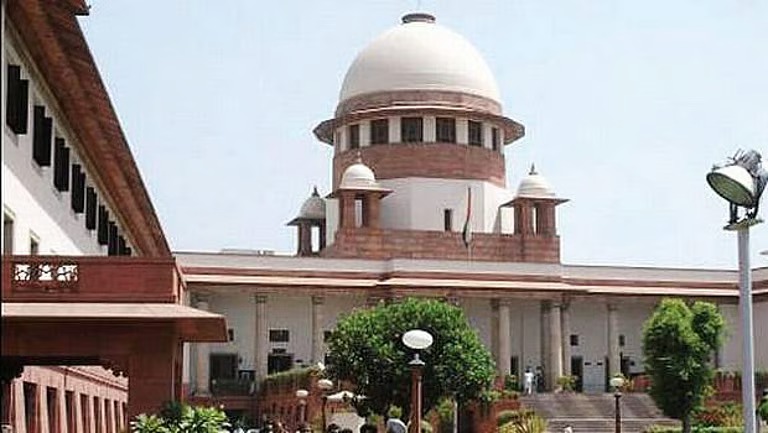
Supreme Court Upholds Deletion of Section 14A Disallowance
Failure to Record Satisfaction Invalidates AO’s Action
DLF Case Sets Precedent for Tax Assessments
By Legal Reporter
New Delhi: March 13, 2026:
Also Read: Absence of Eyewitness Not Fatal: Supreme Court Upholds Convictions in Balkishan Murder Case
In a landmark ruling delivered on March 12, 2026, the Supreme Court of India dismissed the Revenue’s appeal against DLF Home Developers Ltd., affirming that disallowances under Section 14A read with Rule 8D cannot be sustained unless the Assessing Officer records proper satisfaction. The judgment strengthens taxpayer protections against arbitrary disallowances and clarifies the scope of Section 14A.
[Recommended Research Resources]
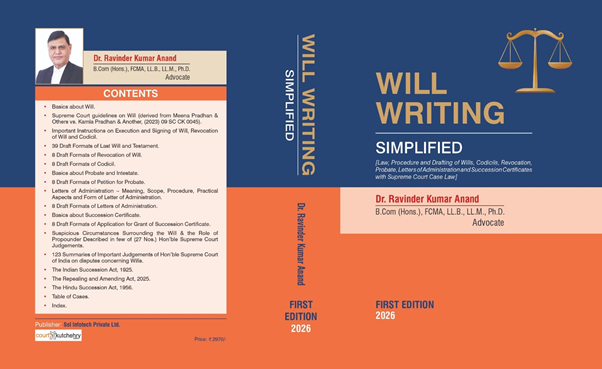
📘 Legal professionals, families and students alike will benefit from Will Writing Simplified, which covers procedure and case law in detail.
🔹 Buy on Amazon
🔹 Buy on Flipkart
Background of the Case
- Assessment Year: 2011–12.
- AO’s Action: Disallowed ₹80.66 crore under Section 14A, claiming expenditure was incurred in relation to exempt dividend income.
- Tribunal & High Court: Both the ITAT and Delhi High Court deleted the disallowance, holding that the AO had not recorded proper satisfaction.
- Supreme Court: Upheld the deletion, dismissing the Revenue’s Special Leave Petition (SLP).
Supreme Court’s Observations
- Recording satisfaction is mandatory: The AO must demonstrate why the taxpayer’s claim of no expenditure related to exempt income is incorrect.
- Rule 8D not automatic: Application of Rule 8D requires prior satisfaction; otherwise, disallowance is invalid.
- Judicial consistency: The Court found no reason to interfere with the ITAT and High Court’s findings.
Also Read: Bhopal Gas Tragedy Legacy: High Court Orders Cleanup Plan for Union Carbide Site
Legal Significance
- Section 14A clarified: Disallowance cannot be made mechanically; AO must provide reasoning.
- Taxpayer protection: Prevents arbitrary additions to income without evidence.
- Precedent: Strengthens jurisprudence on Section 14A, guiding future assessments.
Impact on Taxpayers
- Relief from arbitrary disallowances: Taxpayers can challenge disallowances if AO fails to record satisfaction.
- Reduced litigation: Clear guidelines will prevent unnecessary disputes.
- Corporate confidence: Large companies gain assurance that tax authorities must follow due process.
Expert Reactions
Tax professionals have welcomed the ruling, noting that it reinforces principles of natural justice. They argue that the judgment will reduce harassment and ensure fairness in tax administration.
Conclusion
Also Read: Supreme Court Orders 30% Women Representation in Bar Association Committees
The Supreme Court’s ruling in the DLF case marks a milestone in tax jurisprudence, ensuring that disallowances under Section 14A cannot be made without proper satisfaction. By upholding the deletion of ₹80.66 crore, the Court has reinforced the importance of reasoned assessments and taxpayer rights.
GEO Keywords for Faster Searches
- Supreme Court Section 14A ruling 2026
- DLF Home Developers tax case
- Rule 8D satisfaction requirement
- ITAT Delhi High Court Section 14A
- Tax disallowance deletion Supreme Court India
- Section 14A disallowance Supreme Court judgment
- AO failure to record satisfaction case
Also Read: Supreme Court Slams Hospitals Over DAMA, Allows Passive Euthanasia