
Supreme Court Slams Hospitals Over DAMA, Allows Passive Euthanasia
Discharge Against Medical Advice Risks Patient Rights
Court Recognizes Right to Die with Dignity
By Legal Reporter
New Delhi: March 14, 2026:
Also Read: Absence of Eyewitness Not Fatal: Supreme Court Upholds Convictions in Balkishan Murder Case
On March 12, 2026, the Supreme Court of India came down heavily on the common hospital practice of issuing “Discharge Against Medical Advice” (DAMA) forms when curative treatment is no longer possible. The Court observed that such discharges often occur when patients are on life support, leaving families to take them home without adequate medical safeguards.
In the same judgment, the Court permitted passive euthanasia for a patient who had been in a vegetative state for more than a decade, reinforcing the principle of dignity in end-of-life care.
Background of the Case
- The case involved Harish Rana, a 32-year-old man who had been in a coma since 2013 after a severe brain injury.
- His parents sought permission to withdraw life-sustaining treatment.
- The Court allowed passive euthanasia, clarifying that clinically assisted nutrition and hydration count as medical treatment that can be withdrawn under certain conditions.
[Recommended Research Resources]
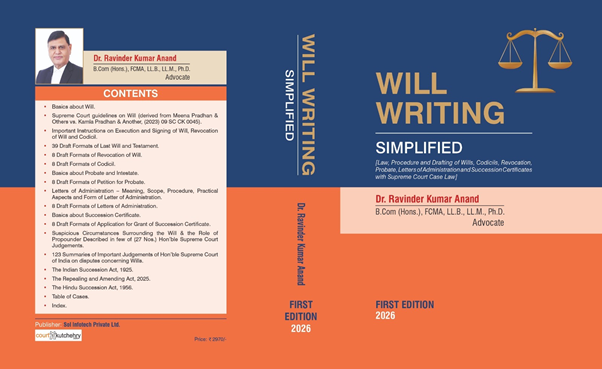
📘 Legal professionals and students alike will benefit from Will Writing Simplified, which covers procedure and case law in detail.
🔹 Buy on Amazon
🔹 Buy on Flipkart
Supreme Court’s Observations
- Hospitals must not abdicate responsibility: DAMA forms cannot be used as an excuse to discharge patients prematurely.
- Patient dignity is paramount: The right to die with dignity is part of Article 21 (Right to Life).
- Best interest principle: Decisions must consider what the patient would have wanted if capable of expressing choice.
- Passive euthanasia permitted: Withdrawal of life support is lawful under strict safeguards.
Crux of the Legal Debate
Also Read: Bhopal Gas Tragedy Legacy: High Court Orders Cleanup Plan for Union Carbide Site
- Medical ethics vs patient rights: Hospitals argue DAMA is necessary when families insist on discharge, but the Court held that medical responsibility continues until lawful withdrawal of treatment.
- Right to privacy and dignity: The ruling builds on Puttaswamy v. Union of India (2017), expanding Article 21 to include end-of-life dignity.
- Passive euthanasia framework: The Court reaffirmed earlier guidelines (2018 Common Cause v. Union of India) but applied them directly without a living will.
Impact of the Ruling
- For hospitals: Stronger accountability in handling terminal patients; DAMA cannot be routine practice.
- For families: Legal clarity on withdrawing life support under court supervision.
- For patients: Reinforces dignity and autonomy in medical care.
- For lawmakers: Signals need for comprehensive legislation on end-of-life care and euthanasia.
Expert Reactions
Medical ethicists and legal experts have hailed the judgment as a milestone in patient rights, noting that it balances compassion with responsibility. However, they caution that hospitals will need clear protocols to comply with the ruling.
Conclusion
Also Read: Supreme Court Orders 30% Women Representation in Bar Association Committees
The Supreme Court’s ruling against DAMA and its authorization of passive euthanasia marks a historic step in India’s medical jurisprudence. By prioritizing patient dignity and holding hospitals accountable, the Court has reshaped the framework of end-of-life care, ensuring that medical responsibility cannot be abandoned when treatment becomes difficult.
GEO Keywords for Faster Searches
- Supreme Court DAMA ruling India
- Passive euthanasia Supreme Court India
- Harish Rana vegetative state case
- Right to die with dignity Article 21
- Supreme Court hospital discharge ruling
- End-of-life care law India
- Supreme Court medical ethics judgment 2026
Also Read: Supreme Court Slams Hospitals Over DAMA, Allows Passive Euthanasia