
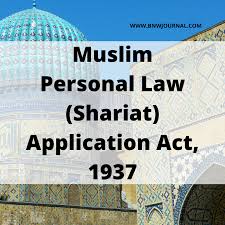
Supreme Court Questions Centre and UP Government Over 87-Year Delay in Framing Shariat Act Rules
Court flags statutory vacuum under Muslim Personal Law (Shariat) Application Act, 1937
Absence of rules prevents Muslims from filing declarations under Section 3
By Legal Reporter
New Delhi: February 20, 2026:
The Supreme Court of India has sought explanations from the Union Government and the Uttar Pradesh Government on why rules under the Muslim Personal Law (Shariat) Application Act, 1937 have not been framed even after 87 years. The Court observed that the absence of rules under Section 4 of the Act has created a statutory vacuum, preventing Muslims from effectively filing declarations under Section 3, which allows them to opt for governance by Shariat in matters of personal law.
[Suggested Resource]
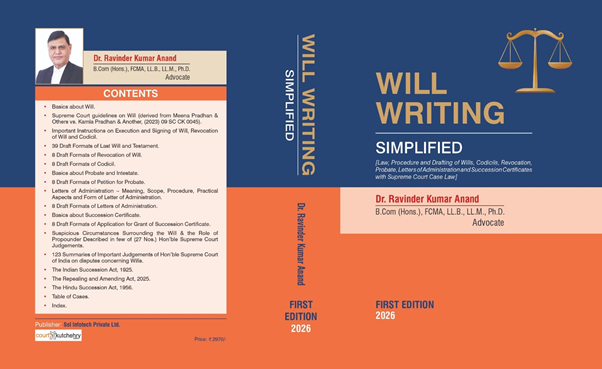
Legal professionals and students alike will benefit from Will Writing Simplified, which covers procedure and case law in detail. Amazon 📘 Buy "Will Writing Simplified" online: 🔹 Flipkart
Also Read: Vijay Mallya Tells Bombay High Court He Cannot Return to India, Cites Passport Revocation and UK Ban
Background of the Case
- The issue arose during hearings in Civil Appeal No. 2637 of 2012 (Smt. Gohar Sultan v. Sheikh Anis Ahmad and Another).
- The petitioner argued that the absence of rules under Section 4 has made it impossible for Muslims in Uttar Pradesh to formally declare their preference for Shariat law in personal matters such as inheritance, marriage, divorce, and succession.
- The bench comprising Justice Sanjay Karol and Justice Augustine George Masih issued notices to both the Centre and the UP government, seeking clarification.
Supreme Court’s Observations
- The Court noted that without rules, Section 3 declarations cannot be filed, leaving Muslims unable to exercise their statutory rights.
- It described the situation as a “glaring oversight” that has persisted for decades.
- The Court emphasized that framing rules is essential to ensure uniform application of Muslim personal law across states.
Relevant Laws and Provisions
- Muslim Personal Law (Shariat) Application Act, 1937 – Governs application of Shariat law in personal matters.
- Section 3: Allows Muslims to file a declaration opting for Shariat law.
- Section 4: Empowers governments to frame rules for implementing Section 3.
- Constitution of India – Article 25: Guarantees freedom of religion, including personal law practices.
- Constitution – Article 14: Ensures equality before law; absence of rules may amount to denial of equal protection.
Why This Matters
- For Citizens: Muslims in Uttar Pradesh are unable to formally opt for Shariat law due to lack of rules.
- For Governance: Highlights administrative negligence in implementing a central law.
- For Legal Precedent: Sets the stage for judicial scrutiny of state compliance with central legislation.
Broader Implications
- Policy Reform: The case may push governments to finally frame rules under Section 4, ensuring effective implementation of the Act.
- Judicial Oversight: Reinforces the role of courts in addressing legislative and administrative gaps.
- Community Rights: Ensures that statutory rights of minorities are not undermined by bureaucratic inaction.
Also Read: Indian Customs Seize Ship with 309 Containers of Walnuts Over Fake Origin Claims
Expert Views
Legal experts argue that the delay in framing rules reflects systemic neglect of minority rights. Constitutional scholars emphasize that the case highlights the importance of administrative accountability in implementing personal law statutes.
Conclusion
The Supreme Court’s intervention in the Shariat Act rules case exposes a long-standing gap in India’s legal framework. By questioning the Centre and the UP government, the Court has signalled that statutory rights cannot remain dormant due to administrative inaction. The outcome of this case could finally pave the way for effective implementation of the Muslim Personal Law (Shariat) Application Act, 1937, ensuring fairness and clarity in personal law governance.
Keywords for SEO & Faster Searches
- Supreme Court Shariat Act rules not framed
- Muslim Personal Law Shariat Application Act 1937
- Section 3 declaration Shariat law India
- Section 4 Shariat Act rules UP government
- Supreme Court notices Centre UP Shariat Act
- Personal law governance India Supreme Court
- Shariat law statutory vacuum India