

Supreme Court: Seniority of Direct Recruits Counts from Initial Appointment, Not Probation
Court Overturns Madras HC Ruling on TNEB Engineers
Judgment Clarifies Service Law Across India
By Legal Reporter
New Delhi: March 13, 2026:
Also Read: Calcutta High Court: Screen Icons & Layouts Eligible for Protection Under Designs ActOn 12 March 2026, the Supreme Court of India delivered a landmark judgment on the determination of seniority for direct recruits in government service. The case arose from a long-standing dispute between directly recruited Assistant Engineers and promoted candidates in the Tamil Nadu Electricity Board (TNEB).
The Court held that seniority must be counted from the date of initial appointment, including the training period, and not from the date probation begins. This ruling ensures fairness for direct recruits and aligns service law with constitutional principles of equality.
Case Background
- Dispute: Whether training and probation periods should be excluded when calculating seniority.
- Madras HC Ruling: Seniority should begin only after probation completion.
- Supreme Court Bench: Justices Rajesh Bindal and Vijay Bishnoi.
- Findings:
- Seniority is determined by the merit list at recruitment.
- Training and probation are part of service, not separate.
- Excluding training undermines fairness for direct recruits.
[Recommended Legal Resources]
Also Read: Bombay High Court: Advocates Must Not Loot Clients in the Name of Justice
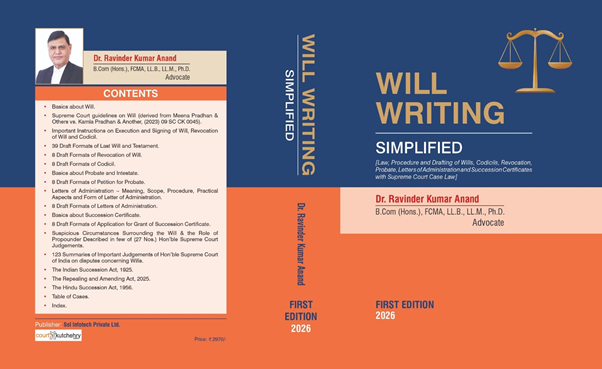
📘 Legal professionals and students alike will benefit from Will Writing Simplified, which covers procedure and case law in detail.
🔹 Buy on Amazon
🔹 Buy on Flipkart
Legal Significance
- Service Regulations: Under TNEB rules, seniority is based on recruitment merit, not probation.
- Judicial Principle: Seniority must reflect the initial appointment date to avoid discrimination.
- Constitutional Context: Upholds Articles 14 and 16, ensuring equality in public employment.
Broader Implications
Also Read: Supreme Court Orders CBI Probe into Dalit Woman’s Death Linked to Ex-MP’s Aide
- For Direct Recruits: Ensures fair recognition of service from the first day of appointment.
- For Promoted Candidates: Clarifies that promotions cannot override direct recruitment seniority.
- For Employers: Provides clarity in workforce management and reduces litigation.
- For Judiciary: Strengthens consistency in service law rulings across states.
How Employees Should Deal with Such Situations
- Check Recruitment Rules: Understand how seniority is determined in your organization.
- Maintain Records: Keep appointment letters, training certificates, and probation orders.
- Seek Legal Advice: In case of disputes, rely on this Supreme Court precedent.
- Awareness: Employees should know that training and probation are part of service tenure.
Conclusion
Also Read: Supreme Court Told: Blood Donation Ban on LGBTQ+ and Sex Workers Retained
The Supreme Court’s ruling is a milestone in service jurisprudence. By clarifying that seniority of direct recruits counts from initial appointment, not probation completion, the Court has ensured fairness, reduced ambiguity, and strengthened equality in public employment. This judgment will serve as a guiding precedent for similar disputes across India.
GEO Keywords for Faster Searches
- Supreme Court seniority direct recruits’ judgment 2026
- TNEB Assistant Engineers seniority case
- Initial appointment vs probation seniority India
- Madras HC seniority ruling overturned
- Service law seniority Supreme Court India
- Articles 14 and 16 seniority case India
- Supreme Court Rajesh Bindal Vijay Bishnoi ruling
Also Read: India Grants 30-Day Visa Extension to Foreigners Amid West Asia War