
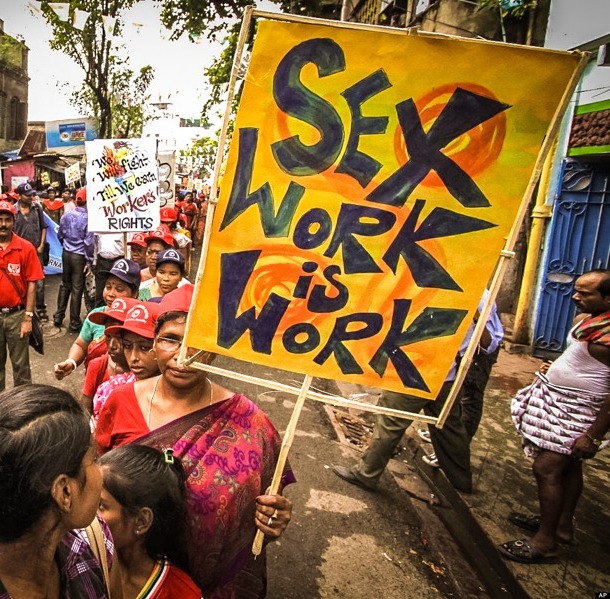
Supreme Court Redefines Rights: Consent, Dignity, and Protection for Sex Workers
Judgment mandates safehouses, national database, and trauma-informed victim care
Voluntary adult sex work cannot be criminalised or forced into rehabilitation
By Legal Reporter
New Delhi: June 03, 2026:
The Supreme Court’s 2026 ruling in the Prajwala case is a watershed moment for India’s legal framework on sex work and trafficking. It distinguishes voluntary adult sex work from trafficking, mandates victim consent for rehabilitation, and directs systemic reforms such as safehouses, national databases, and trauma-informed victim protection.
Introduction
On 2 June 2026, the Supreme Court of India delivered a landmark judgment in the Prajwala v. Union of India case, reshaping the discourse on sex work, trafficking, and victim protection. The ruling clarifies that voluntary adult sex workers cannot be rescued or rehabilitated against their will, placing informed consent at the heart of legal processes. It also mandates systemic reforms to strengthen anti-trafficking mechanisms and victim rehabilitation.
Background of the Case
- Origin: PIL filed in 2004 by NGO Prajwala highlighting systemic failures in tackling sex trafficking.
- Interim Orders: Over two decades, the Court issued directions on rehabilitation schemes and legislative drafting.
- Union’s Assurances: In 2015, government promised an Organised Crime Investigative Agency and comprehensive anti-trafficking law.
- Final Judgment (2026): Bench of Justices J.B. Pardiwala and R. Mahadevan issued transformative directives.
Key Legal Principles and Rules Discussed
1. Consent and Autonomy under Article 21
- Holding: Voluntary sex workers cannot be detained or rehabilitated without consent.
- Constitutional Basis: Article 21 guarantees dignity and autonomy.
- Impact: Shifts focus from paternalistic rescue operations to respecting agency.
2. Immoral Traffic (Prevention) Act (ITPA)
- Problem: Enforcement blurred lines between trafficking and consensual sex work.
- Court’s Clarification: Trafficking is a crime; consensual adult sex work is not.
- Directive: Parliament must reform ITPA to align with international protocols.
3. Victim Protection Plan
- Principles: Dignity, autonomy, safety, non-criminalisation.
- Mandates:
- Trauma-informed rescue operations.
- Confidentiality of victim identity.
- Legal aid and psychosocial support.
- Safe, non-custodial shelters with minimum standards.
4. Anti-Human Trafficking Units (AHTUs)
- Directive: Establish trained personnel, infrastructure, and victim-sensitive procedures.
- Minimum Standards: Coordination mechanisms, grievance redressal, independent monitoring.
5. National Database
- Mandate: Centralised and state-level databases to track trafficking cases, survivors, accused, and rehabilitation progress.
- Purpose: Real-time coordination between police, welfare departments, and courts.
6. Legislative Recommendations
- Bharatiya Nyaya Sanhita (BNS) 2023: Court urged clearer definitions of trafficking.
- Cyber Trafficking: Directed government to address digital exploitation.
- Training: Police, prosecutors, medical professionals, and magistrates to undergo specialised training.
Broader Legal Context
International Protocols
The judgment aligns with the UN Palermo Protocol (2000), which distinguishes trafficking from consensual sex work.
Constitutional Rights
- Article 14: Equality before law.
- Article 19(1)(g): Right to practice any profession.
- Article 21: Right to life and dignity.
Together, these provisions safeguard voluntary sex workers from arbitrary state action.
Implications
- For Sex Workers: Recognition of autonomy, protection from forced rehabilitation.
- For Victims of Trafficking: Stronger systemic safeguards, trauma-informed care.
- For Law Enforcement: Clearer distinction between trafficking and consensual work.
- For Policy: Urgent need to reform ITPA and strengthen cyber laws.
Comparative Perspective
- Netherlands: Legalised sex work with strict regulation.
- Germany: Sex workers have labour rights.
- India: Still criminalises aspects under ITPA; SC ruling nudges towards rights-based framework.
Conclusion
The Supreme Court’s ruling is transformative, balancing victim protection with sex worker autonomy. By mandating consent, systemic reforms, and legislative clarity, it charts a path toward a humane, rights-based approach to trafficking and sex work in India.
Detailed FAQ
Q1. What was the Prajwala case about?
A PIL filed in 2004 by NGO Prajwala highlighting systemic failures in tackling sex trafficking and protecting survivors.
Q2. What did the Supreme Court rule on voluntary sex work?
It held that voluntary adult sex workers cannot be rescued, detained, or rehabilitated without consent, affirming their autonomy under Article 21.
Q3. How does the ruling affect the Immoral Traffic (Prevention) Act?
The Court clarified that ITPA must focus on trafficking and exploitation, not consensual adult sex work. It urged Parliament to reform the Act.
Q4. What is the Victim Protection Plan?
A framework ensuring dignity, autonomy, confidentiality, trauma-informed care, legal aid, and safe shelters for victims of trafficking.
Q5. What role do Anti-Human Trafficking Units (AHTUs) play?
They must adopt minimum standards, employ trained personnel, and coordinate effectively to protect victims.
Q6. Why is a national database important?
It enables real-time tracking of trafficking cases, survivors, accused, and rehabilitation progress, ensuring coordination across states.
Q7. How does the ruling address cyber trafficking?
The Court directed government to strengthen cyber laws and train police to tackle digital exploitation.
Q8. What constitutional rights are relevant?
- Article 14 (Equality).
- Article 19(1)(g) (Right to profession).
- Article 21 (Right to dignity and autonomy).
Q9. How does this ruling compare internationally?
It aligns with UN Palermo Protocol and global best practices distinguishing trafficking from consensual sex work.
Q10. What reforms did the Court recommend?
- Clearer definition of trafficking under BNS 2023.
- Reform of ITPA.
- Specialised training for stakeholders.
- Establishment of safehouses and protective homes with minimum standards.