
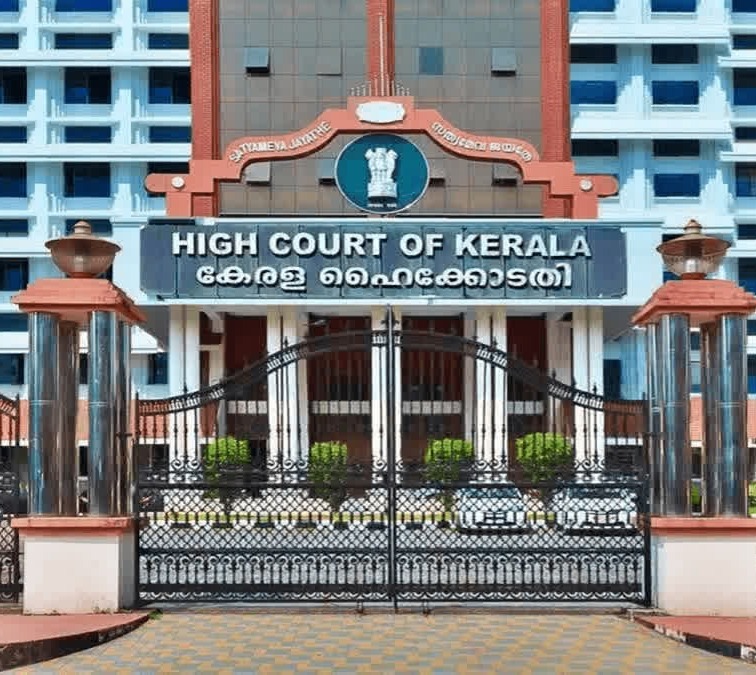
Kerala HC: Accused Can Use Prior Statements in Cross-Examination
Evidence Act Section 145 Governs Contradictions
Court Reaffirms Fair Trial Rights with Procedural Safeguards
By Legal Reporter
New Delhi: May 22, 2026:
The Kerala High Court has clarified that an accused person has the right to confront and cross-examine witnesses on their previous statements, but such cross-examination must be conducted within the framework of the Indian Evidence Act. The ruling underscores that contradictions or omissions in prior statements can be used to test credibility, but they must be properly proved through procedure under Section 145 of the Evidence Act.
Significant issues relating to inheritance rights, royal family property disputes, and interpretation of succession laws were examined in Anil Kak vs Kumari Sharada Raje and Others , where the Supreme Court analyzed competing claims concerning estate succession and ownership rights. This landmark judgment is particularly valuable for readers researching Hindu succession law, partition of inherited property, testamentary disputes, and legal principles governing family estates under Indian civil law.
Background of the Case
The Kerala High Court was hearing a criminal appeal where the accused sought to rely on contradictions between witness testimony in court and their earlier statements recorded during investigation. The trial court had restricted such use, leading to a challenge before the High Court.
Justice A. Badharudeen clarified that while the accused has a constitutional right to a fair trial, including effective cross-examination, the law requires strict adherence to procedural safeguards when using prior statements.
Key Legal Framework
- Indian Evidence Act, 1872 – Section 145
- Allows cross-examination of a witness regarding previous written statements.
- Contradictions must be specifically put to the witness during cross-examination.
- The investigating officer must later prove the contradiction by producing the statement.
- Criminal Procedure Code, 1973 – Section 161 Statements
- Statements made to police during investigation are not substantive evidence.
- They can only be used to contradict a witness under Section 145 of the Evidence Act.
- Supreme Court Precedents
- Tahsildar Singh v. State of UP (1959): Established that contradictions must be proved by confronting the witness with their prior statement.
- State of Karnataka v. K. Yarappa Reddy (1999): Reiterated that Section 161 statements are limited in use and cannot be treated as substantive evidence.
Court’s Analysis
- The Court emphasized that cross-examination is a vital right of the accused, forming part of the constitutional guarantee of fair trial under Article 21.
- However, contradictions must be proved in accordance with Section 145. Merely producing prior statements without confronting the witness is insufficient.
- The Court clarified that omissions in prior statements may amount to contradictions only if they are material and affect credibility.
- It reaffirmed that the investigating officer plays a crucial role in proving contradictions by producing the original statement.
Implications of the Judgment
- For Accused Persons: Strengthens their right to challenge witness credibility using prior statements but requires procedural compliance.
- For Courts: Reinforces the evidentiary principle that prior statements are not substantive evidence but can be used to test credibility.
- For Criminal Trials: Ensures balance between protecting accused rights and preventing misuse of prior statements.
Critical Analysis
The ruling highlights the delicate balance between fair trial rights and evidentiary safeguards. While cross-examination is a cornerstone of criminal justice, unrestricted use of prior statements could undermine the reliability of evidence. By insisting on strict compliance with Section 145, the Court ensures that contradictions are genuine and properly proved.
This approach aligns with Supreme Court jurisprudence, maintaining consistency across jurisdictions. It also underscores the importance of careful trial procedure, where both prosecution and defence must adhere to evidentiary rules to ensure justice.
FAQs for Quick Understanding
Q1: Can an accused use prior police statements to contradict a witness?
Yes, but only under Section 145 of the Evidence Act, which requires confronting the witness with the statement during cross-examination.
Q2: Are statements made to police under Section 161 CrPC substantive evidence?
No. They are not substantive evidence and can only be used to contradict a witness.
Q3: What is the procedure for proving contradictions?
The defence must confront the witness with the prior statement, and the investigating officer must later produce the statement to prove the contradiction.
Q4: Can omissions in prior statements be treated as contradictions?
Yes, but only if the omissions are material and affect the credibility of the witness.
Q5: Why is cross-examination important in criminal trials?
It allows the accused to test the credibility of witnesses, ensuring fairness and protecting the constitutional right to a fair trial.
In summary: The Kerala High Court reaffirmed that accused persons can rely on prior statements to challenge witness credibility, but only through the procedure laid down in Section 145 of the Evidence Act. This ruling strengthens fair trial rights while ensuring evidentiary safeguards are respected.