
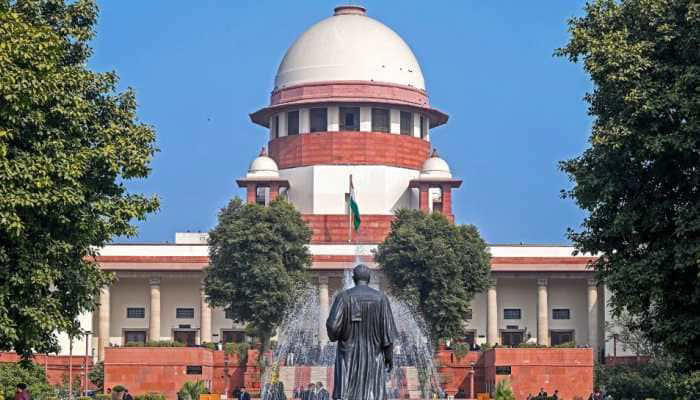
COURTKUTCHEHRY SPECIAL SERIES ON LANDMARKS JDUGEMENTS ON WILLS, CODICIL & PROBATE
Kavita Kanwar v. Pamela Mehta & Ors.: Supreme Court Rejects Probate of Suspicious Will
Executor-Beneficiary Failed to Prove Due Execution
Dominant Role and Exclusion of Heirs Raised Legal Doubts
By Vishwas Kumar
New Delhi: March 20, 2026
Also Read: Kavita Kanwar v. Pamela Mehta & Ors.: Supreme Court Rejects Probate of Suspicious Will
On 19 May 2020, the Supreme Court of India in Kavita Kanwar v. Pamela Mehta & Others (Civil Appeal No. 3688 of 2017; (2020) 05 SC CK 0022) delivered a significant judgment concerning the validity of a contested Will. The Division Bench comprising Justice A.M. Khanwilkar and Justice Dinesh Maheshwari upheld the findings of the lower courts, which had refused probate on the ground of suspicious circumstances surrounding the Will.
The dispute arose when the appellant, Kavita Kanwar, sought to enforce her mother’s Will, under which she was both the executor and principal beneficiary. The Will excluded other heirs, raising questions about fairness and voluntariness. Both the trial court and the High Court had found the circumstances suspicious, particularly noting the appellant’s dominant role in the execution process and the absence of evidence that the testatrix fully comprehended the document. The Supreme Court agreed, emphasizing that the burden lies on the propounder of a Will to dispel all legitimate suspicions and prove due execution in accordance with law.
The Court observed that exclusion of natural heirs, coupled with the executor-beneficiary’s controlling position, required strict scrutiny. Since the appellant failed to establish that the testatrix understood and approved the contents of the Will, the appeal was dismissed. This ruling reinforces the principle that testamentary freedom must be balanced against safeguards ensuring authenticity and voluntariness. It also highlights that courts will not grant probate where doubts remain unresolved, especially in cases involving exclusion of heirs and dominant beneficiaries.
For More, Read Here the Summary of the Judgement from the Book: WILL WRITING SIMPLIFIED, read below or open page no 436, Chapter 14.1 in the book. (Online book purchase link available here on: Buy online: Amazon | Flipkart
Also Read: Top 123 Supreme Court Judgments on Wills
|
|
Case Summary |
: |
Kavita Kanwar v. Pamela Mehta & Ors. |
|
|
Court |
: |
Supreme Court of India |
|
|
Citations |
: |
(2020) 05 SC CK 0022: Civil Appeal No. 3688 of 2017. |
|
|
Link |
: |
https://www.courtkutchehry.com/judgements/1034363/kavita-kanwar-vs-pamela-mehta-ors
|
|
|
Decided on |
: |
19 May 2020 |
|
|
Coram |
: |
Hon’ble Mr. Justice A.M. Khanwilkar, Hon’ble Mr. Justice Dinesh Maheshwari. |
|
|
Relevant Paragraphs |
: |
Para Nos. 15 to 17.9, 18–22, 52–53.
|
Also Read: V. Prabhakara v. Basavaraj K. (Dead) by LRs & Another: Supreme Court Upholds Registered Will
1. Facts of the Case:
The appellant, younger daughter of the testatrix Smt. Amarjeet Mamik, sought probate of a Will dated 20.05.2003 bequeathing the first floor and terrace of property D-179, Defence Colony, New Delhi in her favour. The Will was partly holograph and partly typed. The testatrix had two daughters and one son. The Trial Court and the Delhi High Court rejected probate, finding multiple unexplained suspicious circumstances.
2. Law Points Involved:
Whether due execution and validity of a partly typed, partly holograph Will were proved; extent to which suspicious circumstances surrounding execution and exclusion of heirs affect grant of probate under the Indian Succession Act, 1925.
3. Acts / Provisions / Articles Referred:
(i). Indian Succession Act, 1925 — Sections 59, 61, 62, 63(c), 268, 276
(ii). Indian Evidence Act, 1872 — Sections 58, 68
(iii). Code of Civil Procedure, 1908-Sections 151, Order 14 Rule 1(6), Order 15 Rule 2, Order 8 Rule 5(2), Order 6 Rule 7
(iv). Constitution of India — Article 136
4. Judgments Referred:
(i). H. Venkatachala Iyengar v. B.N. Thimmajamma, (1958) 11 SC CK 0008.
(ii). Smt. Jaswant Kaur v. Smt. Amrit Kaur, (1976) 10 SC CK 0028.
https://www.courtkutchehry.com/judgements/649331/smt-jaswant-kaur-vs-smt-amrit-kaur-and-others/]
(iii). Surendra Pal v. Dr. Saraswati Arora, (1974) 08 SC CK 0018.
(iv). Smt. Indu Bala Bose v. Manindra Chandra Bose, (1981) 11 SC CK 0017.
(v). Benga Behera v. Braja Kishore Nanda, (2007) 05 SC CK 0175.
(vi). Naranjan Umeshchandra Joshi v. Mrudula Jyoti Rao, (2006) 12 SC CK 0022;
5. Obiter Dicta:
(i). Mere proof of signatures does not discharge the propounder’s burden; the conscience of the Court must be satisfied that the testatrix executed the Will after understanding its contents.
(ii). If the propounder takes an active role in preparation/ execution and receives a substantial benefit, it constitutes a serious suspicious circumstance requiring complete explanation.
6. Ratio Decidendi:
The propounder failed to prove that the testatrix understood the contents or voluntarily executed the Will. Numerous suspicious circumstances active role and benefit of the propounder, exclusion of son and elder daughter,
absence of explanation for partly typed/handwritten form, contradictions among attesting witnesses, lack of proof of who drafted or typed the Will, and secret execution remained unexplained. Consequently, the Will was held not genuine, and probate was rightly refused.
7. Final Ruling:
Appeal dismissed. Concurrent findings of the Trial Court and High Court upheld Will dated 20 May 2003 held surrounded by unexplained suspicious circumstances; probate rightly refused.
8. Gist Highlighting Dispute with Final Decision:
The dispute centered on whether the appellant-beneficiary, who was executor of her mother’s Will, proved its due execution. Both lower courts found the Will suspicious owing to her dominant role and exclusion of other heirs. The Supreme Court affirmed that the appellant failed to remove these suspicions or prove that the testatrix comprehended the document, thereby rejecting the appeal and confirming denial of probate.
Also Read: Meena Pradhan and Others v. Kamla Pradhan and Another: Supreme
Read full Judgement Here:
Kavita Kanwar v. Pamela Mehta & Ors.
Supreme Court of India
(2020) 05 SC CK 0022: Civil Appeal No. 3688 of 2017.
https://www.courtkutchehry.com/judgements/1034363/kavita-kanwar-vs-pamela-mehta-ors
You Can Also Purchase the Book from here on: Buy online: Amazon | Flipkart
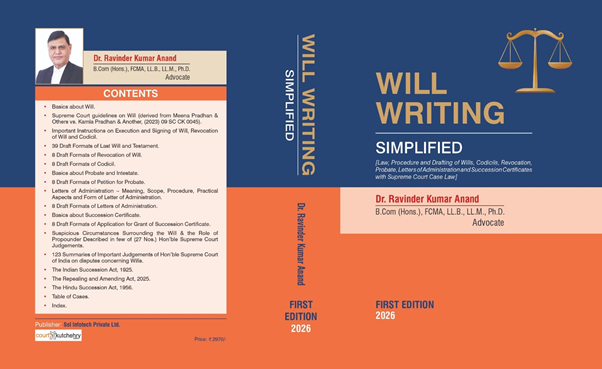
OUR RECOMMENDATION: Check out 123 Key Judgements, as highlighted in the book, WILL WRITING SIMPLIFIED, for the quick research and reference purposes. Click the link here: https://www.courtkutchehry.com/pages/blog/123-supreme-court-judgments-on-wills/
SEO-Friendly Keywords
- Kavita Kanwar v. Pamela Mehta Supreme Court case
- Suspicious will probate India
- Supreme Court judgment on wills 2020
- Executor-beneficiary will dispute India
- Civil Appeal No. 3688 of 2017 judgment
- Testamentary law Supreme Court ruling