
COURTKUTCHEHRY SPECIAL SERIES ON LANDMARKS JDUGEMENTS ON WILLS, CODICIL & PROBATE
Ashutosh Samanta (D) by LRs. and others v. SM. Ranjan Bala Dasi and Others: Supreme Court Upholds Proof of Will Despite Absence of Witnesses
Sections 69–71 Evidence Act Applied Where Witnesses Deceased
Presumption Under Section 90 Declared Inapplicable to Wills
By Vishwas Kumar
New Delhi: March 20, 2026:
Also Read: Kavita Kanwar v. Pamela Mehta & Ors.: Supreme Court Rejects Probate of Suspicious Will
In Ashutosh Samanta (D) by LRs. and others v. SM. Ranjan Bala Dasi and Others (Civil Appeal No. 7775 of 2021, decided on 14 March 2023), the Supreme Court of India addressed a challenge to the genuineness of a Will central to a succession dispute. The appellant, claiming rights as a purchaser under Upendra (who had no bequest), argued that the Will was fabricated, citing delay in its production and the absence of attesting witnesses.
The Division Bench comprising Hon’ble Mr. Justice S. Ravindra Bhat and Hon’ble Ms. Justice Hima Kohli examined whether the Will had been duly proved in accordance with law. The Court clarified that when attesting witnesses are deceased, Sections 69–71 of the Indian Evidence Act provide adequate mechanisms for proving execution. In this case, the concurrent factual findings of the trial and High Court had already established the Will’s validity through secondary evidence and corroborative testimony.
Also Read: Top 123 Supreme Court Judgments on Wills
Importantly, the Court rejected the appellant’s reliance on Section 90 of the Evidence Act, which allows a presumption of authenticity for documents over 30 years old. The Bench emphasized that this presumption does not apply to Wills, given their unique nature and the need for strict proof of execution and attestation.
Affirming the concurrent findings, the Supreme Court dismissed the appeal, holding that the Will was duly executed and proved despite the absence of living attesting witnesses. The ruling underscores the judiciary’s pragmatic approach: while strict compliance with statutory requirements remains essential, the law provides flexibility to ensure justice when witnesses are unavailable due to passage of time.
This judgment reinforces that succession disputes cannot be defeated merely by technical objections, and that credible secondary evidence can sustain the validity of testamentary documents.
For More, Read Here the Summary of the Judgement from the Book: WILL WRITING SIMPLIFIED, read below or open page no 436, Chapter 14.1 in the book. (Online book purchase link available here on: Buy online: Amazon | Flipkart
|
|
Case Summary |
: |
Ashutosh Samanta (D) by Lrs. and Others v. SM. Ranjan Bala Dasi and Others |
|
|
Court |
: |
Supreme Court of India |
|
|
Citations |
: |
(2023) 03 SC CK 0038: Civil Appeal No. 7775 of 2021. |
|
|
Link |
: |
|
|
|
Decided on |
: |
14 March 2023 |
|
|
Coram |
: |
Hon’ble Mr. Justice S. Ravindra Bhat, Hon’ble Ms. Justice Hima Kohli, (Division Bench) |
|
|
Relevant Paragraphs |
: |
Para Nos. 1–21 |
Also Read: V. Prabhakara v. Basavaraj K. (Dead) by LRs & Another: Supreme Court Upholds Registered Will
1. Facts of the Case:
The testator, Gosaidas Samanta, had three sons—Upendra, Anukul, and Mahadev—and executed a Will dated 16.11.1929 bequeathing his estate to Anukul, Mahadev, and Shibu (grandson through Upendra). A partition deed dated 21.02.1945 recognized this Will. Upendra later sold portions of the property, and the appellant (purchaser) claimed title through him. A suit for partition (T.S. No. 647/1952) and subsequent appeals questioned the validity of the Will since it was never probated. Thereafter, respondents sought letters of administration (O.S. No. 79/1969). Both the trial and High Courts held the Will to be genuine despite the death of all attesting witnesses.
2. Law Points Involved:
(i). Whether a Will over 30 years old can be presumed genuine under Section 90, Evidence Act, 1872.
(ii). Whether letters of administration could be granted despite delay and absence of living attesting witnesses.
(iii). Whether the concurrent findings of lower courts warranted interference by the Supreme Court.
3. Acts / Provisions / Articles Referred:
(i). Indian Succession Act, 1925: Sections 63, 63(c), 278
(ii). Indian Evidence Act, 1872: Sections 68, 69, 71, 90
4. Judgments Referred:
(i). M.B. Ramesh (D) by LRs. v. K.M. Veeraje Urs (D) by LRs. (2013) 05 SC CK 0042.
https://www.courtkutchehry.com/judgements/668947/mb-ramesh-d-by-lrs-vs-km-veeraje-urs-d-by-lrs-an/]
(ii). Bharpur Singh v. Shamsher Singh, (2008) 12 SC CK 0067.
https://www.courtkutchehry.com/judgements/661748/bharpur-singh-and-others-vs-shamsher-singh/]
(iii). Janki Narayan Bhoir v. Narayan Namdeo Kadam, (2002) 12 SC CK 0087.
https://www.courtkutchehry.com/judgements/654452/janki-narayan-bhoir-vs-narayan-namdeo-kadam/]
(iv). Babu Singh v. Ram Sahai alias Ram Singh, (2008) 04 SC CK 0017.
(v). K. Laxmanan v. Thekkayil Padmini, (2008) 12 SC CK 0054.
https://www.courtkutchehry.com/judgements/661158/k-laxmanan-vs-thekkayil-padmini-and-others/]
(vi). V. Kalyanaswamy v. L. Bakthavatsalam, (2020) 07 SC CK 0008.
5. Obiter Dicta:
The Court observed that while Section 90 allows a presumption for documents over 30 years old, such presumption cannot extend to Wills, which must always satisfy the specific evidentiary standards of Section 63 of the Succession Act and Section 68 of the Evidence Act.
6. Ratio Decidendi:
The presumption under Section 90 of the Evidence Act does not apply to Wills. When attesting witnesses are deceased or unavailable, proof of execution may be established under Sections 69 and 71 by witnesses acquainted with the handwriting of the testator and attesting witnesses. The concurrent findings of the lower courts affirming due execution and attestation were upheld.
Also Read: Meena Pradhan and Others v. Kamla Pradhan and Another: Supreme
7. Final Ruling:
The appeal was dismissed. The Will was held to have been duly executed and proved in accordance with law. Letters of administration were rightly granted. No order as to costs.
8. Gist Highlighting Dispute with Final Decision:
The appellant, purchaser under Upendra (who had no bequest), challenged the Will’s genuineness citing delay and absence of attesting witnesses. The Supreme Court held that proof under Sections 69–71 of the Evidence Act was adequate where witnesses were deceased and that the concurrent factual findings were sound. The presumption under Section 90 was ruled inapplicable to Wills. Appeal dismissed.
Read full Judgement Here:
Ashutosh Samanta (D) by Lrs. and Others v. SM. Ranjan Bala Dasi and Others
Supreme Court of India
(2023) 03 SC CK 0038: Civil Appeal No. 7775 of 2021.
You Can Also Purchase the Book from here on: Buy online: Amazon | Flipkart
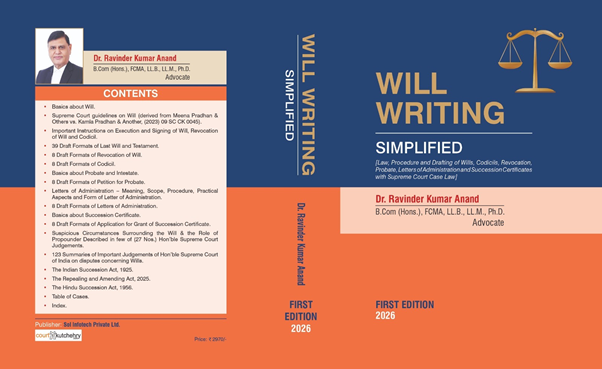
OUR RECOMMENDATION: Check out 123 Key Judgements, as highlighted in the book, WILL WRITING SIMPLIFIED, for the quick research and reference purposes. Click the link here: https://www.courtkutchehry.com/pages/blog/123-supreme-court-judgments-on-wills/
SEO Keywords
- Ashutosh Samanta v. Ranjan Bala Dasi case
- Supreme Court Will proof 2023
- Civil Appeal No. 7775 of 2021 Supreme Court
- Sections 69–71 Evidence Act Will proof
- Section 90 Evidence Act presumption Wills
- Indian inheritance law Supreme Court ruling