
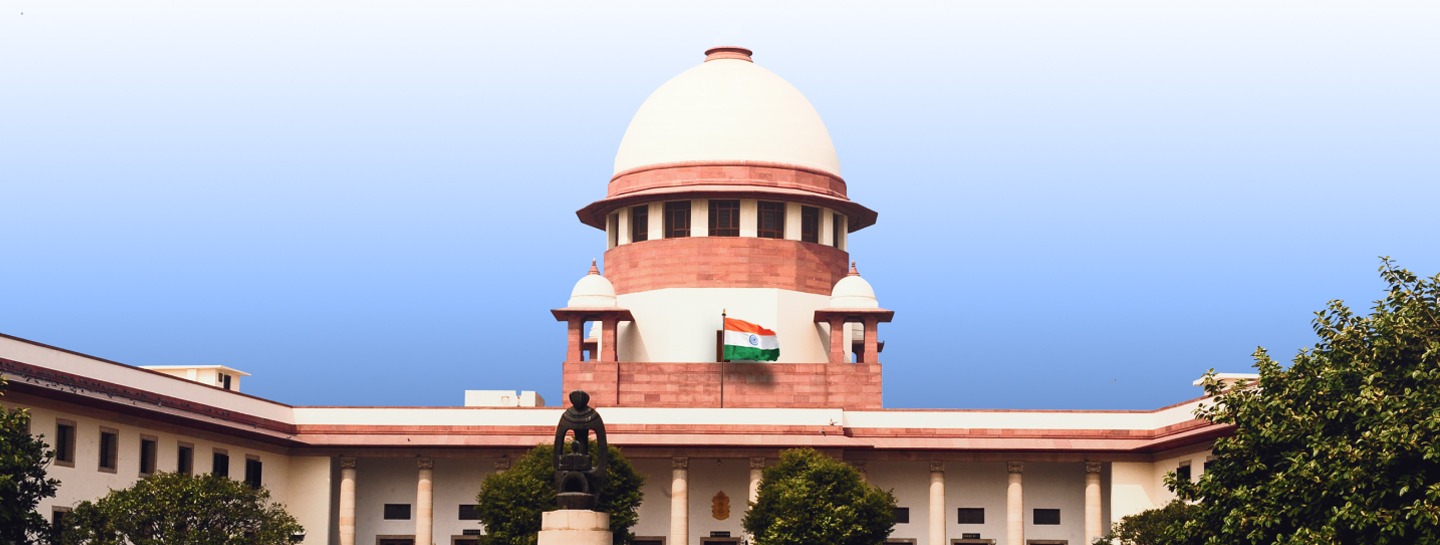
COURTKUTCHEHRY SPECIAL SERIES ON LANDMARKS JDUGEMENTS ON WILLS, CODICIL & PROBATE
Jagmail Singh & Anr v. Karamjit Singh & Ors: Supreme Court Allows Secondary Evidence of Lost Will
High Court’s Rejection Overturned
Scribe and Patwari Testimony Found Sufficient
By Vishwas Kumar
New Delhi: March 21, 2026
For a deeper understanding, explore this complete list of Supreme Court judgments on wills in India.
In a significant ruling, the Supreme Court of India in Jagmail Singh and Another v. Karamjit Singh and Others (Civil Appeal No. 1889 of 2020, decided on 13 May 2020) addressed the admissibility of secondary evidence in proving a lost Will. The dispute arose when the original Will, allegedly executed by the deceased, was handed over to revenue officials for mutation purposes but was never returned. The appellants sought to rely on secondary evidence, while the High Court had rejected their plea, holding that the existence of the Will itself had not been adequately proved.
The Supreme Court, comprising Hon’ble Mr. Justice Navin Sinha and Hon’ble Mr. Justice Krishna Murari, took a different view. The Court emphasized that the testimony of the scribe and patwaris provided a prima facie foundation for the existence of the Will. It clarified that the inability to produce the original document, despite issuing notice, does not automatically bar reliance on secondary evidence under the Indian Evidence Act. The Court reaffirmed that once the existence of a document is reasonably established, secondary evidence can be permitted to prove its contents.
This ruling underscores the principle that justice should not be defeated merely due to procedural hurdles when credible testimony supports the existence of a document. By allowing secondary evidence, the Supreme Court ensured that substantive rights are not lost in technicalities. The judgment is a reminder of the Court’s pragmatic approach in balancing evidentiary rules with fairness, especially in inheritance disputes where documentary proof often becomes contentious.
For More, Read Here the Summary of the Judgement from the Book: WILL WRITING SIMPLIFIED, read below or open page no 436, Chapter 14.1 in the book. (Online book purchase link available here on: Buy online: Amazon | Flipkart
|
14.32 |
Case Summary |
: |
Jagmail Singh and Another v. Karamjit Singh and Others |
|
|
Court |
: |
Supreme Court of India |
|
|
Citations |
: |
(2020) 05 SC CK 0019: Civil Appeal No. 1889 of 2020. |
|
|
Link |
: |
https://www.courtkutchehry.com/judgements/1034172/jagmail-singh-anr-vs-karamjit-singh-ors/
|
|
|
Decided on |
: |
13 May 2020 |
|
|
Coram |
: |
Hon’ble Mr. Justice Navin Sinha, Hon’ble Mr. Justice Krishna Murari. |
|
|
Relevant Paragraphs |
: |
Para Nos. 1–20 |
For similar rulings, see cases on secondary evidence of wills in India.
1. Facts of the Case:
Appellants (Jagmail Singh and another) filed a suit for declaration of ownership over land of Babu Singh, asserting their title under a Will dated 24.01.1989. The original Will, handed to the village patwari for mutation, could not be retrieved. The Trial Court allowed secondary evidence under Sections 65–66 of the Evidence Act. The High Court reversed the order, holding that the existence of the Will was not proved—a prerequisite for permitting secondary evidence. Aggrieved, appellants approached the Supreme Court.
2. Law Points Involved:
(i). Admissibility of secondary evidence under Sections 65 & 66 of the Indian Evidence Act, 1872.
(ii). Foundational requirements before allowing secondary evidence of a document.
(iii). Whether the High Court erred in rejecting secondary evidence for want of initial proof of the Will’s existence.
3. Acts / Provisions / Articles Referred:
(i). Constitution of India, 1950 — Article 227
(ii). Indian Evidence Act, 1872 — Sections 65(a)–(g), 66
4. Judgements Referred:
(i). Ashok Dulichand v. Madahavlal Dube, (1975) 08 SC CK 0009.
(ii). Rakesh Mohindra v. Anita Beri & Ors., (2015) 11 SC CK 0066.
(iii). H. Siddiqui (Dead) by LRs v. A. Ramalingam, (2011) 03 SC CK 0043.
5. Obiter Dicta:
Merely exhibiting a document does not prove it. Admission in evidence does not automatically establish authenticity; it must be proved in accordance with law (para 17).
6. Ratio Decidendi:
The Court held that once the appellants had shown the Will was in possession of revenue officials and had served notice under Section 66, the foundational facts for secondary evidence were satisfied. The High Court committed an error in holding that the existence of the Will was unproved. The right to lead secondary evidence arises when the original cannot be produced despite due diligence (paras 11–16).
7. Final Ruling:
Appeal allowed. The Supreme Court set aside the High Court judgment, permitting the appellants to lead secondary evidence of the Will dated 24.01.1989. Admission of secondary evidence, however, does not establish authenticity, which must be proved at trial (paras 18–19). No order as to costs (para 20).
Also Read: Supreme Court guidelines on proof of wills
8. Gist Highlighting Dispute with Final Decision:
Dispute centered on whether secondary evidence of a lost Will could be permitted when the original was handed to revenue officials for mutation. The High Court refused, citing non-proof of existence. The Supreme Court found that evidence from the scribe and patwaris sufficiently established a prima facie foundation for existence. Consequently, it allowed secondary evidence, reaffirming that failure to produce the original despite notice does not bar proof through secondary means.
Read full Judgement Here:
Jagmail Singh and Another v. Karamjit Singh and Others
Supreme Court of India
(2020) 05 SC CK 0019: Civil Appeal No. 1889 of 2020.
https://www.courtkutchehry.com/judgements/1034172/jagmail-singh-anr-vs-karamjit-singh-ors/
You Can Also Purchase the Book from here on: Buy online: Amazon | Flipkart
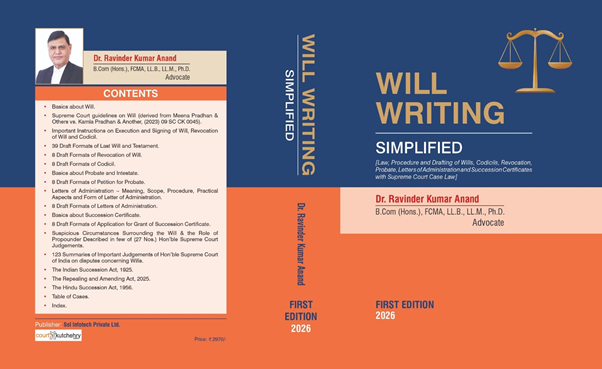
OUR RECOMMENDATION: Check out 123 Key Judgements, as highlighted in the book, WILL WRITING SIMPLIFIED, for the quick research and reference purposes. Click the link here: https://www.courtkutchehry.com/pages/blog/123-supreme-court-judgments-on-wills/