
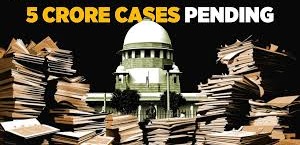
COURTKUTCHEHRY SPOTLIGHT ON RISING VOLUME OF PENDING CASES IN INDIA
India’s Courts Face 4.76 Crore Pending Cases: Govt Tells Parliament; Experts Suggest Tech, Mediation, and Action Against Fake Cases
High Courts Hold 63.66 Lakh Cases, Supreme Court Over 92,000—Backlog at Crisis Levels
Digital Reforms, Alternative Dispute Resolution, and Strict Scrutiny of Frivolous Litigation Could Ease Burden
By Vishwas Kumar
New Delhi: February 15, 2026:
India’s judiciary is facing one of its biggest challenges yet: over 4.76 crore pending cases across courts nationwide, according to data presented in Parliament by the Union Ministry of Law and Justice. The staggering backlog includes 63.66 lakh cases in High Courts and 92,101 cases in the Supreme Court of India. The disclosure has reignited debate on how to tackle judicial delays, with experts pointing to technological innovation, mediation, and stricter action against fake or frivolous cases as possible solutions.
Also Read: Supreme Court: Absconding Accused Cannot Seek Anticipatory Bail Based on Co-Accused’s Acquittal
The Scale of the Backlog
- District and Subordinate Courts: Over 4.76 crore cases pending as of December 31, 2025.
- High Courts: More than 63.66 lakh cases awaiting resolution.
- Supreme Court: 92,101 cases pending, with pendency rising by over 11% in three years.
- State-wise Data: Uttar Pradesh leads with 1.13 crore cases in district courts, followed by Maharashtra and West Bengal.
This backlog has led to delays in justice delivery, eroding public confidence and impacting economic growth.
Causes of Judicial Delays
- Vacant Judicial Posts: Thousands of judge positions remain unfilled.
- Infrastructure Gaps: Many courts lack adequate staff and digital systems.
- Complex Procedures: Lengthy adjournments and procedural hurdles slow progress.
- Frivolous Litigation: Fake or repetitive cases clog the system, wasting judicial time.
Possible Solutions
1. Technological Advancements
- E-Courts & Digital Filing: Expanding the National Judicial Data Grid (NJDG) and e-filing systems can reduce paperwork and speed up hearings.
- AI-Powered Case Management: Artificial intelligence can help prioritize urgent cases and flag repetitive filings.
- Virtual Hearings: Hybrid court models can reduce delays, especially in remote areas.
2. Mediation and Alternative Dispute Resolution (ADR)
- Encouraging mediation, arbitration, and conciliation can resolve disputes outside traditional courts.
- ADR mechanisms are faster, less expensive, and reduce burden on judges.
- Mandatory pre-litigation mediation in civil cases could significantly cut pendency.
3. Strict Action Against Fake Cases
- Courts can impose penalties for frivolous litigation to discourage misuse.
- Screening mechanisms at filing stage can filter out duplicate or baseless cases.
- Stronger accountability for lawyers and litigants who misuse the system.
Government Initiatives
Also Read: Madras High Court Slams Private Firm for Profiting by Sub-Leasing Public Land Leased at ₹1
The Law Ministry has highlighted steps being taken:
- Court Computerization: Digitization of records and case tracking.
- Filling Vacancies: Efforts to appoint judges more quickly.
- Infrastructure Development: New courtrooms and better facilities.
However, experts argue that these measures must be combined with systemic reforms to make a real impact.
Expert Opinions
- Legal Scholars: Stress that “justice delayed is justice denied,” urging faster reforms.
- Judges: Call for better case management and stricter timelines.
- Policy Analysts: Suggest that technology and ADR are the only sustainable solutions.
Also Read: Chhattisgarh High Court Rules WhatsApp Chats and Call Recordings Admissible in Matrimonial Disputes
[Recommended Legal Resource]
For readers seeking deeper insights into Indian legal procedures, succession, and Supreme Court precedents, the book Will Writing Simplified [Law, Procedure and Drafting of Wills, Codicils, Revocation, Probate, Letters of Administration and Succession Certificates with Supreme Court Case Law] is highly recommended. It provides practical guidance on drafting and interpreting legal documents, making it invaluable for lawyers, students, and professionals.
Conclusion
India’s judicial backlog of 4.76 crore cases is a crisis that demands urgent attention. While government initiatives like digitization and filling vacancies are steps in the right direction, real progress will require embracing technology, promoting mediation, and cracking down on fake cases. The Supreme Court and High Courts have already shown willingness to innovate, but systemic reforms must follow to ensure that justice in India is not just delivered but delivered on time.
Suggested Keywords for SEO & Faster Searches
- India court case backlog 2026
- 4.76 crore pending cases judiciary India
- Supreme Court pending cases statistics India
- High Court case pendency India 2026
- Judicial delays causes and solutions India
- Technology in Indian courts e-filing AI
- Mediation ADR consumer disputes India
- Fake cases frivolous litigation India courts
- National Judicial Data Grid case backlog India
- Will Writing Simplified book legal resource
Also Read: Gujarat High Court Summons Man Over Hasty Remarriage After Divorce